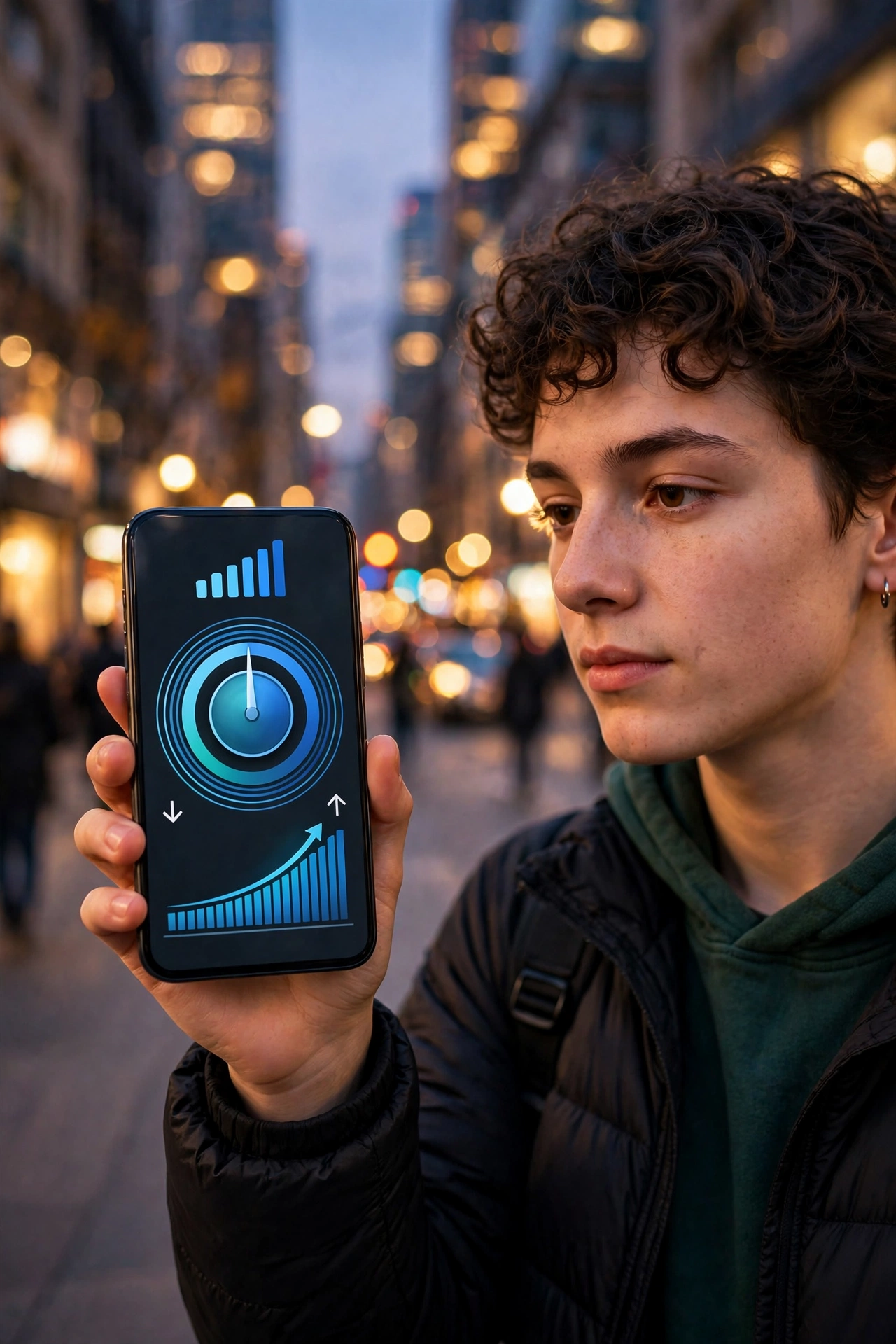
My cousin bought a new phone last month, and the first thing he showed me was a speed test: 412 Mbps on mobile data. My home Wi-Fi does 100. That number came from a 5G connection, and it got me thinking. Most of us have heard of 5G, but very few of us actually know what is 5g technology for beginners in plain language, without the sales talk.
This guide fixes that. No engineering degree needed, no jargon without an explanation, just the honest picture: what 5G is, how it works, how fast it really is, and whether you should care in 2026. By the end, you will know what to look for on your next phone, why your friend’s 5G is faster than yours, and the mistakes that make people pay for 5G they never actually use.
Table of Contents
What Is 5G Technology for Beginners?
Let us start with the simplest definition. 5G is the fifth generation of mobile network technology. It is the system that connects your phone to the internet when you are away from Wi-Fi. 1G gave us voice calls, 2G added texting, 3G brought the mobile internet, and 4G made video streaming normal. 5G is the next step, built for three things: much higher speeds, far lower delay, and room for far more devices at once.
If you have ever wondered what is 5g technology for beginners in one sentence, that is it: a faster, quicker, roomier mobile network. The “G” simply stands for generation. Nothing more mysterious than that.
Here is a comparison that helped me. Think of 4G as a two-lane road into a busy city. It works fine at 3 a.m., but at rush hour everything slows down. 5G is like rebuilding that road with ten lanes, better traffic lights, and a shortcut for ambulances. The road itself is the same idea, but far more can travel on it at once, and urgent traffic gets through first.
One thing worth clearing up early: 5G is not a single switch that carriers flip on. It is a family of technologies that work together, and the 5G on your phone depends on where you live, which carrier you use, and which phone you hold. That is why two people can both say “I have 5G” and get completely different speeds.
How 5G Actually Works
You do not need to understand radio engineering to understand 5G. Three ideas do most of the work, and each one is simple on its own. If you are still working out what is 5g technology for beginners, these three ideas are the whole story in miniature: new airwaves, more antennas, and smarter aiming.
Radio Waves and Spectrum
Every mobile network runs on radio waves, and the airwaves are divided into bands, like lanes on a highway. 4G mostly used lower bands. 5G adds new bands, including mid-band and high-band frequencies that carry far more data. Low-band 5G travels far and passes through walls well, but it is only about 20 to 30 percent faster than 4G. Mid-band is the sweet spot: speeds of 100 to 400 Mbps with decent range. High-band, called millimeter wave or mmWave, can pass 1 Gbps, but it barely gets through a window, let alone a brick wall.
That mix of bands is the first thing to understand about what is 5g technology for beginners, because it explains why speeds vary so much from place to place.
Small Cells Everywhere
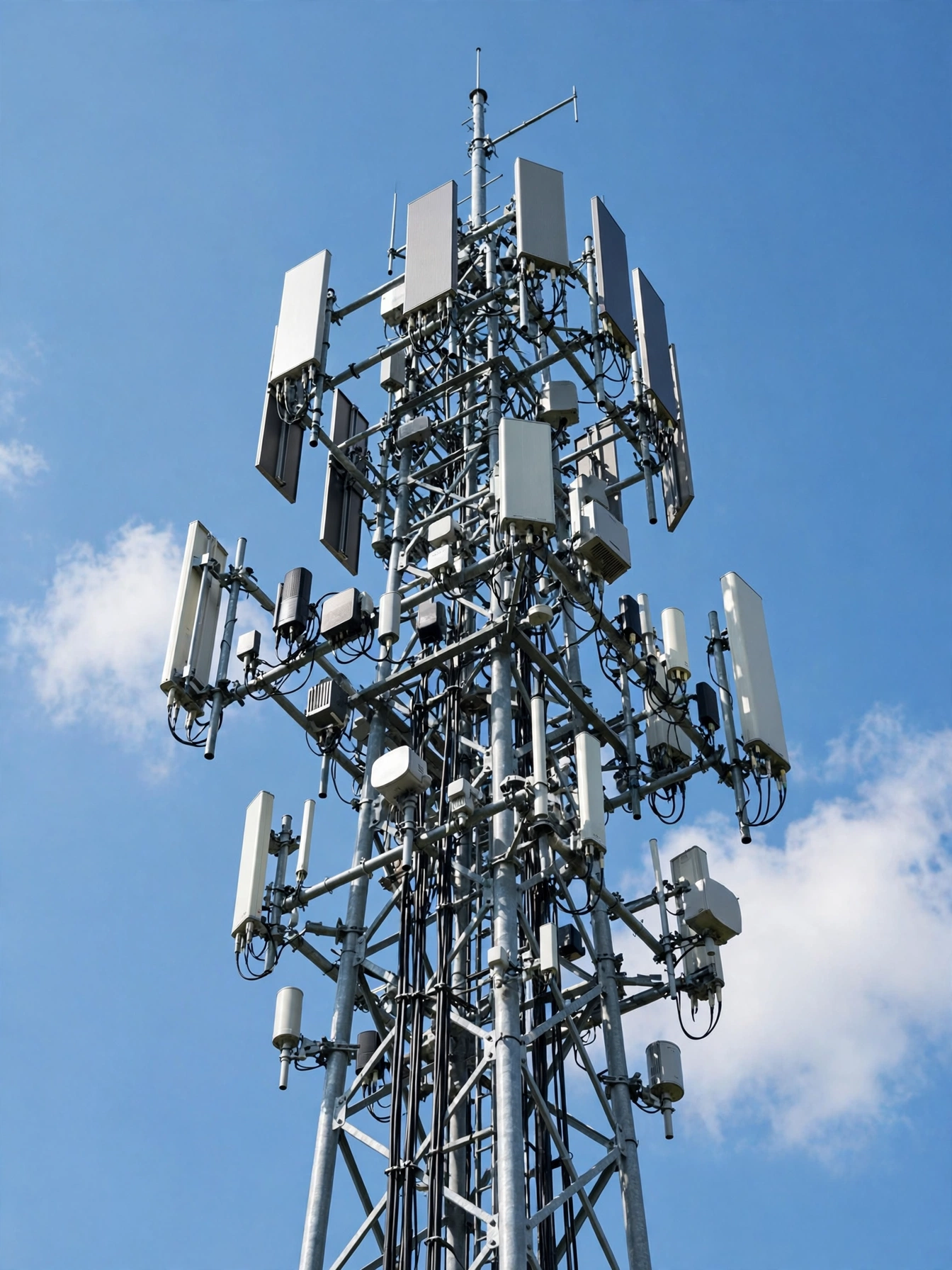
Because the fastest 5G signals do not travel far, carriers place many small antennas, called small cells, on lampposts, rooftops, and buildings. A 4G tower might cover several kilometres. A mmWave small cell might cover one city block. That is why the fastest 5G shows up in stadiums, airports, and busy downtown streets first, and why your speed can change just by walking around the corner. That uneven rollout is a normal part of what is 5g technology for beginners, and it is why a single speed test never tells the whole story.
Massive MIMO and Beamforming
A 5G tower can carry 64, 128, or even 256 antennas. This is called Massive MIMO, and it lets the tower talk to many phones at the same time instead of one after another. Beamforming goes with it: instead of spraying signal in every direction, the tower aims a focused beam of radio energy straight at your phone. The result is a stronger connection with less wasted signal, especially in crowded places like concerts and railway stations. Together, these two tricks are the quiet engine of what is 5g technology for beginners, and they are why a crowded stadium can still feel fast.
The Three Types of 5G
Not all 5G is equal, and this is the part carriers rarely explain in their adverts. Your phone shows the same little “5G” icon for all three, but the experience is very different. That sameness is confusing, and it is the first thing to clear up when you explain what is 5g technology for beginners to a friend.
| Type | Speed (typical) | Coverage | Best for |
|---|---|---|---|
| Low-band 5G | 30–100 Mbps | Very wide, works indoors | Everyday browsing, calls, maps |
| Mid-band 5G | 100–400 Mbps | Good, city-wide | Streaming, gaming, video calls |
| High-band (mmWave) | 500 Mbps–1 Gbps+ | Short range, one block | Stadiums, airports, dense crowds |
If your 5G feels no faster than 4G, you are almost certainly on low-band. If a friend brags about 800 Mbps on the same carrier, they probably caught a mid-band or mmWave signal. Neither of you is wrong. You are just on different flavours of the same network. That is the most common confusion about what is 5g technology for beginners, and now you know the answer.
So the next time someone asks you what is 5g technology for beginners, you can answer honestly: it depends on which of the three types your phone is actually using.
5G vs 4G: The Real Differences
Speed gets all the headlines, but latency matters just as much. Latency is the delay between tapping something and the network responding. On 4G, that delay is usually 30 to 50 milliseconds. On good 5G, it can drop below 10 milliseconds, and in ideal conditions, under 1 millisecond. You will not feel 10 milliseconds when you open a web page, but you will feel it in a video call, a cloud game, or a remote-controlled machine. Latency is the part of what is 5g technology for beginners that most people never hear about, yet it is the change you feel first in a game or a video call.
| Feature | 4G LTE | 5G |
|---|---|---|
| Typical download speed | 20–100 Mbps | 100–400 Mbps (mid-band) |
| Peak speed | About 1 Gbps | Up to 10–20 Gbps in theory |
| Latency | 30–50 ms | Under 10 ms, as low as 1 ms |
| Devices per sq km | About 100,000 | Up to 1 million |
| Best at | Streaming, browsing | Gaming, smart cities, IoT |
Read that table once more and you will see what is 5g technology for beginners at a glance: not just faster downloads, but a network built for a crowd of devices.
The last row is the real story. 5G was not built only to make your phone faster. It was built for a world with far more connected things: smart meters, delivery drones, factory sensors, and self-driving cars. Your phone is just the first device to use it. It is also the part of what is 5g technology for beginners that phone adverts skip, because a smart meter is less exciting than a speed test.
How Fast Is 5G in Real Life?
Advertised speeds and real speeds are two different things, and I would rather give you honest numbers. In everyday use, most people on mid-band 5G see 100 to 300 Mbps. That is enough to download a 2 GB movie in about a minute, stream 4K video without buffering, and run a video call while someone else games in the next room. That gap between the poster and the pavement is the first honest lesson of what is 5g technology for beginners.
But three things decide your actual speed. First, your band: low-band may only beat 4G by a little. Second, your location: step inside a concrete building and mmWave disappears. Third, congestion: a stadium full of 50,000 phones will slow any network down, though 5G handles the crowd far better than 4G ever did. If you remember one thing about what is 5g technology for beginners, make it this: your band and your location decide your speed, not the logo on the box.
So do not buy a phone for the headline number. Ask your carrier which bands cover your home and your workplace. That answer matters more than any speed test on a poster. That single check saves more disappointment than any other tip about what is 5g technology for beginners.
What Do You Need to Use 5G?
The checklist is short, and missing any one item means no 5G at all. Work through it in order and you have covered the practical half of what is 5g technology for beginners before you spend anything.
First, a 5G phone. A 4G phone cannot be updated to 5G, no matter what an app promises. The phone needs a 5G modem built in. Most phones sold since 2022 have one, but check the specifications before you buy. Look for the words “5G” in the connectivity section, not just in the marketing name.
Second, a 5G plan. Some older plans keep you on 4G even with a 5G phone, so check with your carrier. In many countries, 5G is now included at no extra cost, but in others it still sits on a pricier tier. Ask before you assume, because this is the most common surprise in what is 5g technology for beginners.
Third, 5G coverage where you actually live and work. Carriers publish coverage maps, and they are worth checking street by street. A city can be “covered” while your street is not. If you spend most of your day in one place, that one place is what counts.
Fourth, a 5G SIM or eSIM that supports it. Most modern SIMs do, but a SIM card from 2016 may not. If your phone shows 4G after everything else checks out, the SIM is the first thing to replace. This is the simplest test of what is 5g technology for beginners in real life: a phone, a plan, coverage, and a SIM that all agree.
Where 5G Makes a Real Difference
For a lot of people, 5G changes nothing they notice. For others, it changes everything. Here is where the question of what is 5g technology for beginners turns practical: who actually benefits, and who can safely ignore it for now.
Phones, Streaming, and Video Calls
This is the everyday win. A 4K stream on a train, a video call that does not freeze when you walk between rooms, a photo backup that finishes before you put the phone down. If you stream a lot on mobile data, you will feel this on day one, and that is the simplest everyday proof of what is 5g technology for beginners.
Gaming on the Go
Cloud gaming is where low latency shines. A 40-millisecond delay makes a fast game feel sluggish; under 10 milliseconds, it feels like the game is running on your own device. If you play competitive games on your phone, 5G is the first network that makes cloud gaming genuinely playable. For players, that is the clearest payoff in what is 5g technology for beginners, and it is the reason cloud gaming finally works on a phone.
Smart Homes and Smart Cities
A single 5G cell can handle up to a million devices per square kilometre. That sounds abstract until you picture a city: traffic lights, buses, water meters, security cameras, and delivery robots all talking at once. 4G would choke. 5G was designed for exactly this crowd, and keeping your connection safe matters more as more of your home joins the network, so read up on the basics alongside the speed.
Business and Remote Work
Factories use 5G to run robots that need instant responses. Doctors have tested remote consultations over 5G where a fraction of a second matters. Farmers use connected sensors to water crops precisely. None of this is science fiction any more; it is already running in pilot projects around the world. That industrial side is the part of what is 5g technology for beginners that rarely makes it into phone adverts, but it is where the biggest money is going.
The Downsides Nobody Mentions
A fair guide does not hide the weak spots. 5G has four, and you should know them before you pay for it.
Coverage is still patchy. Outside big cities, 5G can be thin or absent, and your phone will quietly fall back to 4G. If you live in a rural area, a 5G phone may spend most of its life on 4G anyway. This is the least exciting part of what is 5g technology for beginners, but it is the part that decides whether you are happy with your purchase.
Battery drain is real. Early 5G phones chewed through battery faster because the modem worked harder, especially when hunting for a weak signal. Newer phones handle this much better, but if your battery drops fast, switching the phone to 4G-only mode in settings is a fair fix. It is a small detail, but it belongs in any honest account of what is 5g technology for beginners.
The cost can surprise you. A 5G phone costs more, a 5G plan can cost more, and the faster speeds can burn through a data allowance in days if you are not careful. A 100 GB plan disappears quickly when every download runs at 300 Mbps. That is why a realistic view of what is 5g technology for beginners always includes the bill, not just the speed test.
Finally, the hype is bigger than the benefit for many users. If you mostly use Wi-Fi at home and in the office, and your 4G already streams video fine, 5G may not change your day at all. That is not a failure of the technology. It just means your needs were already met.
Is 5G Safe?
This question comes up in every conversation about 5G, so let us answer it plainly. 5G uses radio waves, the same kind of non-ionising radiation as 4G, Wi-Fi, and FM radio. The World Health Organization and the US Federal Communications Commission have both said there is no established scientific evidence that the radio waves used by 5G pose a health risk to humans. If you came here wondering what is 5g technology for beginners and whether it is safe, the short answer is that the evidence so far says yes.
That does not mean research has stopped; scientists keep studying it, as they should with any new technology. But the honest summary of the evidence today is reassuring. If you want to read further, Vonage’s plain-English guide to 5G covers the technology and its safety questions in more depth, and it is a solid next read after this one.
7 Mistakes Beginners Make with 5G
- Buying a 5G phone without checking coverage at home. The phone is only as good as the signal where you live.
- Paying for a premium 5G plan while still on an old 4G SIM. Check the SIM first.
- Judging 5G by one speed test. Test in three places: home, work, and outdoors.
- Leaving 5G on all the time in a weak-signal area. Your battery will pay for it.
- Assuming the “5G” icon means fast 5G. Low-band 5G can feel just like 4G.
- Burning through a data cap in a week. Faster downloads use data faster.
- Ignoring security. More connected devices mean more doors to lock, so learn the basics of keeping your connection safe as you add gadgets to your network.
Avoid those seven and you have already handled the everyday side of what is 5g technology for beginners better than most new users.
Should You Switch to 5G in 2026?
Here is my honest answer. If you are buying a new phone anyway, get a 5G one. It costs little extra now, and the network around you will only get better. If your current phone still works well, there is no rush. 4G is not disappearing, and for browsing, streaming, and calls, it still does the job.
Switch sooner if you stream a lot on mobile data, play cloud games, work from places without Wi-Fi, or live in a city with strong mid-band coverage. Wait if you are mostly on Wi-Fi, live somewhere with patchy coverage, or your budget is tight. The technology will still be there in a year, probably cheaper and better. That is the whole decision, really. Once you understand what is 5g technology for beginners, the question stops being about the technology and starts being about your life: where you live, how you use your phone, and what you pay.
What is 5g technology for beginners in the end? It is not magic, and it is not a scam. It is a better road for the same traffic, with room for far more vehicles and a faster lane for the urgent ones. Understand the three types, check your coverage, and you will get the good parts without paying for the hype.

Frequently Asked Questions
What is 5G technology for beginners in simple words?
5G is the fifth generation of mobile network technology. It connects your phone to the internet faster than 4G, with less delay and room for many more devices at once. In simple words, it is a faster and more capable mobile network, not a new kind of phone. That is the one-sentence version of what is 5g technology for beginners, and everything else in this guide is just detail on top of it.
Do I need a new phone for 5G?
Yes. You need a phone with a 5G modem built in, a 5G plan from your carrier, and 5G coverage where you are. A 4G phone cannot be updated to 5G with software.
Is 5G faster than home Wi-Fi?
Sometimes. Mid-band 5G at 100 to 400 Mbps beats many home connections, and mmWave can pass 1 Gbps. But a good fibre Wi-Fi connection is usually more stable indoors, and Wi-Fi does not eat into a mobile data allowance.
Does 5G use more battery?
It can, especially on older phones or in weak-signal areas where the modem works harder. Newer phones manage this well, and you can switch to 4G-only mode in settings if battery life matters more than speed.
Will 4G stop working when 5G spreads?
No. 4G and 5G work side by side, and carriers have said 4G will keep running for many years. Your 4G phone will not suddenly stop working.
Disclaimer
This article is general educational information about 5G technology, not professional, technical, or financial advice. Speeds, prices, coverage, and offers vary by country, carrier, and device, and they change over time. Always verify current details from official sources such as your carrier or the device maker before making a purchase decision.
To learn more about the site behind this guide, visit the About Us page.