

Open a food app, a magazine or a social feed and you will find ten different people telling you ten different things about food. One says bread is the enemy. Another says you need 150 grams of protein a day. A third swears by a diet that costs more per week than your rent. If you are just starting out, it is no wonder healthy eating for beginners feels confusing before you have even cooked a single meal.
Here is the good news: healthy eating for beginners does not need a perfect diet, a supplement shelf or a nutrition degree. It needs a few simple principles, repeated most days, in a way that fits your real life. I have seen people transform their energy and their weight not by following a famous plan, but by fixing the meals they already eat — one plate at a time. This guide is healthy eating for beginners in plain words: exactly how to fix the meals you already eat, without guilt trips and without expensive ingredients.
Table of Contents
What Healthy Eating for Beginners Really Means
Healthy eating for beginners is not a diet. A diet has a start date, a list of forbidden foods and usually an end date too, when most people quietly go back to how they ate before. Healthy eating is different. It is a pattern — the overall way you eat across weeks and months — built around varied, nutritious foods that suit your culture, your budget and your appetite.
The World Health Organization describes a healthy diet with four simple principles: adequacy, balance, moderation and diversity. In plain words, that means eating enough, eating a mix of foods, not overdoing any one thing, and keeping variety on your plate. You do not need to count every calorie or weigh your rice to follow those principles. You just need a simple way to build a meal, and that is where the balanced plate comes in.
One more thing worth saying early: healthy eating for beginners is about adding good things before it is about cutting bad things. People who start by banning everything they enjoy usually last about two weeks. People who start by adding a vegetable to lunch, a glass of water instead of a second soda, and a proper breakfast tend to still be going six months later. Addition first, subtraction second. That order — add first, cut later — is the heart of healthy eating for beginners.
The Balanced Plate: Your Simplest Tool
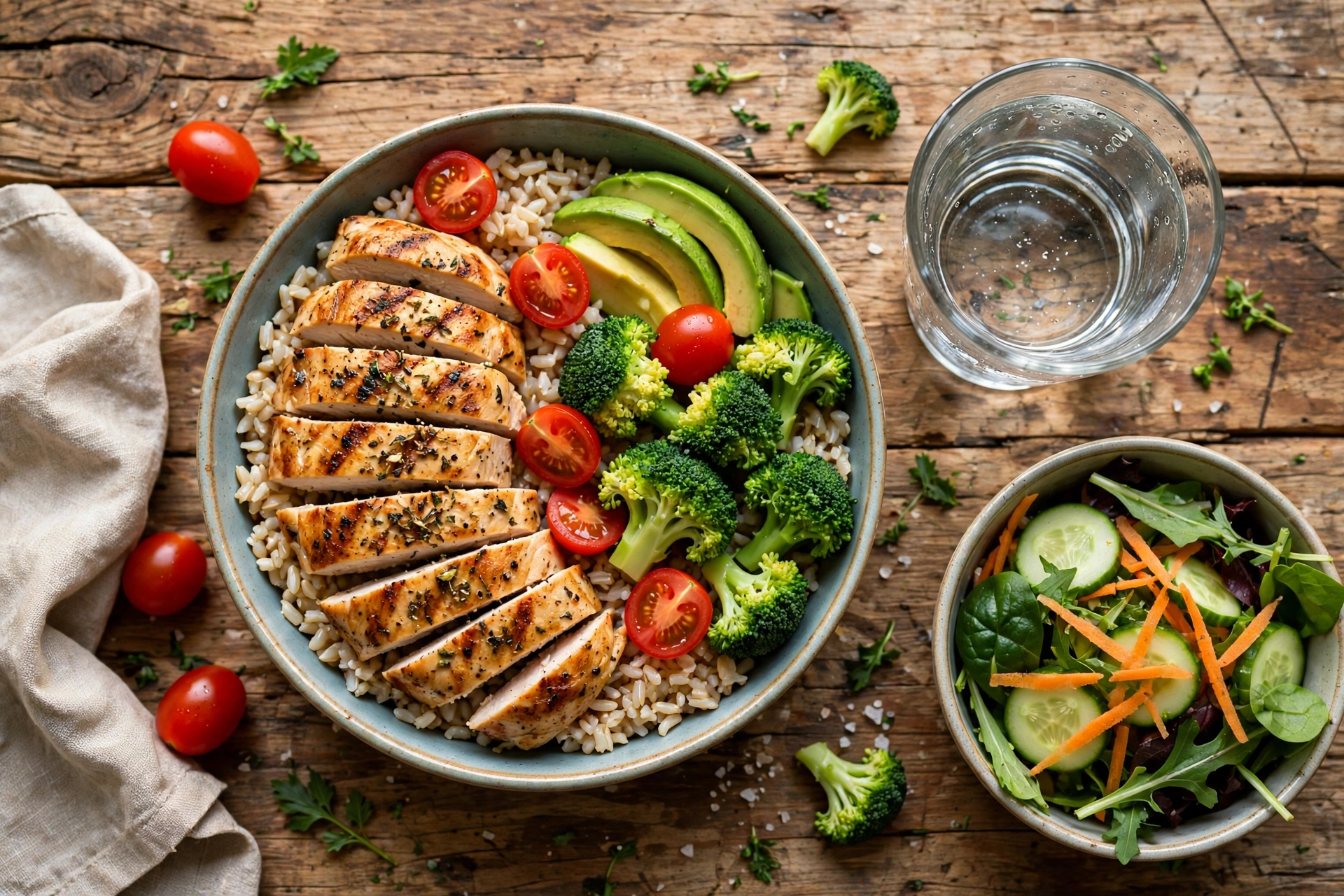
If you take only one idea from this guide, take this one. At most meals, build your plate like this:
- Half the plate: vegetables and fruit. Salad, cooked vegetables, a piece of fruit — whatever is fresh and in season where you live.
- A quarter of the plate: protein. Eggs, fish, chicken, beans, lentils, tofu or yoghurt. Protein keeps you full and protects your muscles.
- A quarter of the plate: whole grains or starchy foods. Brown rice, whole-wheat bread, oats, potatoes or sweet potatoes.
- A little healthy fat. A spoon of olive oil, some nuts, seeds or avocado.
- Water as your default drink.
That is it. No app, no kitchen scale, no maths. A plate built this way gives you fibre, protein, vitamins and steady energy, and it works whether you cook at home, eat at a canteen or order takeaway. This plate method is the easiest part of healthy eating for beginners because it needs no counting, no app and no special food.
When a meal does not look like this — a burger with fries, say — you have not failed. Healthy eating for beginners is measured across the week, not judged meal by meal. Aim to eat this way about 80% of the time and leave the other 20% for real life: birthdays, street food with friends, a slice of cake because it is Tuesday and you wanted one.
Eat Mostly Whole Foods
The single most reliable rule in nutrition is also the simplest: eat mostly foods that look close to how nature made them. Vegetables, fruit, whole grains, beans, lentils, nuts, seeds, eggs, fish and lean meat are whole foods. They are naturally filling, rich in nutrients and hard to overeat. A bowl of lentils and rice will keep you full for hours; a bag of crisps will not, even though it may hold the same calories.
Ultra-processed foods are the opposite — made in factories with long ingredient lists, lots of added sugar, salt and oil, and designed to make you want more. Biscuits, instant noodles, fizzy drinks, packaged snacks and most fast food fall into this group. Research links diets high in ultra-processed foods with weight gain and poorer health, so the goal is not to ban them forever but to make them the exception rather than the daily base. If your kitchen is stocked with whole foods, your default meals take care of themselves.
A practical test helps when you are shopping: if a food has more than five or six ingredients and you cannot pronounce half of them, it is probably ultra-processed. That does not make it poison. It just means it should not be the foundation of your day. For healthy eating for beginners, the shopping rule is simple: fill most of your trolley from the fresh produce, grains and protein aisles, not the snack aisle.
Protein and Fibre: The Two Things That Keep You Full
Ask anyone who has tried to eat healthily why they gave up, and the answer is usually hunger. They ate a salad, felt starving an hour later and decided healthy food does not work. The problem was not the salad. The problem was that the salad had almost no protein and almost no fibre.
Protein and fibre are the two most filling parts of a meal. Together they slow digestion, steady your blood sugar and cut the cravings that send you to the snack drawer at 4 pm. That is why healthy eating for beginners always starts with protein and fibre at every meal, not with a calorie target.
Good protein sources include eggs, chicken, fish, beans, lentils, chickpeas, tofu, Greek yoghurt and cottage cheese. Aim for a palm-sized portion at lunch and dinner, and something protein-rich at breakfast too — an egg, yoghurt or a handful of nuts beats a plain white-bread breakfast that leaves you hungry by 10 am. Good fibre sources include vegetables, fruit, beans, lentils, oats and whole grains. Most adults need around 25 to 30 grams of fibre a day, and most get barely half of that. Add fibre gradually, though — a sudden jump from very little to a lot can upset your stomach for a few days, so build it up over two or three weeks and drink enough water alongside it.
The Sugar-Drink Trap
If you change only one thing after reading this guide, make it this one: stop drinking your sugar. Fizzy drinks, sweetened teas, energy drinks, flavoured milk and even fruit juice carry a surprising amount of added sugar, and because they are liquid, they do not fill you up at all. A single 330 ml can of cola holds around 35 grams of sugar — about 9 teaspoons — and most people finish it in a few minutes without feeling any fuller.
The fix is almost embarrassingly easy. Swap sweet drinks for plain water first, and if plain water bores you, add lemon slices, mint or cucumber. Unsweetened tea and black coffee are fine too. Many people who practise healthy eating for beginners say cutting sweet drinks was the single change they noticed fastest. Save the sweet drinks for occasional treats instead of making them your daily hydration.
How to Read a Food Label in 30 Seconds
Food labels look complicated, but for healthy eating for beginners you only need to check four things, and it takes about half a minute:
- Serving size. The numbers on the pack are per serving, not per pack. A small bag of biscuits may list two servings, so double the sugar if you eat the whole bag.
- Added sugar. Look for sugar, syrup, honey and words ending in “-ose” in the ingredients. The lower the sugar per 100 grams, the better.
- Fibre. More fibre is usually better. A bread with 5 grams of fibre per 100 grams beats one with 1 gram.
- Salt (sodium). Many sauces, soups and ready meals are far saltier than they taste. Lower is better, especially if you eat packaged food often.
Ignore the big claims on the front of the pack — “low fat”, “natural”, “high protein” — and read the small table on the back. The front is advertising; the back is the truth. Label reading is a small skill, but for healthy eating for beginners it removes a lot of guesswork at the shop. After a few weeks of checking labels, you will know your regular products by heart and will not need to read them every time.
Healthy Eating for Beginners on a Tight Budget
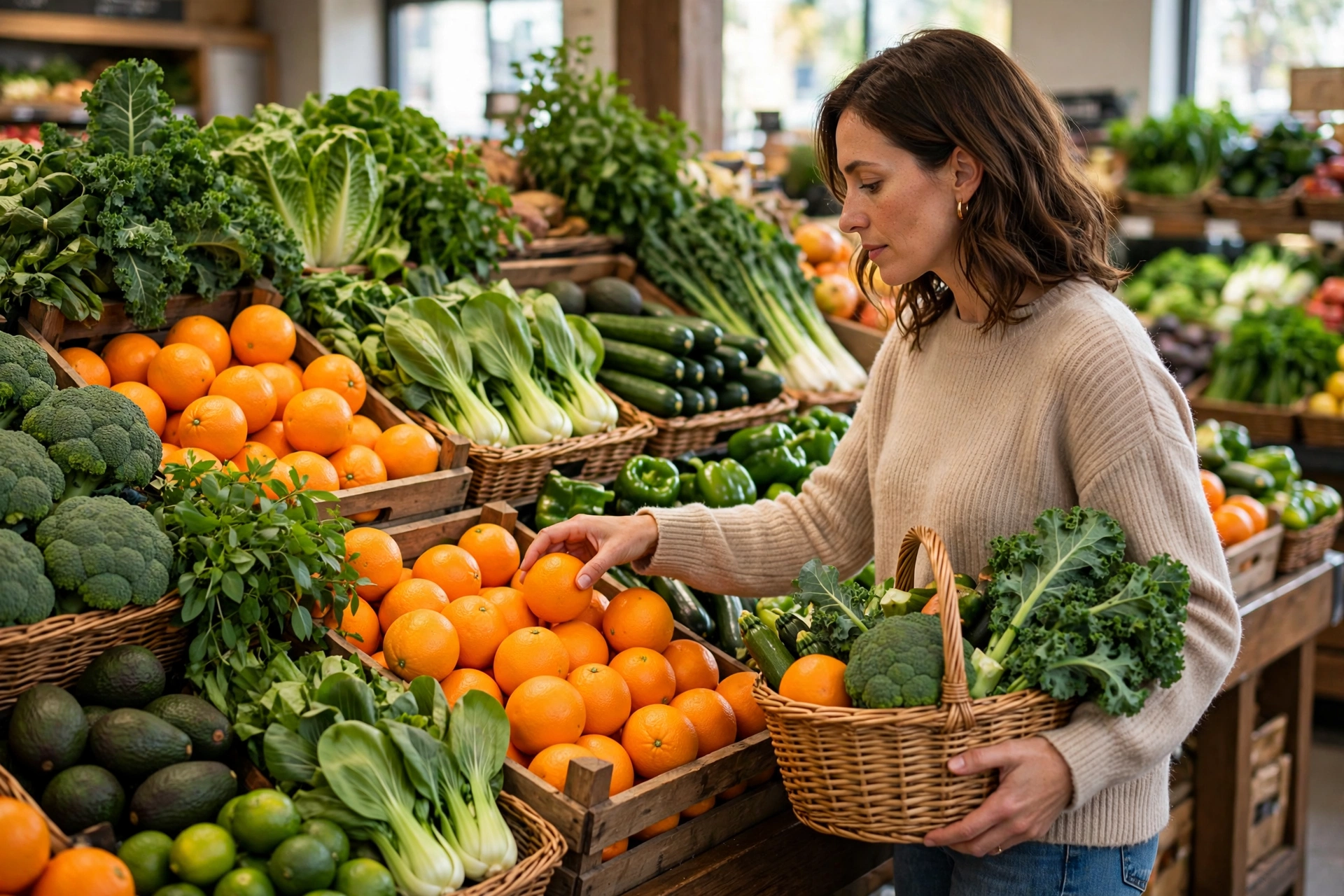
Healthy food has a reputation for being expensive, and it can be — if you buy imported superfoods, pre-cut fruit and fancy protein bars. But the cheapest healthy foods in any market are also some of the best: lentils, beans, chickpeas, eggs, seasonal vegetables, rice, oats and bananas. A bag of lentils costs very little, keeps for months and makes a dozen filling meals. Seasonal vegetables are almost always cheaper than out-of-season ones, and frozen vegetables are just as nutritious as fresh, often at half the price.
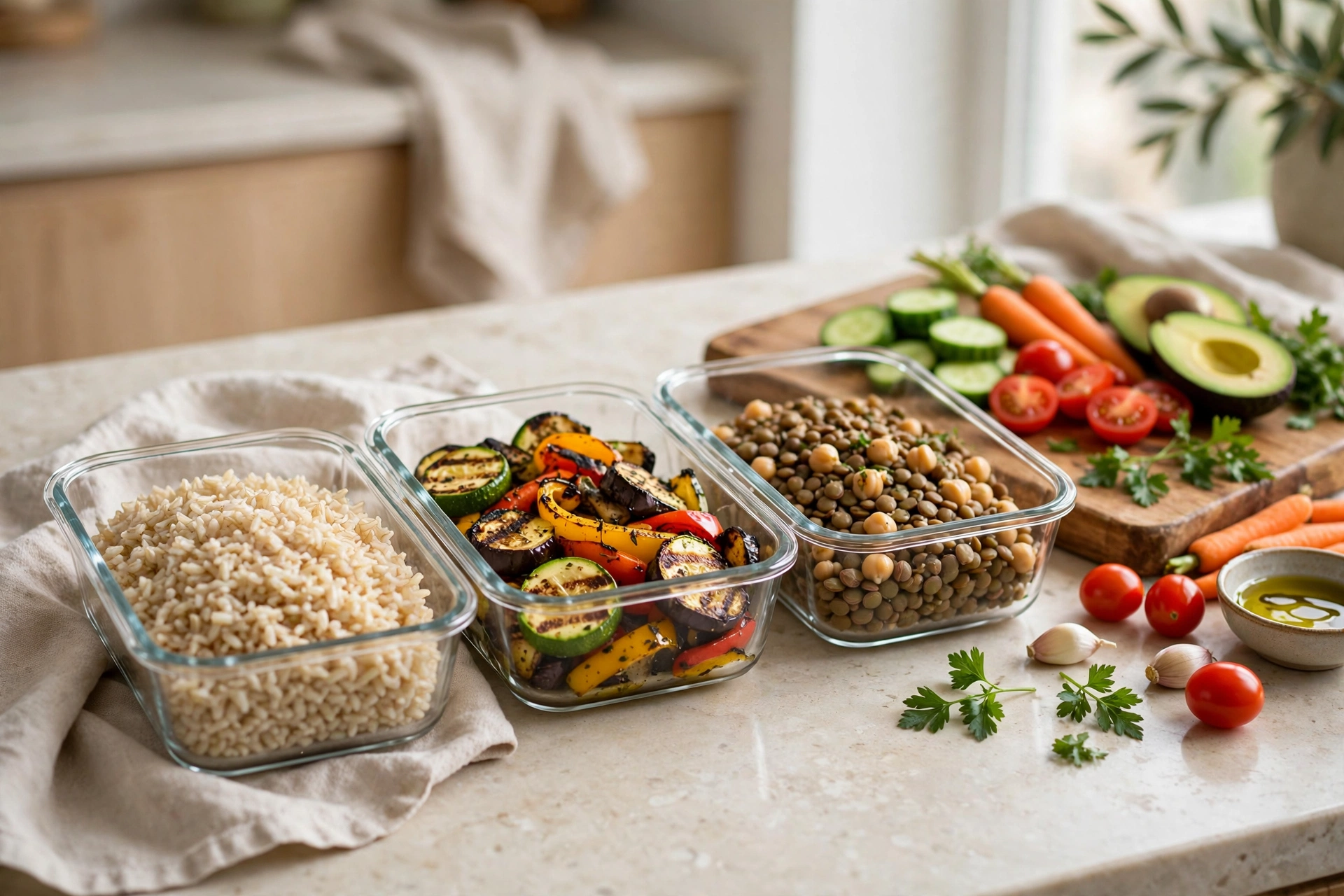
A few budget habits make healthy eating for beginners genuinely affordable. Plan three or four meals for the week before you shop, so you buy what you will actually cook. Cook in batches — a big pot of lentil curry or bean stew on Sunday covers three lunches.
With a little planning, healthy eating for beginners fits a tight budget better than daily takeaway ever will. Buy whole foods in bulk where it makes sense, and keep a short list of five or six simple meals you can cook without thinking. Takeaway twice a week costs far more than a week of home cooking, so even cooking four nights out of seven saves real money. Healthy eating is not a luxury habit; it is mostly a planning habit.
A Simple 7-Day Starter Plan
You do not need a printed meal plan to start, but having one week mapped out removes the daily “what should I eat?” struggle. Here is a starter week that uses the balanced plate at every meal. If a full week feels like a lot, remember that healthy eating for beginners is about the pattern, so even following four days of this plan is a strong start. Adjust it to your taste, your culture and what is available near you — the pattern matters, not the exact dishes.
Day 1: Breakfast — oats with banana and a boiled egg. Lunch — lentil soup with whole-wheat bread and salad. Dinner — grilled chicken, brown rice and steamed vegetables.
Day 2: Breakfast — yoghurt with fruit and a handful of nuts. Lunch — chickpea salad with cucumber, tomato and olive oil. Dinner — fish, potatoes and green beans.
Day 3: Breakfast — whole-wheat toast with eggs and tomato. Lunch — bean and vegetable stew with rice. Dinner — stir-fried vegetables with tofu and noodles.
Day 4: Breakfast — oats with apple and cinnamon. Lunch — egg sandwich on whole-wheat bread with salad. Dinner — chicken and vegetable curry with brown rice.
Day 5: Breakfast — yoghurt, oats and berries. Lunch — lentil and vegetable soup with bread. Dinner — baked fish, sweet potato and salad.
Day 6: Breakfast — eggs, toast and fruit. Lunch — chickpea and rice bowl with vegetables. Dinner — homemade vegetable pasta with beans.
Day 7: Breakfast — your favourite from the week. Lunch — leftovers, rebuilt as a balanced plate. Dinner — a meal you enjoy cooking, with a vegetable on the side.
Notice what this week does not include: no calorie counting, no banned foods, no expensive ingredients. It is ordinary food, arranged in a balanced way. If you follow a week like this and then keep the pattern going, healthy eating for beginners stops being a project and becomes simply how you eat.
5 Mistakes Beginners Make
- Changing everything on day one. A new diet, a new gym routine, no sugar, no bread, no snacks — all at once. It lasts about ten days. Change one habit a week instead. Healthy eating for beginners works when the change is small enough to survive a busy week. One habit that sticks beats ten habits that collapse.
- Skipping meals to “save” calories. Skipping breakfast usually means overeating by evening. Regular meals with protein and fibre keep hunger steady and make overeating far less likely.
- Trusting “healthy” labels. Granola bars, flavoured yoghurts and fruit juices often carry as much sugar as a dessert. Check the label, not the claim on the front.
- Eating too little protein. A salad with no protein is a snack, not a meal. Add an egg, some beans, yoghurt or chicken and the same salad suddenly keeps you full for hours.
- Treating one bad meal as failure. One pizza does not ruin a week of good eating, just as one salad does not fix a week of takeaways. Healthy eating for beginners is a pattern over months. A slip is a data point, not a defeat — note it, and eat normally at the next meal.
Healthy Eating and Exercise Go Together
Food and movement support each other, and you do not need a gym membership to get the benefit. A 10-minute walk after meals helps your body handle blood sugar better, and regular movement makes you more aware of what you eat. If you are already working on fitness, our guide on home workouts pairs naturally with this one — strength and walking plus balanced meals cover most of what a beginner needs. Read it here: Home Workout for Beginners Without Equipment
Start small: walk after lunch, take the stairs, stretch for five minutes in the morning. Movement is not a punishment for eating; it is the other half of the same healthy life. That is the same idea behind healthy eating for beginners: small, steady habits beat dramatic short-lived efforts. People who move regularly also tend to make better food choices, not because of willpower but because they feel the difference in their energy.
Frequently Asked Questions
How do I start healthy eating as a beginner?
Start with one meal you already eat regularly. Add vegetables or fruit where they are missing, include a protein source, and choose a fibre-rich carbohydrate when it is practical. Once that change feels routine, improve another meal, a snack or a drink. Healthy eating for beginners works best as a series of small upgrades, not one giant overhaul.
What should I eat every day for a healthy diet?
For healthy eating for beginners, most days aim for a variety of vegetables and fruit, a protein source at each meal, whole grains or other fibre-rich carbohydrates, some healthy fats like olive oil or nuts, and plenty of water. The World Health Organization’s healthy diet guidance gives the same basic picture worldwide, with room to adapt it to local foods and budgets. You can read the WHO fact sheet here: WHO Healthy Diet
Is healthy eating expensive?
It can be, but it does not have to be. Lentils, beans, eggs, oats, seasonal vegetables and frozen vegetables are among the cheapest foods available and also among the healthiest. Planning meals, cooking in batches and cutting back on takeaways usually saves money overall. In short, healthy eating for beginners is a planning skill, not a spending contest.
Can I still eat my favourite foods?
Yes. Healthy eating for beginners is about the overall pattern, not perfection. Keep your favourite foods in the 20% — the occasional pizza, dessert or takeaway — and build the other 80% around balanced plates and whole foods. Banning foods completely usually backfires; enjoying them sometimes keeps the whole pattern sustainable.
How long does it take to feel a difference?
Many people notice steadier energy and less bloating within two to three weeks of eating more fibre, protein and water and cutting back on sugary drinks. Weight and other bigger changes take longer — usually a few months of steady habits. For healthy eating for beginners, patience is part of the method: give any change at least a month before judging it, and judge it by how you feel, not by a single day on the scales.
Disclaimer
The content in this article is general educational information only and is not professional medical, nutritional or financial advice. Food needs vary by age, health condition, pregnancy, medication and personal circumstances. If you have diabetes, kidney disease, food allergies or any other medical condition, please speak to a doctor or a registered dietitian before changing your diet. Prices, products, rules and offers mentioned here can change over time, so please verify details from official sources before acting on them.
To learn more about the site behind this guide, visit the About Us page.