

I lost my first pretend trade in about eleven minutes. I had bought a stock I barely understood, at a price I had picked because the chart looked exciting, and I watched it slide while I told myself it would bounce back. It did not. The good news was that no real money was involved at all, because that trade happened inside a practice account. That is the whole point of paper trading for beginners: you get to make your early mistakes where they cost you nothing but pride.
Paper trading for beginners means placing simulated trades with virtual money at real market prices. The name comes from the old days, when traders wrote their trade ideas down on paper and checked later whether those ideas would have worked. Today, a simulator or demo account does the same job with live prices, order tickets, charts and a virtual balance. Nothing you win is real, and nothing you lose is real either. What is real is the skill you build through paper trading for beginners.
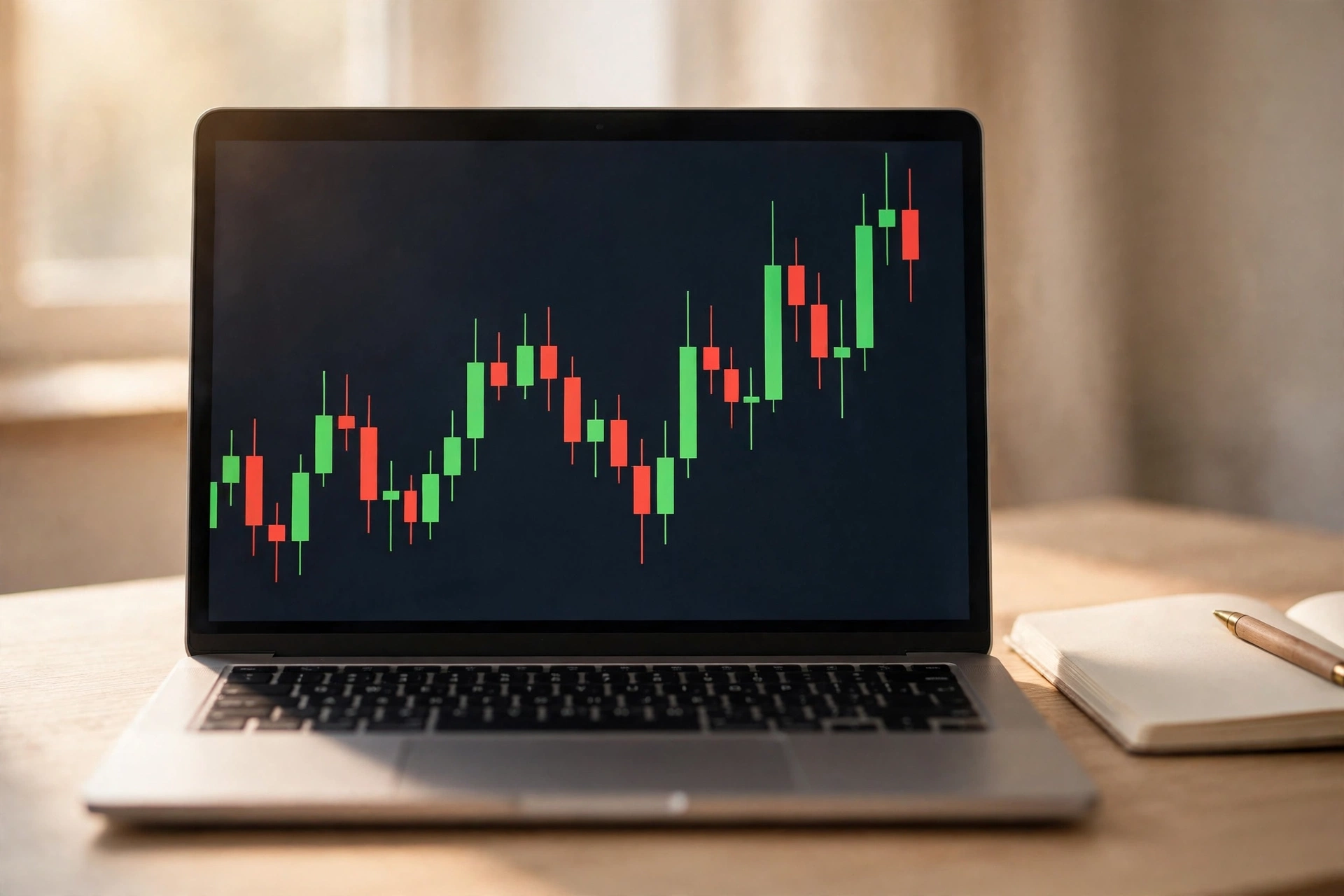
Table of Contents
What Paper Trading for Beginners Really Means
Strip away the jargon and paper trading for beginners is simple: you practise the full job of a trader, minus the financial risk. You pick a market, study a chart, decide where to enter, set a stop-loss, choose a target, place the order and then watch what happens. The platform records the result exactly as a broker would, so you learn how orders behave in a live market.
That practice covers more than clicking buy and sell. A market order fills at the current price, which can differ from the price you saw a second earlier. A limit order only fills at your price or better, so it can sit unfilled while the market runs away. A stop-loss order turns into a market order once your exit price is hit, which means fast markets can fill it worse than you expected. Reading about these differences is one thing. Watching them happen to your own simulated position is what makes them stick.
Why Paper Trading for Beginners Is Worth Your Time
The obvious benefit is protection. A beginner who jumps straight into live trading usually pays for their education with real losses, and those losses often arrive before any skill has had time to form. Paper trading for beginners moves that tuition phase to a free classroom. You can test ten ideas, lose on six of them, and still walk away with your starting capital intact.
There is a second benefit that gets less attention: it forces you to build a process. When nothing is at stake, it is tempting to trade on gut feeling and call it a strategy. A serious practice routine stops that habit early. You write your plan before you enter, you record the result after you exit, and after a few dozen trades you can see which of your ideas actually work and which ones only felt good in the moment.
None of this makes paper trading for beginners perfect, and honesty about its limits will save you trouble later. Simulated fills are usually cleaner than live fills, especially in fast or thin markets. You will not feel the same stress when a virtual position drops 8% as you will when real money does. Some beginners also pick up bad habits in practice, such as holding losing trades forever because there is no real pain in doing so. The fix is to practise with strict rules, which is exactly what the rest of this guide sets up.
How to Start Paper Trading for Beginners in 7 Steps
Follow these steps in order. Skipping ahead to live-looking trades before you have rules in place is the most common way beginners waste their practice time.
Step 1: Pick One Market and Stick With It
Choose one market for your first month of practice: stocks, forex, crypto or futures. Each market has its own hours, volatility and language, and trying to learn all of them at once just creates noise. If you already read about stocks, start there. If our earlier guides caught your interest, you could practise the same ideas you learned in futures trading, but keep the focus narrow either way.
Step 2: Choose a Simulator With Real Prices
Pick a free platform that uses live or near-live prices and supports the order types you want to learn: market, limit and stop orders at minimum. TradingView, thinkorswim and Webull all offer well-known simulators, and most brokers offer a demo account built into their normal platform. Avoid any simulator that uses delayed prices by more than a few minutes, because stale prices teach you timing that will not survive contact with a live market.
Step 3: Set a Realistic Virtual Balance
This step matters more than it looks. Many simulators hand you $100,000 or even $1,000,000 in virtual money. If you plan to start live trading with $2,000, practising with a million teaches you position sizes you will never actually use. Reset the balance, if the platform allows it, to something close to the amount you genuinely expect to deposit later. Your practice should feel like a rehearsal for your real account, not a video game with unlimited coins.
Step 4: Write Your Rules Before Your First Trade
Before you place a single order, write down four things: what setup you will trade, how much of your account you will risk per trade, where your stop-loss goes, and where you take profit. A simple starting rule is to risk no more than 1% of your virtual account on any one trade. On a $5,000 practice account, that means a maximum loss of $50 per trade. That single rule alone will teach you position sizing faster than any course.
Step 5: Place Your First Trades Slowly
Start with two or three trades in your first week, not thirty. For each one, record the ticker, entry price, position size, stop-loss, target and the reason you entered. Then let the trade play out without moving your stop further away just because you hope it will recover. Moving stops to avoid a loss is one of the first bad habits to catch in yourself, and catching it in practice is free.
Step 6: Keep a Trading Journal From Day One
Your journal is where paper trading for beginners turns into learning. A spreadsheet is enough. For every trade, note the entry, exit, result, whether you followed your rules, and one sentence about what you would do differently. After twenty trades, patterns show up that you would never spot from memory alone: maybe you lose most often when you trade in the first fifteen minutes, or you exit winners too early. Those patterns are the real payoff of paper trading for beginners.
Step 7: Review Weekly, Not After Every Trade
Checking your results once a week keeps you honest without turning every trade into an emotional event. Look at your win rate, your average win versus your average loss, and how many times you broke your own rules. A week where you followed the plan and lost a little is a better week than a week where you broke the plan and got lucky. That distinction is the difference between a trader and a gambler, and paper trading for beginners is where you learn to tell them apart.
Choosing a Paper Trading Platform
The best platform for paper trading for beginners is the one you will actually use every day, with prices and tools close to what you would use live. The table below compares the most common free options for beginners.
| Platform | Best for | What to know |
|---|---|---|
| TradingView | Chart-based practice | Browser-based paper trading built into strong charting tools |
| thinkorswim | Stocks, options and futures | The same interface as the live platform, free with an account |
| Webull | Mobile-first beginners | Clean app with a large virtual balance you should reset to a realistic size |
| Your broker’s demo account | Practising where you will trade live | Same order ticket and layout as your future real account |
Whichever you pick, spend your first session learning the platform itself: placing each order type, cancelling an order, setting an alert and reading your positions tab. That hour pays for itself many times over. SoFi’s guide to paper trading for beginners also walks through the pros and cons in plain language, and it is worth a read before you commit to one platform.
Risk Rules for Paper Trading for Beginners Worth Practising
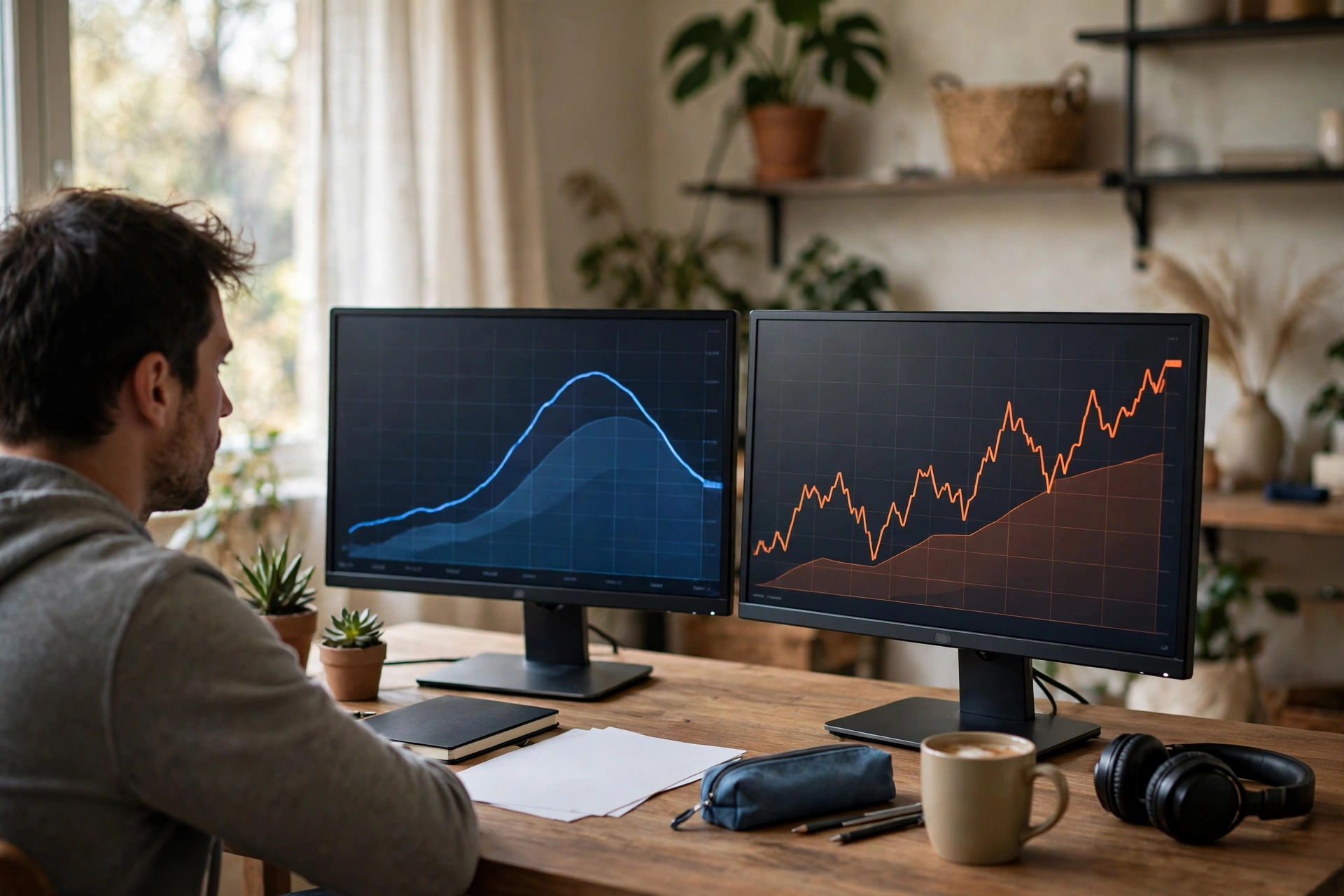
Paper trading for beginners works best when you treat the virtual money as if it were real, and that means practising risk rules until they feel boring. Risk 1% or less per trade. Never add to a losing trade to average down unless that was part of your written plan before you entered. Keep your daily loss limit: if you lose 3% of the account in one day, stop trading for the day and review instead of chasing the loss back.
Position sizing deserves a worked example, because it is where most beginners go wrong. Suppose your practice account is $5,000 and your rule is 1% risk, which is $50. You want to buy a stock at $100 with a stop-loss at $95, so your risk per share is $5. Divide $50 by $5 and you get 10 shares. That is your position. If the stop is wider, the position gets smaller. The risk stays the same. Practise that calculation on every trade until you can do it without thinking, because in live trading you will need it under pressure.
Common Mistakes in Paper Trading for Beginners That Ruin Good Practice
The first mistake is treating the simulator like a game. Oversized positions, dozens of trades a day and revenge trading after a loss all feel harmless when the money is fake, but they train exactly the habits that destroy live accounts. If you would not do it with real money, do not do it in practice either.
The second mistake is practising without a plan and then judging yourself only on profit. A lucky month proves nothing if you broke your rules to get there. Judge your practice by discipline first and profit second: did you follow the plan, did you respect your stops, did you log every trade?
The third mistake is staying in practice forever. Paper trading for beginners is a training phase, not a destination. Some beginners keep practising for years because going live feels scary, and their practice stops teaching them anything new. The next section gives you a concrete way to know when practice has done its job.
The fourth mistake is the opposite one: going live after one good week. Ten winning paper trades in a row can happen by luck, especially in a rising market. A short hot streak is not evidence of skill, and it is the most dangerous moment to increase your size.
When Are You Ready to Trade With Real Money?
Use numbers, not feelings, to make this call in paper trading for beginners. A sensible graduation checklist looks like this: at least 30 to 50 closed paper trades with a written plan for each one, a positive result over that sample after accounting for realistic fees, and at least two months of practice without a major rule break. If you cannot tick all three boxes, keep practising. There is no prize for going live early.
When you do go live, start small. Many experienced traders suggest starting with an amount you can afford to lose completely, such as $500 to $2,000, and trading the same small size you practised with. Expect your performance to dip at first: real emotions, real slippage and real hesitation all show up the moment money is real. That dip is normal, and it is why starting small matters. If your small live account survives its first two months with your rules intact, you can consider increasing size slowly, by 25% to 50% at a time, only after profitable months.
One last honest point: paper trading for beginners cannot teach you everything. It cannot reproduce the fear of a real drawdown or the temptation to move a stop when your own money is falling. What it can do is make sure that when those emotions arrive, you already know your platform, your plan and your position sizes cold. That preparation is worth weeks of practice, and it is the cheapest trading education you will ever get.

Frequently Asked Questions
Is paper trading for beginners really free?
Most simulators are free, including the paper trading modes on TradingView, thinkorswim and Webull and most broker demo accounts. You may need a free account to use them, and some features such as live data for certain markets can carry conditions, so check the platform’s terms before you rely on it.
How long should I paper trade before going live?
Count trades, not weeks. A common benchmark is 30 to 50 closed trades with a written plan, spread over at least two months, with no major rule breaks. If you reach that bar with a positive result, you have a reasonable basis for starting small with real money.
Does paper trading for beginners guarantee live trading success?
No. Paper trading for beginners builds mechanics, discipline and record-keeping, but live trading adds emotions, slippage and partial fills that simulators soften. Treat a good practice record as preparation, not as a promise, and start live trading with small size.
Can I paper trade forex, crypto and futures too?
Yes, depending on the platform. Many simulators cover stocks and ETFs, while others add forex pairs, crypto, options or futures contracts. Pick the simulator that matches the market you actually plan to trade, so your paper trading for beginners practice transfers directly.
What is the biggest paper trading mistake beginners make?
Practising with an unrealistic balance and no written rules. A million-dollar demo account with random trades teaches nothing. A realistic balance, a 1% risk rule and a journal turn the same simulator into genuine training.
Disclaimer
This article is general educational information only and is not professional or financial advice. Trading involves substantial risk, including the possible loss of your capital, and results from paper trading for beginners do not guarantee live trading results. Details such as platform features, fees, rules and offers change over time and vary by country and provider, so please verify current details from official sources before making any financial decision.
To learn more about the site behind this guide, visit the About Us page.