
Intro
Learning how to start running for beginners is simpler than most people think. You do not need to be fit already, you do not need expensive gear, and you definitely do not need to run five kilometres on day one. I have watched plenty of friends go from “I can’t even run for a bus” to finishing their first 5K in eight weeks, and every single one of them started the same way: slowly, with more walking than running, and with a plan they could actually stick to.
Running is one of the cheapest forms of exercise on the planet. A pair of shoes, a safe route, and twenty minutes are enough to begin. This guide explains how to start running for beginners step by step, so you never have to guess what to do next. The health payoff is real too: regular runners tend to have stronger hearts, better sleep, lower stress, and more energy during the day. A large long-term study of more than 55,000 adults found that runners had a 30% lower risk of death from any cause than non-runners. You do not need to chase those numbers, though. You just need to start.
Table of Contents

Why Running Is Worth Starting
Most people quit running before they ever get the good part. The first two weeks feel awkward. Your legs ache, your breathing sounds loud, and a pace that looks slow on paper still feels hard. That is normal, and it passes faster than you expect.
Here is what changes once you get past the first fortnight. Your breathing settles. The same loop that left you winded starts to feel comfortable. You sleep better on run days, and small everyday things — climbing stairs, carrying groceries, chasing a bus — get easier. That is why learning how to start running for beginners is less about talent and more about surviving the first two weeks: once the habit sticks, the fitness follows on its own.
One honest warning: running will not fix everything overnight, and it is not a shortcut to weight loss on its own. What it does, reliably, is build a habit that makes every other healthy choice easier. People who run regularly tend to eat a little better and sleep a little earlier without forcing it. That quiet knock-on effect is the real prize.
Before Your First Run: What You Actually Need
You need far less than the running shops want you to believe. That is the first lesson in how to start running for beginners: the gear list is short, and most of it you already own. Here is the short list.
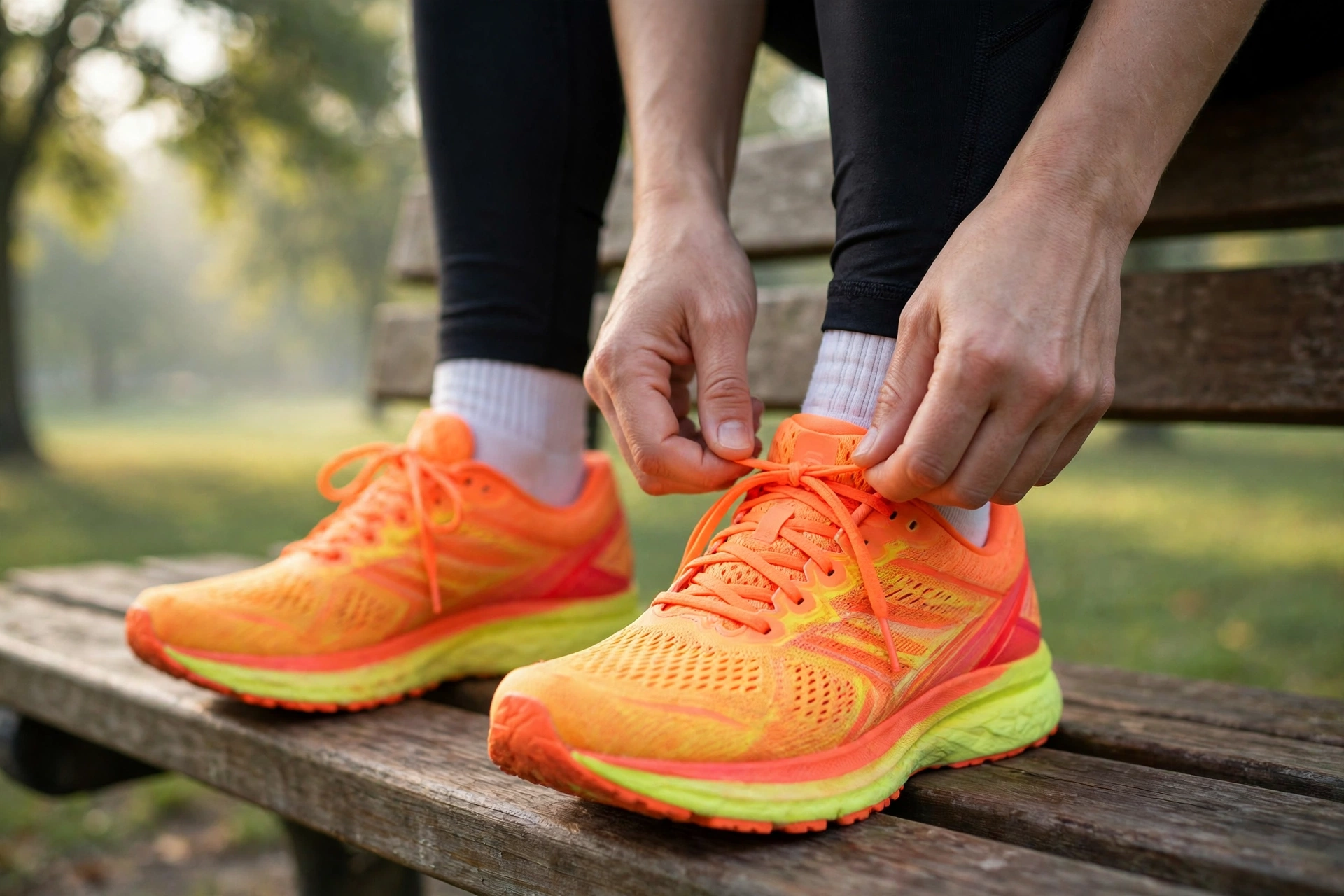
Shoes that fit. This is the one thing worth spending money on. You do not need the most expensive pair, but you do need real running shoes, not flat fashion trainers. If a local running shop offers a free gait check, take it — they watch you walk and jog for a minute and suggest shoes that suit your feet. Expect to pay for comfort, not for a brand name.
Comfortable clothes. Any breathable t-shirt and shorts or leggings will do. Avoid heavy cotton, which soaks up sweat and gets cold and heavy. In winter, a thin jacket and gloves are enough for most people; you warm up fast once you start moving.
A safe route. Pick somewhere flat, well-lit, and away from heavy traffic for your first runs. A park path, a quiet neighbourhood loop, or a treadmill all work. Measure a loop of about 2 kilometres so you always know roughly how far you have gone.
A way to track time. Your phone timer is enough. A free running app is handy later, but do not let setting one up delay your first run by a week.
A quick health check, if it applies to you. Most healthy adults can start a gentle run-walk programme without a doctor’s visit. But if you have a heart condition, chest pain you have not had checked, diabetes you are unsure how to manage around exercise, or you have been completely inactive for a long time, talk to your doctor first. The CDC’s physical activity guidance for adults is a useful reference for how much weekly activity to aim for once you are moving regularly.
How to Start Running for Beginners with the Run-Walk Method
The run-walk method is the single best way to learn how to start running for beginners, and it is how almost every coach starts a brand-new runner. You alternate short bursts of running with walking, then gradually shift the balance until you are running the whole time. It works because it builds your fitness without hammering your joints, and because it keeps every session finishable — which is what keeps you coming back. If you remember one thing about how to start running for beginners, make it this: walk breaks are part of the training, not a sign that it is not working.
Here is your first session, step by step:
- Walk briskly for 5 minutes to warm up.
- Run slowly for 1 minute, then walk for 2 minutes.
- Repeat that run-walk cycle 6 times.
- Walk for 5 minutes to cool down.
That is about 28 minutes in total, with only 6 minutes of actual running. It will feel easy, and that is the point. If even 1 minute of running feels too hard, drop it to 30 seconds of running and 90 seconds of walking. There is no prize for suffering in week one.
Do three sessions a week, with at least one rest day between them. Running every other day is the sweet spot for beginners: your body adapts and gets stronger on the rest days, not during the run itself. This rhythm is a core part of how to start running for beginners without getting injured, and it is worth protecting even when you feel keen to do more.
Your First 8-Week Running Plan
This plan takes you from your first run-walk session to 30 minutes of continuous running in eight weeks. It assumes three sessions a week. If you miss a session, just do it the next day — do not try to cram two sessions into one day to catch up. A steady, patient approach is the whole secret of how to start running for beginners and actually keep going past the first month.
| Week | Run | Walk | Repeat | Total time |
|---|---|---|---|---|
| Week 1 | 1 min | 2 min | 6 times | ~28 min |
| Week 2 | 2 min | 2 min | 5 times | ~30 min |
| Week 3 | 3 min | 2 min | 5 times | ~30 min |
| Week 4 | 5 min | 2 min | 4 times | ~33 min |
| Week 5 | 8 min | 2 min | 3 times | ~35 min |
| Week 6 | 10 min | 1 min | 3 times | ~38 min |
| Week 7 | 15 min | 1 min | 2 times | ~37 min |
| Week 8 | 30 min continuous | — | — | 30 min |
Two rules govern the whole plan. First, the 10% rule: never increase your total weekly running time by more than about 10% in a single week. Your heart and lungs improve faster than your tendons and bones, and the 10% rule is what keeps the slow parts safe. It is one of the most overlooked details of how to start running for beginners, because it feels too cautious — until the week you skip it and your knees remind you. Second, if a week feels hard, repeat it. Repeating a week is not failure — it is the plan working. Plenty of runners repeat week 4 twice and still finish week 8 on schedule.
How Fast Should You Run?
Slower than you think. This is the mistake nearly every beginner makes, and it is the reason so many people quit in week two. Anyone learning how to start running for beginners should treat pace as the last thing to worry about, not the first. Your easy running pace should feel comfortable enough that you can talk in full sentences while you run. If you can only gasp out a few words, you are going too fast — no matter how slow the pace looks on your watch.
Forget about speed entirely for the first eight weeks. There will be plenty of time for faster running later. Right now, the only pace that matters is the one you can hold while breathing through your nose or chatting with a running partner. Patience with pace is an underrated part of how to start running for beginners, because the runners who slow down early are the ones still running a year later.
A useful test: if you finish a run and feel like you could have kept going for another ten minutes, you ran at the right pace. If you finish a run feeling destroyed, you ran too hard. Easy running builds the aerobic base that makes everything else possible.
How to Breathe While Running
Breathing feels strange at first, and beginners worry about it far more than they need to. There is no single “correct” breathing technique, but a simple rhythm helps: breathe in for three steps, breathe out for two steps. In-in-in, out-out. This gives your lungs a steady pattern to follow and stops you from holding your breath without noticing. Getting your breathing settled is a small but real milestone when you are learning how to start running for beginners.
Breathe through your mouth and nose together, not just your nose — you need the extra air, especially on warm days. If you get a stitch (that sharp pain under your ribs), slow to a walk, press gently on the sore spot, and breathe out slowly as the foot on the opposite side hits the ground. Stitches are common in beginners and they fade as your core gets stronger.
One more practical tip: do not eat a heavy meal in the two hours before a run. A small snack like half a banana or a slice of toast an hour beforehand is plenty. Drink a glass of water 30 to 60 minutes before you head out, and take a few sips after you finish.
7 Common Beginner Mistakes to Avoid
I made at least four of these myself, so consider this the shortcut I wish someone had handed me. Most guides on how to start running for beginners list the gear and the plan but skip the mistakes, and the mistakes are what actually end most beginners’ running before week four.
- Doing too much, too soon. The classic beginner error. Your enthusiasm in week one is real, but your tendons need six to eight weeks to catch up with your motivation. Follow the plan, even when it feels too easy.
- Running every day. Rest days are when your body rebuilds stronger. Beginners need at least one full rest day between runs, and two rest days a week is even better in the first month.
- Skipping the warm-up. Five minutes of brisk walking before you run, and five minutes of easy walking after, cuts your injury risk and makes the run itself feel easier. It is the cheapest insurance in running.
- Wearing the wrong shoes. Old flat trainers or worn-out shoes with no cushioning are a fast route to sore knees and shin splints. If your shoes have done more than 500 kilometres, or they are older than a year of regular use, it is time for a new pair.
- Comparing yourself to others. Someone will always be faster. The runner you passed on your first loop might be on their twentieth year of running. Your only comparison is with last week’s version of you.
- Ignoring pain. Soreness that fades in a day or two is normal. Sharp pain, pain that changes how you walk, or pain in the same spot every run is not normal — back off, walk instead, and get it checked if it does not settle in a few days.
- Running the same route every time. Your body adapts to variety. Mix in a park path, a gentle hill, or a treadmill session once a week. It keeps your legs stronger and your brain less bored.
Staying Motivated When It Gets Hard
Motivation is unreliable, so build systems instead. That is the honest truth about how to start running for beginners and stay with it: willpower fades, but a laid-out pair of shoes and a fixed time slot do not. Lay your running clothes out the night before, so the morning decision is already made. Run at the same time on the same days, so it becomes a slot in your week rather than a daily negotiation with yourself.
A running partner helps enormously — even a virtual one. Tell a friend your plan, or join a local beginners’ running group. The NHS Couch to 5K programme, which follows the same run-walk idea as this guide, has helped millions of people go from the sofa to 5K, and its structure is a good backup if you want an app to follow instead of a printed plan.
Track your progress in the simplest way possible: write down each run’s time and how it felt. Watching “run 1 minute” become “run 15 minutes” over seven weeks is genuinely motivating, and it is proof that the plan works even on the days when it does not feel like it. This simple log is also the easiest way to see how to start running for beginners turns into a real habit: the numbers quietly prove you are improving.
And if you miss a week — because of illness, weather, or life — do not quit. Just pick up where you left off, or drop back one week in the plan. A missed week is a pause, not a failure. The runners who succeed are not the ones who never miss a day; they are the ones who come back after missing one.
If you want a low-impact way to build leg strength between runs, a simple home workout routine pairs well with this plan. I have written a beginner guide to home workouts without equipment that works well on rest days.
When to See a Doctor Before Running
Most people can start a gentle running programme safely, but get medical advice first if any of these apply to you: a known heart condition, chest pain during exertion, unexplained dizziness or fainting, severe asthma, joint problems that limit walking, or a long period of complete inactivity combined with other health conditions. A quick check costs little and removes a worry that could otherwise sit in the back of your mind on every run.

Frequently Asked Questions
How long does it take a beginner to run 5K?
Most beginners reach 5K in 8 to 12 weeks with three sessions a week. If you follow the run-walk plan in this guide, 30 minutes of continuous running at week 8 usually covers about 4 to 5 kilometres, so a full 5K is only a week or two further on. That timeline is realistic for most people learning how to start running for beginners from zero.
How many days a week should a beginner run?
Three days a week is the sweet spot. Run every other day with rest days in between, and add a fourth day only after a month of comfortable three-day weeks. This schedule is the safest answer to how often anyone learning how to start running for beginners should train. Rest days are part of the training, not a break from it.
Is it OK to walk during a run as a beginner?
Yes — walking is part of the plan, not a failure. The run-walk method deliberately mixes walking and running, and even experienced runners take walk breaks on long runs. Walk whenever you need to, especially in the first month. Anyone working out how to start running for beginners should treat walking as a tool, not a weakness.
What should I eat before my first run?
Keep it light. A small snack like half a banana, a slice of toast, or a handful of dates about an hour before you run is enough. Avoid heavy, fatty or very spicy food in the two hours before a run, and drink a glass of water 30 to 60 minutes beforehand.
Do I need special shoes to start running?
You need proper running shoes, but not the most expensive pair. Comfortable running shoes with decent cushioning, fitted at a shop if possible, are the one purchase that genuinely matters. Shoes are the first thing most people ask about when learning how to start running for beginners, and the answer is simple: fit and comfort beat price and brand every time. Avoid flat fashion trainers, which offer no support for repeated impact.
Disclaimer
The information in this article is general educational information only. It is not medical, professional, or financial advice. Running advice, training plans, and health claims in this article are general guidance for healthy adults; individual needs vary, and details such as prices, rules, offers, and medical recommendations change over time. Please verify important details from official sources and consult a qualified professional before starting a new exercise programme, especially if you have a health condition.
To learn more about the site behind this guide, visit the About Us page.