
You probably used artificial intelligence changing our world before you finished your first cup of coffee this morning. Your phone recognized your face, your news feed already knew what you like to read, and your navigation app quietly picked the fastest route to work. None of it felt like science fiction. That is exactly the point: artificial intelligence changing our world is not some distant future event. It is already woven into ordinary days, and it is reshaping how we work, learn, stay healthy, and spend our money.
I am not going to pretend this is all good news or all bad news. The honest picture sits in the middle. Artificial intelligence changing our world brings real benefits — faster medical diagnoses, cheaper learning, small businesses that can compete with big ones — and real problems, from job disruption to deepfakes. This guide walks through both sides with plain examples, so you can form your own opinion instead of borrowing someone else’s hype or fear.
Table of Contents

What Artificial Intelligence Changing Our World Really Means
Strip away the buzzwords and artificial intelligence is simply software that learns from data and then makes predictions or decisions. A spam filter learns what junk mail looks like. A recommendation engine learns what videos keep you watching. A medical tool learns what a diseased scan looks like compared to a healthy one. The “intelligence” is pattern recognition at a scale no human could manage by hand.
There are two ideas worth keeping separate. Narrow AI does one job well — translating languages, recognizing faces, predicting traffic. General AI that matches a human across every task does not exist yet, whatever headlines suggest. Almost everything you meet in daily life is narrow AI, and that is plenty powerful on its own. When people talk about artificial intelligence changing our world, they are almost always talking about thousands of narrow tools adding up to a big shift.
Artificial Intelligence Changing Our World in Daily Life
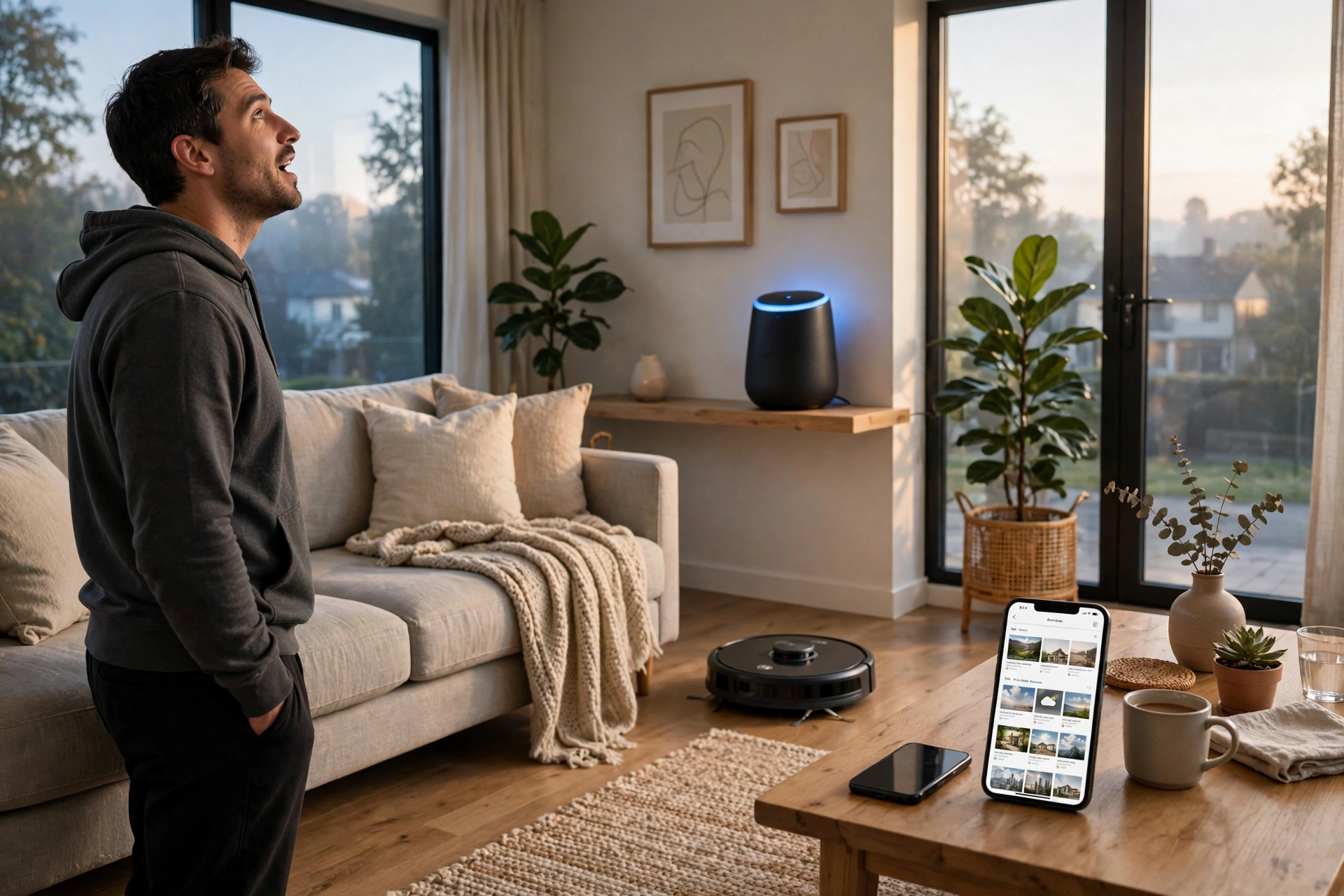
Start with your morning. Your alarm app learned when you actually wake up. Your email sorted itself. Your smart speaker answered a question about the weather. Your bank’s fraud system checked your card payment in a fraction of a second and decided it was really you. Each of those moments is small. Together, they are a new kind of infrastructure — invisible, always on, and increasingly hard to opt out of.
Entertainment shows the same pattern. Streaming services do not guess what you might like; they study what millions of people watched, skipped, and rewatched, then build a feed tuned to you. That is artificial intelligence changing our world at its most ordinary — and its most powerful. Online stores do the same with products. This personalization is convenient, and it is also why two people searching for the same thing often see different results. Artificial intelligence changing our world means your digital experience is increasingly tailored — for better and for worse.
The home is changing too. Smart thermostats learn your schedule and cut heating bills by 10 to 15 percent in many households. Robot vacuums map your rooms. Voice assistants set timers, control lights, and order groceries. None of these devices is revolutionary alone. Put together, they turn the average house into something that manages itself in small ways, freeing up time that used to go to chores.
How Work Is Being Reshaped
If you work in an office, you have probably already felt this shift. Artificial intelligence changing our world shows up in draft emails, meeting summaries, spreadsheets that clean themselves, and customer-service chatbots that answer routine questions at 2 a.m. A 2024 industry survey found that workers using AI assistants for writing and research tasks finished them noticeably faster, often in roughly half the time of manual work. The boring parts of jobs are getting automated first.
That does not mean every job disappears. In short, artificial intelligence changing our world is less about robots taking jobs and more about the job description quietly changing under your feet. History is useful here: ATMs did not kill bank tellers; they changed what tellers did, pushing them toward advice and sales. The same pattern is playing out now. Roles built entirely on repetitive data entry are shrinking, while roles that mix human judgment with AI tools are growing — think nurses using diagnostic support, teachers using personalized lesson plans, or small shop owners using AI to write product descriptions and answer customers.
There is a catch, and it deserves honesty. PwC research estimates AI could add $15.7 trillion to the global economy by 2030. The transition is painful for people whose skills become less valuable faster than they can retrain. The World Economic Forum has estimated that AI will displace tens of millions of roles while creating even more new ones, but the people losing jobs and the people gaining them are often not the same people, and retraining takes time and money. Any guide that skips this part is selling you something.
Healthcare: Where the Stakes Are Highest
Few areas show artificial intelligence changing our world more clearly than medicine. AI systems now read X-rays, MRIs, and eye scans, sometimes spotting early signs of disease — diabetic eye damage, certain cancers, skin lesions — that a tired human eye might miss. In drug discovery, AI models screen millions of chemical compounds in weeks, work that once took years of lab time. Hospitals use predictive tools to flag patients at risk of complications before they worsen.
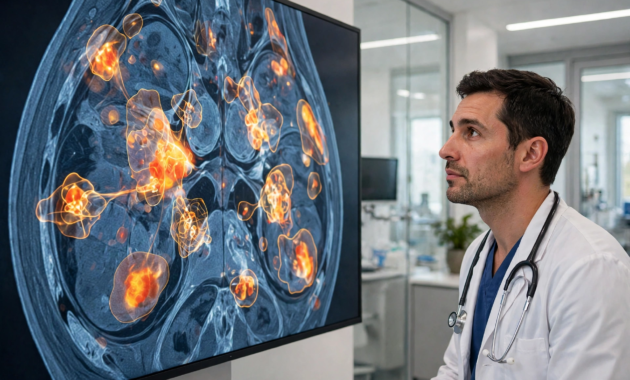
Wearables bring this closer to home. That is artificial intelligence changing our world where it matters most: catching problems early, when treatment works best. A smartwatch that warns about an irregular heartbeat is a small AI model running on your wrist. Sleep apps analyze your rest patterns. None of this replaces doctors. The best results come when AI handles the pattern-spotting and humans handle the judgment, the conversation, and the care. Be skeptical of any app that claims to diagnose you on its own — real medical AI works inside clinics, with trained professionals, under regulation.
Learning and Education Get Personal
Education may be the quietest revolution of all. Artificial intelligence changing our world means a student in a small town can now get a personal tutor at midnight: an AI tutor that explains algebra step by step, adjusts to the student’s pace, and never gets impatient. Language learners get instant pronunciation feedback. Teachers use AI to grade routine work faster and spend class time on discussion instead of paperwork.
This is genuinely good news for access. A quality tutor used to be expensive and scarce. Now the basics of tutoring are close to free. The risk is different: students who let AI do their homework learn nothing, and schools are still figuring out where the line sits. The students who benefit most are the ones who use AI as a coach — asking it to explain, quiz, and challenge them — not as a shortcut to finished answers.
Business, Money, and Small Sellers
For businesses, artificial intelligence changing our world is mostly about cost and reach. A one-person online store can now write product listings, translate them into three languages, answer customer questions around the clock, and run ads targeted to likely buyers — tasks that once needed a team. Banks use AI to approve loans faster and catch fraud in real time. Farmers use AI tools to predict weather windows and spot crop disease from phone photos.
The flip side is competition. When everyone can produce decent content and ads cheaply, standing out gets harder, not easier. The winners tend to be businesses that use AI for the routine work and spend their saved time on things AI cannot fake: real product quality, honest customer service, and trust. If you run a small business, that is the practical takeaway — automate the repetitive, stay human where it counts.
The Risks Nobody Should Ignore
A balanced guide has to name the problems plainly. First, bias: AI learns from historical data, and historical data carries human prejudices. Hiring tools trained on past hiring data have screened out qualified women; facial recognition has performed worse on darker skin tones. Second, misinformation: AI can now generate realistic fake videos and articles at scale, making it harder to trust what you see online. Third, privacy: personalization runs on your data, and every convenience you accept hands over a little more of it.
Fourth, dependence. None of this means artificial intelligence changing our world should be stopped — it means it should be steered. When navigation, translation, and writing all come from machines, the skills behind them can fade. That is not a reason to reject the tools — it is a reason to keep practicing judgment yourself. Check the AI’s answer before you forward it. Verify a medical claim with a real doctor. Treat AI output as a strong first draft, never as a final verdict.
What Comes Next
So where is artificial intelligence changing our world headed in the next few years? Immersive technologies are part of the same story — see our beginner’s guide to augmented reality vs virtual reality. Expect AI to fade further into the background: built into cars, appliances, classrooms, and clinics rather than announced as a feature. Expect more regulation — rules about labeling AI-generated content, protecting personal data, and testing high-risk systems like hiring and lending tools. Expect the job market to keep rewarding people who can work with AI rather than against it: prompt skills, data literacy, and the ability to check machine output critically.
My own view is simple. Whatever happens, artificial intelligence changing our world will reward the people who stay curious and keep checking the machine’s work. Artificial intelligence changing our world is neither a savior nor a villain; it is a tool, and tools amplify whoever holds them. Used lazily, it spreads errors and laziness at scale. Used carefully, it gives ordinary people capabilities that once belonged only to experts and big companies. The difference is not in the technology. It is in how deliberately we use it.
Frequently Asked Questions
Will artificial intelligence changing our world take my job?
It may change your job more than erase it. Roles built on repetitive tasks face the most pressure, while roles mixing human judgment with AI tools are growing. Learning to use AI tools in your own field is the most practical protection available today.
Is AI safe to use for health questions?
Use it for general learning, not diagnosis. AI can explain conditions and help you prepare questions for your doctor, but real diagnosis needs trained professionals and proper testing. Never trust an app that claims to diagnose you alone.
Do I need technical skills to benefit from AI?
No. Most useful AI tools are built for ordinary users — chatbots, writing assistants, translation apps, and photo tools need no coding. The valuable skill is judgment: knowing when to trust the output and when to double-check it.
Is my personal data safe with AI tools?
It depends on the tool. Free services often fund themselves with your data, so read the privacy settings before sharing sensitive information. Avoid pasting passwords, financial details, or private documents into public AI tools.
Will AI keep getting more powerful?
Almost certainly, but progress is uneven. Some capabilities improve fast, others stall for years. The safest assumption is steady improvement with occasional surprises — which is why learning to adapt matters more than predicting the exact future.
Disclaimer
This article is general educational information only and is not professional, medical, financial, or legal advice. Details such as statistics, rules, tools, and offers change over time and vary by country and provider, so please verify important decisions from official sources or a qualified professional before acting on them.
To learn more about the site behind this guide, visit the About Us page.