
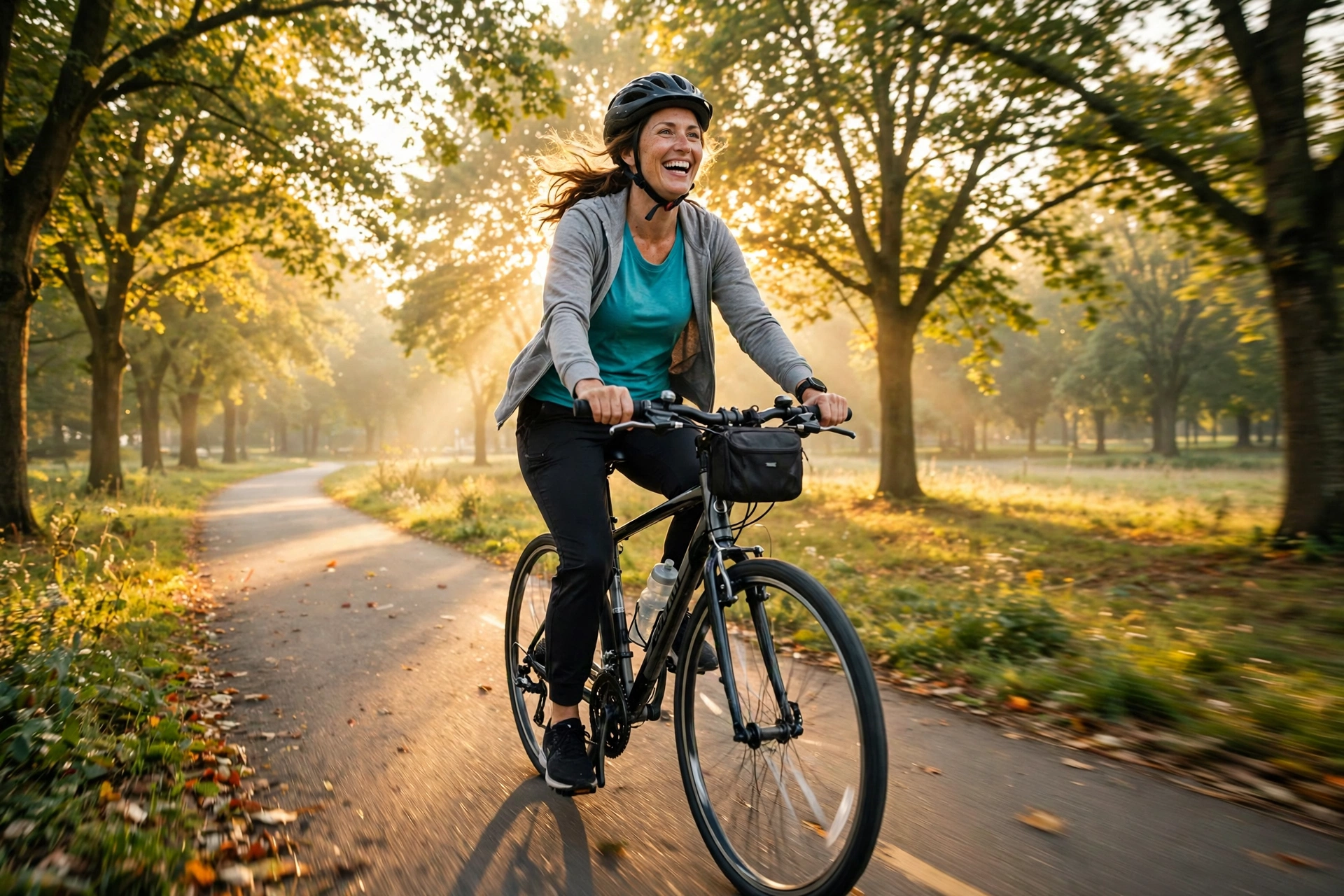
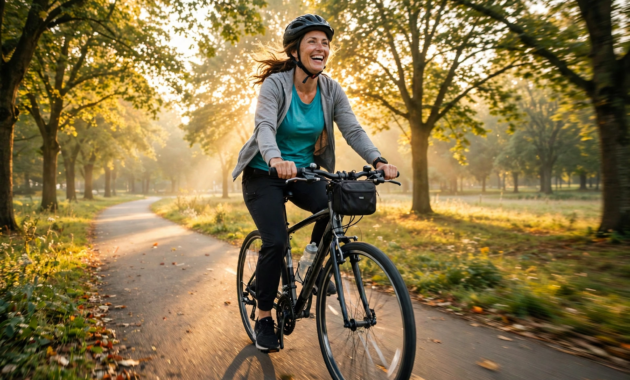
I still remember my first proper ride as an adult. I had borrowed an old hybrid bike from a friend, the tyres were a little soft, and I wobbled down my street like a teenager learning all over again. Twenty minutes later I was back home, legs burning, grinning like an idiot. That short, shaky ride turned into a habit that now gets me outside three or four times a week, and it cost me almost nothing to begin.
If you are wondering how to start cycling for beginners, the honest answer is simpler than most guides make it sound. You do not need a carbon frame, tight Lycra, or a power meter. You need a bike that fits, a helmet, a safe place to ride, and a plan that builds up slowly enough that you actually enjoy it. This guide walks through all four, step by step, so your first month on a bike feels like a win instead of a chore. The first thing to understand about how to start cycling for beginners is that the learning curve is short, and the rewards start on day one.
Table of Contents

How to Start Cycling for Beginners: The Basics
Cycling is one of the friendliest ways to get fit. It is low impact, so your knees and ankles take far less punishment than running, and you can control the effort precisely — coast when you are tired, pedal harder when you feel strong. The World Health Organization recommends 150 to 300 minutes of moderate activity a week for adults, and three relaxed rides of 30 to 45 minutes already cover most of that.
The other thing nobody tells you early enough: cycling is a skill as much as a workout. Balance, braking, changing gears, looking over your shoulder — all of it feels awkward for the first week and automatic by the fourth. That is normal. Every confident cyclist you see was once the person wobbling at a junction, so give yourself permission to be clumsy at the start. A big part of how to start cycling for beginners is accepting that the wobbles are temporary — most riders feel steady within a week.
Before you spend a single rupee or dollar, answer three questions. Where will you ride — smooth roads, gravel paths, or a mix? How far do you realistically want to go in your first month — 5 kilometres or 50? And what do you already own — is there a bike sitting in a garage right now? Your answers decide almost everything that follows, and they stop you from buying the wrong bike for the wrong job. That is why how to start cycling for beginners always begins with an honest look at where and how you will actually ride.
Choose the Right Bike
The bike matters, but not in the way bike shops sometimes suggest. For a beginner, comfort and fit beat speed and brand every single time. A bike you enjoy riding gets ridden. A fast bike that hurts your back ends up gathering dust.
Use the Bike You Already Have
If you own any working bike, start with it. Honestly. Pump the tyres, oil the chain, check the brakes, and ride it for two weeks. Those two weeks will teach you more about what you actually want than ten hours of online research. Many people discover they love cycling on a ten-year-old bike and only upgrade once they know which kind of riding they enjoy. If you are working out how to start cycling for beginners on a tight budget, this is the smartest possible start.
Hybrid Bikes: The Best Default Choice
If you are buying your first bike, a hybrid is usually the smartest pick. Hybrids mix the upright, comfortable position of a city bike with the lighter frame and gears of a road bike. They handle paved roads, park paths and light gravel without complaint, and they are normally the cheapest sensible option. For most people learning how to start cycling for beginners, a hybrid is where the search should begin and often where it ends.
Road Bikes: Fast, But Not for Everyone
Road bikes are built for speed on smooth tarmac. They have drop handlebars, narrow tyres and a leaned-forward position that feels aggressive if you are not used to it. They are wonderful once you are hooked and riding 40 kilometres or more, but they are a poor first bike for someone who mostly wants relaxed rides around the neighbourhood. Buy one later, when you know you want the speed. For now, if your idea of how to start cycling for beginners involves relaxed weekend rides, a road bike will only make things harder.
Mountain Bikes: Only If Your Trails Demand Them
Mountain bikes are made for rough ground — roots, rocks, steep dirt tracks. Their wide tyres and suspension are brilliant off-road and sluggish on tarmac. If your local riding is mostly trails, they make sense. If your local riding is mostly roads and park paths, a mountain bike will feel heavy and slow, and you will work harder than you need to for every kilometre. So unless your trails demand it, keep mountain bikes out of your early plans for how to start cycling for beginners.
What Size Bike Do You Need?
Size matters more than brand. A bike that is too big or too small will hurt your knees, your back, or both, and it will quietly kill your motivation. Stand over the frame: on a hybrid or road bike you should have roughly 2 to 5 centimetres of clearance between yourself and the top tube. When you sit on the saddle with your heel on the pedal at its lowest point, your leg should be almost straight, with just a slight bend in the knee.
If you are between sizes, the smaller frame is usually the safer choice — you can raise the saddle and handlebars, but you cannot shrink a frame. Getting the size right is one of the least glamorous parts of how to start cycling for beginners, and one of the most important.
Essential Gear (and What You Can Skip)
You need less gear than the internet wants you to believe. Here is the honest list: the things that keep you safe, and the things that keep you comfortable. Everything else can wait until you are riding regularly. This short list covers everything you truly need when you are learning how to start cycling for beginners.
A Helmet Is Non-Negotiable
Buy a helmet before your first ride, and wear it every single time. It should sit level on your head, low on your forehead — about two finger-widths above your eyebrows — with the straps forming a V under your ears and the chin strap snug enough that only one finger fits underneath. Replace a helmet after any crash, even if it looks fine, because the foam inside can crack invisibly. The very first purchase in how to start cycling for beginners should always be a helmet, before anything else.
Lights: Front and Rear
If there is any chance you will ride near traffic or in low light, fit lights. A white front light and a red rear light are cheap, and many riders run the rear light in daylight too, purely for visibility. Drivers notice a flashing red light long before they notice a cyclist in a grey jacket. Lights are cheap insurance, and they belong on every bike used while learning how to start cycling for beginners.
A Water Bottle and Cage
Even a 30-minute ride makes you sweat. A bottle cage on the frame costs very little and means you always have water within reach. On hot days, take two bottles, or plan a route that passes a shop where you can refill. Staying hydrated is a small detail that makes a real difference when you are learning how to start cycling for beginners.
Padded Shorts: Worth It Sooner Than You Think
Your sit bones will complain during the first few rides — that is normal, and it fades within a couple of weeks as your body adapts. Padded cycling shorts genuinely help during that adjustment period. You do not need the expensive ones. A basic pair under normal shorts works fine, and nobody on a park path cares what you are wearing. Comfort matters more than style when you are figuring out how to start cycling for beginners.
What You Can Skip for Now
Clip-in pedals, cycling shoes, a heart-rate monitor, a GPS computer, a full tool kit, a jersey with back pockets — all of it can wait. Ride in trainers on flat pedals for your first month. Once you are riding three times a week and want to go further, then start adding gear one piece at a time. Keeping it simple is the whole secret of how to start cycling for beginners without wasting money. The single best upgrade for most beginners is not gear at all: it is a basic bike fit, or simply raising the saddle to the right height.
Set Up Your Bike to Fit You
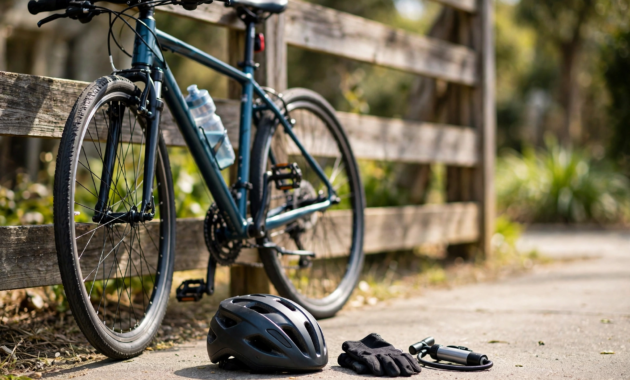
A badly fitted bike turns a pleasant ride into a sore back and aching knees, so spend twenty minutes on this before your first proper ride. Saddle height is the single biggest factor. Sit on the bike, put your heel on the pedal at its lowest point, and check that your leg is straight with your hips level. Then, when you pedal normally with the ball of your foot, your knee should keep a slight bend — around 25 to 30 degrees. If your hips rock side to side as you pedal, the saddle is too high. If your knees feel cramped and sore, it is too low.
Next, check the saddle position. It should be roughly level, not tilted up or down. A saddle tilted nose-up presses where it should not; a saddle tilted nose-down slides you forward onto your arms. Small adjustments make a big difference, so move it a few millimetres at a time and test it on a short ride. Patience here pays off: a comfortable bike is what turns learning how to start cycling for beginners into a habit instead of a chore.
Handlebar height matters too. For a beginner, the handlebars should sit level with the saddle or slightly above it — an upright position is easier on your back and neck, and it helps you see traffic. If the bars are far below the saddle, you will feel stretched out and tense. Most bikes let you raise the stem or flip it, and a bike shop will usually do this for free when you buy from them.
Finally, check your tyres. The recommended pressure is printed on the tyre sidewall — usually 40 to 65 PSI for a hybrid. Pump them to the middle of that range. Soft tyres make every pedal stroke feel twice as hard, and they puncture more easily. A floor pump with a pressure gauge is one of the best twenty-dollar purchases a new cyclist can make. Tyre pressure is a tiny detail, but it shapes every ride you take while learning how to start cycling for beginners.
Learn the Basic Skills
You do not need advanced technique to enjoy cycling, but four basic skills make every ride safer and more fun. Practice them somewhere quiet — an empty car park or a flat park path — before you ride in traffic. These four skills are the practical core of how to start cycling for beginners.
Braking: Both Brakes, Gently
Your front brake does most of the stopping, but grabbing it hard throws your weight forward. The rule is simple: use both brakes together, squeeze gently, and build pressure gradually. In the wet, start braking earlier, because stopping distances roughly double on wet roads. Practice emergency stops at low speed until squeezing both levers feels automatic. Good braking is the skill that makes the rest of how to start cycling for beginners feel safe.
Changing Gears: Little and Often
Gears exist so your legs can spin at a comfortable speed — around 70 to 90 revolutions per minute — instead of grinding. Shift to an easier gear before a hill, not halfway up it when the chain is under load. Change one gear at a time, keep pedalling lightly while you shift, and listen for the smooth click. If the chain rattles or jumps, ease off the pedals for a second and let it settle. Smooth shifting comes with practice, and it is a key part of how to start cycling for beginners.
Starting and Stopping Smoothly
The wobbliest moment in cycling is the first few metres. Put one foot on a pedal at the two o’clock position, push down, and bring your other foot up in one smooth motion. Look ahead, not down at your feet — your body steers where your eyes go. To stop, shift to an easy gear as you slow down, brake gently, and put one foot down before you come to a complete stop. Smooth starts and stops are the first thing to practise when you are learning how to start cycling for beginners.
Looking Over Your Shoulder
Before you turn or move out into the road, you need to check behind you — and doing that without swerving takes practice. On a quiet path, practise glancing over your left shoulder while keeping the bike straight. It feels strange for the first few tries and natural by the tenth. This one skill makes riding in traffic dramatically safer. It is also one of the most overlooked parts of how to start cycling for beginners.
Your First 4 Weeks: A Simple Riding Plan
The biggest mistake new cyclists make is doing too much, too soon. A 40-kilometre ride in week one leaves you sore for three days and dreading the next ride. A slow build leaves you stronger every week and actually looking forward to getting out. Here is a plan that works for most adults starting from zero. Follow it loosely — the point of how to start cycling for beginners is steady progress, not perfection.
| Week | Rides per week | Ride length | Focus |
|---|---|---|---|
| 1 | 2 | 15–20 minutes | Easy pace, flat routes, practise braking and gears |
| 2 | 2–3 | 20–30 minutes | Add one gentle hill, try a new route |
| 3 | 3 | 30–40 minutes | Steady pace, practise looking over your shoulder |
| 4 | 3 | 40–60 minutes | Your first longer ride — pick a flat, scenic route |
Two rules make this plan work. First, keep at least one rest day between rides in the first two weeks — your muscles and your sit bones need recovery time. Second, finish every ride feeling like you could have done a little more. That feeling is what brings you back tomorrow. If you are already reasonably fit from another sport — a home workout routine, for example — you can start at week two, but do not skip the skills practice.
Ride at a pace where you can still talk in short sentences. If you cannot speak at all, you are going too hard. If you can chat easily for the whole ride, you are in the right zone, and you are still building fitness. Speed comes later, almost by itself, as your legs and lungs adapt. That slow build is the heart of how to start cycling for beginners: fitness follows consistency, not effort.
Staying Safe on the Road
Most cycling accidents happen at junctions and roundabouts, not on open roads, so that is where your attention belongs. Ride where drivers can see you — about a metre out from the kerb, not squeezed into the gutter where drains and debris live. At junctions, slow down, make eye contact with drivers where you can, and never assume a driver has seen you just because you have seen them. Visibility and road position are the two habits that matter most while learning how to start cycling for beginners.
Wear something bright. You do not need a high-visibility vest, but a white or yellow top is far easier to spot than black or navy. In low light, reflective strips on your ankles work brilliantly because the movement catches drivers’ eyes.
Follow the same rules as any other road user. Stop at red lights, signal your turns clearly with an outstretched arm, and ride in the same direction as traffic. Riding on the pavement puts pedestrians at risk and teaches you nothing about real road riding. If a road feels too fast or too busy, there is no shame in choosing a quieter parallel street or a dedicated cycle path — arriving relaxed beats arriving stressed. Choosing quieter roads is a perfectly valid part of how to start cycling for beginners.
Carry a basic repair kit once you start riding further than walking distance from home: a spare inner tube, tyre levers, and a small pump or CO2 inflator. A flat tyre is the most common mechanical problem by far, and fixing one takes about ten minutes once you have done it twice. Watch one video, practise once at home, and you will never be stranded again.
7 Mistakes Beginners Make
Learning from other people’s mistakes is cheaper than making your own. These seven come up again and again. Avoid them, and your first month of how to start cycling for beginners will go far more smoothly.
- Buying the most expensive bike first. A mid-range bike you ride weekly beats a top-end bike you are scared to scratch. Upgrade when you know what you want.
- Riding with the saddle too low. It feels safer because your feet reach the ground easily, but it wrecks your knees and wastes your energy. Set it properly and trust the height.
- Skipping the helmet on short rides. Most falls happen close to home, on familiar roads, at low speed. The helmet goes on every time, even for a five-minute trip.
- Going too far, too fast. The first-week 40-kilometre ride ends in soreness and a week off the bike. Build up by about 10 percent a week and your body will thank you. Gradual progress is the golden rule of how to start cycling for beginners.
- Ignoring tyre pressure. Soft tyres make you slow, tired, and far more likely to puncture. Check pressure before every ride — it takes thirty seconds.
- Riding in the gutter. Hugging the kerb puts you in the debris zone and makes drivers squeeze past dangerously close. Claim your metre of road.
- Forgetting food and water on longer rides. Once a ride passes 60 to 90 minutes, you need more than water. A banana, an energy bar, or a handful of dates in your pocket keeps your energy steady.
Frequently Asked Questions
How long does it take to learn how to start cycling for beginners?
Most people feel comfortable on a bike within two to three weeks of riding two or three times a week. Balance and braking usually click in the first few rides, while gear changes and road confidence take a little longer. If you are starting completely from scratch, give yourself a full month before judging whether you enjoy it.
Do I need an expensive bike to start cycling?
No. A basic hybrid bike in good working order is enough for your first few months, and a second-hand bike from a reputable shop can be excellent value. Spend your first money on a helmet, lights, and a pump — the things that keep you safe and riding — and upgrade the bike only when you know which kind of riding you love. That is the budget-friendly truth about how to start cycling for beginners.
How far should a beginner cycle on the first ride?
Fifteen to twenty minutes on flat ground is a perfect first ride — roughly 3 to 5 kilometres at a relaxed pace. The goal is to finish feeling good, not exhausted. Add five to ten minutes each week, and you will be riding for an hour within a month without it ever feeling like a struggle. Short first rides are the sensible way to approach how to start cycling for beginners.
Is cycling good for weight loss?
Yes, cycling burns roughly 400 to 600 calories an hour at a moderate pace, and because it is low impact you can do it often without sore joints. It works best alongside sensible eating and a little strength work — a simple home workout twice a week pairs very well with regular rides. The real advantage is consistency: people stick with cycling because it is enjoyable, and enjoyable exercise is the kind that actually changes your weight over months. That is why so many people who learn how to start cycling for beginners end up sticking with it for years.
What should I wear for my first bike ride?
Normal comfortable clothes are fine. Choose something you can move in, avoid loose trousers that can catch in the chain, and wear closed shoes with a firm sole. Padded shorts help a lot once rides pass 30 minutes. A bright top makes you more visible to drivers. You do not need special cycling clothing until you are riding regularly and want the extra comfort. Simple clothing is all you need when you are starting out with how to start cycling for beginners.
Disclaimer
This article is general educational information only. It is not professional, medical, or financial advice. Cycling involves real risks, and road rules, safety standards, and equipment recommendations vary by country and change over time, so please check your local traffic laws and, if you have a health condition, talk to your doctor before starting a new exercise routine. Prices, products, and availability mentioned here can change — always verify details from official sources before you buy or ride.
To learn more about the site behind this guide, visit the About Us page.