

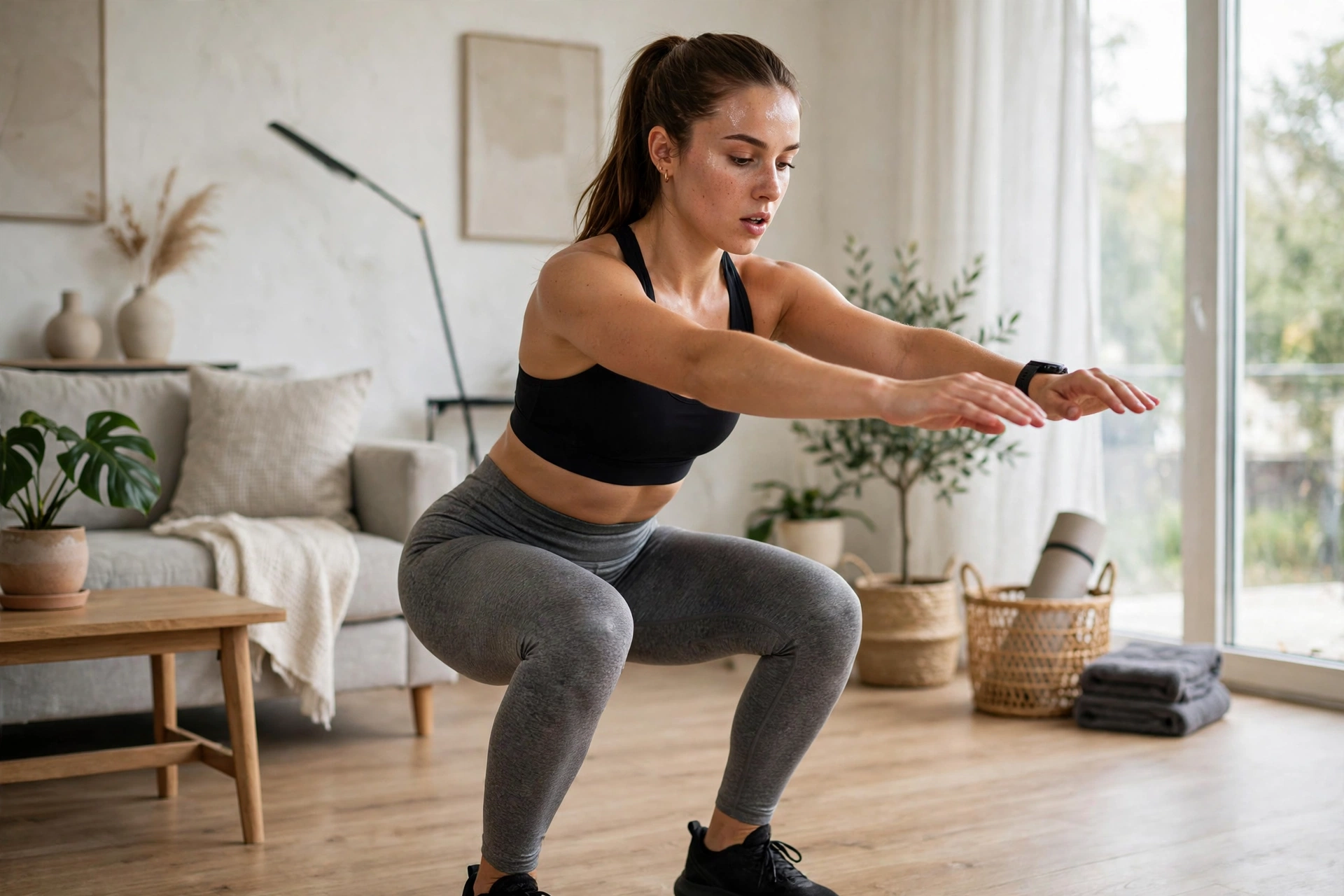
If you have ever wished your workout took 15 minutes instead of an hour, you already understand the appeal of HIIT. But what is hiit training for beginners, really? It is not about punishing yourself until you collapse. It is a simple training structure: short bursts of hard effort, followed by rest, repeated a few times. That is the whole idea, and it is why so many busy people stick with it when longer routines fall apart.
I first tried HIIT on a Tuesday evening when I had exactly 20 minutes before dinner. No gym, no equipment, just a living-room floor and a phone timer. Twenty minutes later I was sweaty, a little out of breath, and honestly surprised at how much work I had done. That short session is what this guide is about — what is hiit training for beginners in plain language, how it works, whether it is safe for you, and a 4-week plan you can start this week.
Table of Contents


What Is HIIT Training for Beginners?
HIIT stands for High-Intensity Interval Training. The name sounds technical, but the idea is simple: you work hard for a short burst, then you rest or move slowly, then you repeat. A classic beginner example is 20 seconds of fast bodyweight squats followed by 60 seconds of slow walking in place, repeated 8 times. The whole session, warm-up included, takes about 15 minutes.
What is hiit training for beginners is a question I hear a lot, because HIIT has a reputation for being brutal. Social media shows people doing burpees until they fall over, and that is not what a beginner version looks like. For a beginner, “high intensity” means hard for you — maybe a 7 out of 10 on effort. You should be breathing hard and finding it difficult to hold a conversation, but you should still be able to keep good form. If your form falls apart, you are going too hard.
The structure matters more than the exercises. Running, cycling, jumping jacks, squats, push-ups — any of these can become HIIT once you organise them into work and rest intervals. That flexibility is the whole point. You can do what is hiit training for beginners at home, in a park, or in a gym, with no equipment at all. Once you understand that the interval pattern is the workout, the rest of what is hiit training for beginners becomes easy to learn.
How HIIT Actually Works
Your body has two main ways of producing energy during exercise. At a comfortable pace, it uses oxygen efficiently and can keep going for a long time. When you push hard for 20 to 40 seconds, you dip into a faster energy system that burns through stored fuel quickly. Then, during the rest interval, your body works to repay that oxygen debt. That recovery work is part of why HIIT burns calories even after you stop.
Here is what happens inside a typical beginner session:
- Work interval (20–40 seconds): your heart rate climbs to roughly 80–90% of its maximum. You feel the effort clearly.
- Rest interval (60–90 seconds): your heart rate drops back toward 50–60%. You catch your breath.
- Repeat (6–10 rounds): each round challenges your heart, lungs and muscles a little more.
- Cool-down (3–5 minutes): slow walking and gentle stretching bring everything back to normal.
Research often quoted by fitness coaches says HIIT can burn 25–30% more calories than steady cardio in the same amount of time, and that your metabolism stays slightly raised for up to 24 hours afterwards. Those numbers vary from person to person, and beginners should not expect miracles in week one. But the time efficiency is real: a 15-minute HIIT session can deliver a similar cardiovascular training effect to a 30-minute jog, which is exactly why it fits busy schedules. This energy-system effect is the core science behind what is hiit training for beginners, and it explains why such short sessions can still feel so demanding.
The Benefits That Make HIIT So Popular
It saves time
This is the number one reason people choose HIIT. A useful session takes 15 to 20 minutes including warm-up and cool-down. If you have ever skipped a workout because you “only” had 20 minutes, HIIT removes that excuse completely. When people ask what is hiit training for beginners, the short answer is often just this: a full workout that fits into a lunch break.
It improves heart fitness fast
Because the hard intervals push your heart rate up, your cardiovascular system adapts quickly. Many beginners notice within three or four weeks that the same workout feels easier — their recovery between intervals gets faster, which is a clear sign of improving fitness. That faster recovery is one of the first visible results of what is hiit training for beginners, and it is a good reason to keep a simple training log.
It needs no equipment
Bodyweight moves are enough to start. Squats, push-ups, marching in place, jumping jacks — these cost nothing and need no gym membership. That also makes HIIT easy to do while travelling, which is where most routines break down. For anyone wondering what is hiit training for beginners in practical terms, the answer is encouraging: your body is the only equipment you need.
It burns fat and keeps muscle
HIIT burns calories during the session and keeps your metabolism slightly elevated afterwards. Because the intervals are short and intense, they also ask your muscles to work hard, which helps you hold on to muscle while losing fat — something long slow cardio does less well.
It is never boring
The intervals change every 20 to 40 seconds, so you are always counting down to the next rest. For people who find treadmills dull, that variety makes a real difference. Boredom kills more fitness plans than laziness does, and HIIT fights boredom by design. This constant change of pace is another reason what is hiit training for beginners keeps attracting people who gave up on longer routines.
HIIT vs Steady-State Cardio
Both work. The question is which one fits your life right now. Here is an honest comparison:
| Feature | HIIT | Steady-State Cardio |
|---|---|---|
| Time per session | 10–20 minutes | 30–60 minutes |
| Calories per minute | Higher | Lower |
| Afterburn effect | Noticeable for hours | Small |
| Equipment needed | None to start | None (walking, jogging) |
| Impact on joints | Can be high (choose low-impact moves) | Usually lower |
| Best for beginners | Yes, with generous rest | Yes, very forgiving |
| Boredom factor | Low — intervals keep changing | Higher for some people |
If you enjoy long walks or gentle jogs, keep doing them. HIIT is not a replacement for everything — it is one tool. Many fit people mix both: two short HIIT sessions and one or two longer easy sessions each week. That combination gives you the benefits of both without overloading your body. When you compare the two honestly, what is hiit training for beginners becomes a question of time and preference, not a contest with one winner.
Is HIIT Safe for Beginners?
Yes, with two conditions: you start gently, and you listen to your body. HIIT is safe for most healthy beginners when the work intervals are short and the rest intervals are generous. The problems start when beginners copy advanced workouts from the internet and try 40 seconds of all-out burpees with only 20 seconds of rest on day one.
You should check with your doctor before starting HIIT if any of these apply to you:
- You have a heart condition or high blood pressure
- You have not exercised in years and are over 40
- You have a joint problem, severe asthma, or a recent injury
- You feel chest pain or get unusually short of breath during light activity
For everyone else, the safest way to begin is the 1:3 rule: rest three times longer than you work. Twenty seconds of effort, sixty seconds of rest. That ratio keeps the session challenging but recoverable, and it is the ratio most beginner guides recommend for the first two weeks — REP Fitness has a useful beginner HIIT guide with three starter routines if you want a second opinion.
As your fitness improves, you can shift to 1:2, then 1:1 — but there is no rush. What is hiit training for beginners if not a patient start? The people who stick with HIIT for a year are the ones who started easy. A gentle start is also the safest way to learn what is hiit training for beginners feels like in your own body before you push harder.
Warm up for 3 to 5 minutes before every session. March in place, roll your shoulders, do a few slow squats and arm circles. A cold body pushed hard is how strains happen. Cool down the same way: two or three minutes of slow walking, then gentle stretches for your legs, hips and shoulders.
How to Start: The 1:3 Rule in Practice
Here is exactly how a first session looks. Set a timer on your phone — any free interval timer app works, or just watch a clock.
- Warm up (4 minutes): march in place for 1 minute, then 10 slow bodyweight squats, 10 arm circles each way, and 30 seconds of gentle side steps.
- Round 1–6: 20 seconds of work, 60 seconds of rest. Alternate two moves: jumping jacks (or step jacks) and bodyweight squats.
- Rest between rounds: the 60-second rest is built in — walk slowly, breathe, shake out your arms.
- Cool down (4 minutes): walk slowly for 2 minutes, then stretch your calves, quads and shoulders for 30 seconds each.
Total time: about 15 minutes. Total hard work: just 2 minutes. That is the secret of HIIT — the hard part is short, and the rest does the rest. If 6 rounds feel easy after two sessions, add one round per week until you reach 8 to 10 rounds. Only then think about lengthening the work interval to 30 seconds. This simple first session is the clearest practical answer to what is hiit training for beginners, and you can repeat it twice a week while you build the habit.
If jumping hurts your knees, swap jumping jacks for step jacks (step side to side instead of jumping) and squats for chair-assisted squats. Low-impact HIIT still counts as HIIT. What matters is the effort level, not the jumping. What is hiit training for beginners, after all, is a structure you adapt to your body — not a test you have to pass. The low-impact version of what is hiit training for beginners works just as well for building fitness, because the interval pattern stays the same.

Your First 4-Week HIIT Plan
Follow this plan two days a week, with at least one rest day between sessions. Keep doing your normal walking or other activity on the other days.
| Week | Work / Rest | Rounds | Session length | Moves |
|---|---|---|---|---|
| Week 1 | 20 sec / 60 sec | 6 | ~15 min | Step jacks, bodyweight squats |
| Week 2 | 20 sec / 60 sec | 8 | ~17 min | Step jacks, squats, marching high knees |
| Week 3 | 30 sec / 60 sec | 8 | ~20 min | Jumping jacks, squats, incline push-ups |
| Week 4 | 30 sec / 45 sec | 8 | ~20 min | Jumping jacks, squats, push-ups, mountain climbers |
By the end of week 4, you will have done 8 sessions. Most beginners notice three things by then: they recover faster between intervals, the same moves feel less exhausting, and they actually look forward to the short sessions. If you miss a session, do not double up the next day — just do the next session on schedule. Consistency beats intensity every time. That steady four-week rhythm is how what is hiit training for beginners turns from a new idea into a lasting habit.
7 Beginner-Friendly HIIT Exercises
These seven moves cover your whole body, need no equipment, and are easy to scale up or down. Pick 3 or 4 per session and rotate them. Learning a few reliable moves is an important part of what is hiit training for beginners, because familiar exercises let you focus on effort and form instead of remembering choreography.
1. Jumping jacks (or step jacks)
The classic warm-up move works as a HIIT interval too. Jump your feet out and arms up, then back. If jumping bothers your knees, step side to side instead — same rhythm, less impact.
2. Bodyweight squats
Feet shoulder-width apart, chest up, sit back as if into a chair. Go only as low as you can control. Squats train your legs and glutes and raise your heart rate fast.
3. Incline push-ups
Hands on a sturdy table or bench, body in a straight line. This is far kinder than floor push-ups and still trains your chest, shoulders and arms. Lower the surface as you get stronger.
4. Marching high knees
Drive one knee up at a time, arms swinging. It looks easy and feels easy for the first 10 seconds — then your heart rate tells a different story.
5. Mountain climbers (slow version)
Hands on the floor or a bench, alternate bringing your knees toward your chest. Keep your hips level. Slowing this move down is the beginner-friendly version, and it still works your core. Many people learning what is hiit training for beginners find this move the hardest to pace, so keep it slow until your form is steady.
6. Glute bridges
Lie on your back, feet flat, lift your hips until your body forms a straight line from shoulders to knees. Great for glutes and lower back, and a useful active-recovery move.
7. Standing plank shoulder taps
Stand tall, raise one arm to tap the opposite shoulder, alternate sides. It trains balance and core without getting on the floor — handy if floor exercises are difficult for you.
7 Mistakes Beginners Make with HIIT
1. Going all-out on day one
The biggest mistake is treating your first session like a competition. Start at 7 out of 10 effort, not 10. You will still get the benefits, and you will still be able to walk normally the next day.
2. Skipping the warm-up
Cold muscles and a cold heart are a bad combination. Five minutes of easy movement costs you almost nothing and prevents most beginner injuries.
3. Resting too little
Short rest sounds tough and impressive. In practice it wrecks your form by round three and turns the session into sloppy flailing. Generous rest is not cheating — it is the design. Beginners studying what is hiit training for beginners often underestimate rest, yet rest is where your body actually adapts to the work.
4. Doing HIIT every day
HIIT is intense, and your body needs 48 hours to recover and adapt. Two or three sessions a week is the sweet spot for beginners. Daily HIIT leads to tired legs, bad sleep and stalled progress. One of the first lessons of what is hiit training for beginners is that recovery days are part of the programme, not days off from it.
5. Using bad form to go faster
Speed without form is how knees and shoulders get hurt. Do the move well first, then go faster. If your form breaks, slow down or take the easier version.
6. Holding your breath
Beginners often hold their breath during hard intervals. Breathe out on the effort and in on the return. If you catch yourself holding your breath, slow down until your breathing is steady again.
7. Ignoring pain
Muscle burn is normal. Sharp pain in a joint is not. If something hurts in a sharp or stabbing way, stop that move and swap it for another one. Pain is information, not weakness.
How Often Should You Do HIIT?
Two sessions a week is the right starting point for most beginners. That gives you 48 hours of recovery between sessions and leaves room for walking, stretching or another activity you enjoy. If you want a no-equipment routine to pair with HIIT, our home workout for beginners guide is a good place to start. After 4 to 6 weeks, if you feel good and your sleep and energy are fine, you can add a third session.
Watch for signs you are doing too much: legs that feel heavy for days, trouble sleeping, a resting heart rate that climbs instead of falls, or dreading every session. Any of those means you should cut back to two sessions — or even one — for a week. Fitness is a long game, and the people who win it are the ones who are still training in six months, not the ones who burned out in three weeks. That patient approach is the real heart of what is hiit training for beginners, and it is what keeps the habit alive long after the first month.
What is hiit training for beginners ultimately comes down to this: short, honest effort, generous rest, and showing up twice a week. That is enough to change your fitness. Everything else — fancier moves, shorter rests, longer sessions — can wait until your body asks for it. If you remember one thing from this guide, let it be that what is hiit training for beginners is a simple pattern you can start today, not a complicated programme you need to study first.

Frequently Asked Questions
Is HIIT good for weight loss?
Yes, it can help. HIIT burns a good number of calories in a short time and keeps your metabolism slightly elevated after the session. But no workout outruns a poor diet on its own. Pair two HIIT sessions a week with sensible eating and daily walking, and the results come steadily. For weight loss, what is hiit training for beginners really offers is a time-efficient way to burn calories without spending an hour at the gym.
How long should a beginner HIIT workout be?
Ten to twenty minutes including warm-up and cool-down is plenty. The hard intervals themselves add up to only 2 to 4 minutes in the first weeks. Longer sessions are not better for beginners — they just add fatigue and injury risk.
Can I do HIIT at home without equipment?
Absolutely. Bodyweight moves like squats, push-ups, jumping jacks and marching high knees need nothing but floor space. That is one of the main reasons HIIT is so popular with beginners. At home, what is hiit training for beginners looks exactly like the 15-minute session described above — a timer, a little floor space, and no purchases required.
What should I eat before a HIIT workout?
Eat a light snack 1 to 2 hours before, such as a banana, a small bowl of yoghurt, or toast with peanut butter. Avoid a heavy meal right before training, and drink water before, during and after the session.
Is HIIT better than running for beginners?
Neither is better in general — they do different jobs. HIIT is more time-efficient and builds power and muscle endurance. Running builds aerobic endurance and is easier on beginners who prefer steady movement. Many people do both: HIIT twice a week and one easy run or long walk.
Disclaimer
This article is general educational information about fitness and exercise. It is not medical advice, and it is not a substitute for guidance from a qualified health professional. Exercise carries some risk, especially if you have a health condition or have been inactive for a long time — check with your doctor before starting a new training programme. Details such as workout guidelines, recommendations and research findings change over time, so please verify current advice from official sources before acting on it.
To learn more about the site behind this guide, visit the About Us page.