

If you want to make money on etsy for beginners, without renting a shop or buying boxes of stock, Etsy is one of the friendliest places to start. I like it for a simple reason. The buyers are already there, searching with their wallets open. Your job is not to build traffic from zero. Your job is to put the right product in front of people who already want it.
That sounds easy, and honestly, the first listing really is easy. Most people who make money on etsy for beginners start exactly here, with one simple product and a clear buyer in mind. You do not need a big brand to make money on etsy for beginners in your first month.
Making steady sales takes a bit more patience. This guide walks you through the whole path in plain language: what to sell, how much it costs, how to price it, and the small habits that separate shops that grow from shops that sit quietly with two views a week. If you follow the steps below, you can make money on etsy for beginners without guessing your way through your first month.
Table of Contents

What Make Money on Etsy for Beginners Really Means
Etsy is a marketplace for handmade goods, vintage items, craft supplies, and digital products. Think of it as a large online market where each seller rents a small stall. Etsy brings the crowd. You bring the products, the photos, and the customer care.
When people talk about how to make money on etsy for beginners, they usually mean one of three models. You can sell digital products like planners and templates. You can sell print-on-demand items like mugs and wall art that a partner prints for you. Or you can sell handmade and personalised goods that you make and ship yourself. Each model can work. They just ask for different amounts of time and money at the start.
Here is the honest part. Etsy rewards shops that list regularly, use clear titles, and answer messages quickly. It does not reward a shop with one listing and big hopes. Most beginners who make money on etsy for beginners treat the first 30 days as a learning month. They list 10 to 20 products, watch what gets clicks, and improve the weak listings instead of quitting.
Why Etsy Is a Good First Marketplace
Starting your own website sounds exciting until you realise nobody visits it. On Etsy, search traffic already exists. A buyer types “budget planner printable” or “personalised wedding gift” and Etsy shows matching shops. That built-in demand is the biggest reason beginners choose this platform.
The starting cost is also low, which is why so many people try to make money on etsy for beginners before building their own website. Listing a product costs about $0.20, and the listing stays live for four months or until it sells. You do not need a warehouse. For digital products, you do not even need to ship anything. Etsy delivers the file for you after payment.
There is a trade-off, of course. Because starting is cheap, competition is real. Thousands of sellers offer planners, stickers, and templates. That is why your niche and your listing quality matter so much. The good news is that you do not need to beat everyone. You only need a small group of buyers who prefer your style, your bundle, or your price. Many sellers who make money on etsy for beginners start by serving one clear buyer, like teachers, new mothers, or small business owners.
Three Ways to Sell on Etsy
Before you open your shop, pick one model and stick with it for your first listings. Mixing everything at once makes your shop look confused, and confused shops rarely sell well.
| Model | What you sell | Money needed to start | Work after each sale |
|---|---|---|---|
| Digital products | Planners, templates, printables, SVG files | Very low, mostly your time | Almost none, Etsy delivers the file |
| Print on demand | Mugs, shirts, posters printed by a partner | Low, partner charges per order | Very little, partner prints and ships |
| Handmade goods | Jewellery, gifts, candles, custom items | Higher, materials and packaging | You make, pack, and ship every order |
Digital products are my usual recommendation for a first shop, especially if your goal is to make money on etsy for beginners with almost no budget. You create the file once and sell it many times. A printable planner that took you an evening to design can sell while you sleep. If you later want physical products without holding stock, read our guide on how to make money with print on demand and compare the two paths side by side.
Handmade goods can earn more per sale, but your hours limit your income. If each item takes 40 minutes to make, your ceiling is easy to calculate. That model suits people who enjoy crafting and want premium pricing. Print on demand sits in the middle. It feels like a real product business, but your margin is thinner because the printing partner takes a share of every order.
Whichever model you choose, the goal in month one is the same. Learn what buyers click, what they favourite, and what they actually buy. That feedback is worth more than any course. Sellers who make money on etsy for beginners usually improve in small loops: list, watch, adjust, list again.
How to Make Money on Etsy for Beginners: Step by Step
Step 1: Pick a Small, Clear Niche
Do not start with “planners for everyone.” Start with “weekly meal planner for busy mothers” or “budget tracker for students.” A narrow niche makes your titles, photos, and pricing much easier. Search Etsy for your idea and open the best-selling listings. Note their prices, their review counts, and the words they use in their titles.
Ask one simple question: can I make something slightly better? That one question guides most shops that make money on etsy for beginners successfully. Better might mean a bigger bundle, clearer instructions, or nicer design. If the top listings all look strong and cheap, pick a nearby niche with softer competition. Choosing well here saves you weeks of frustration later.
Step 2: Create Your First Product Bundle
Single small files struggle to stand out. A bundle of three to five related items looks like better value and supports a higher price. For example, a study planner bundle might include a weekly schedule, a revision tracker, and a goal page. Free tools like Canva are enough to design clean beginner products.
Keep your files tidy. Clean files help you make money on etsy for beginners because buyers leave better reviews and come back for more. Use PDF for planners and worksheets. Use PNG or JPG for artwork. Test the download yourself before listing. A broken file or a blurry page earns bad reviews fast, and early reviews matter a lot on Etsy.
Step 3: Open Your Shop and Write a Clear Listing
Opening a shop takes minutes, but learning to make money on etsy for beginners takes a few weeks of steady listing and testing. Choose a short shop name that hints at your niche, add your payment details, and write a friendly shop announcement. Then create your first listing with care. Your title should start with the words buyers actually search for. Put the main benefit early, not at the end.
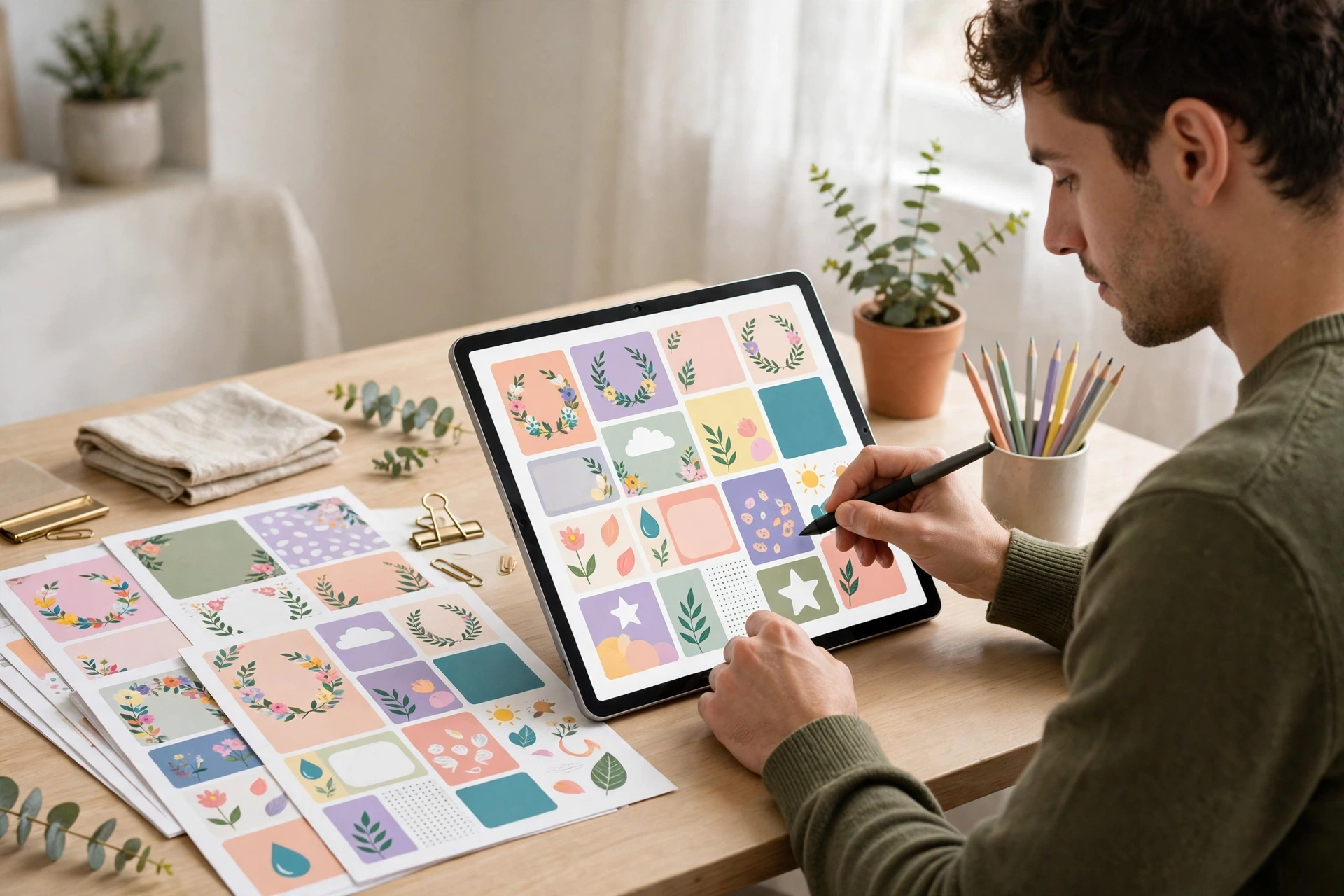
Your photos do most of the selling. Use bright, clean images that show the product in use. For a digital planner, show the pages on a tablet and printed on a desk. Write a description that answers basic questions: what is included, what size it is, how the buyer receives it, and who it helps. Clear listings are how beginners make money on etsy for beginners without spending on ads.
Step 4: Price With Fees in Mind
Pricing too low is the most common beginner mistake when people try to make money on etsy for beginners quickly. Etsy charges a listing fee, a transaction fee of 6.5% on the total sale amount including shipping, and a payment processing fee that varies by country. On a $10 sale, fees might take roughly $1.50 to $2 depending on your location and payment method. Always check the current fee page for your country before you set prices, because rates and rules change.
A simple starting approach works well. Price single printables around $3 to $8, template bundles around $8 to $18, and larger planner bundles around $9 to $25. Then run a small launch discount of 20% to 30% for the first week. Discounts attract early buyers, and early buyers bring the reviews your shop needs.
Step 5: List Regularly and Improve Weekly
One listing rarely changes anything. Regular listing is the quiet habit behind almost every shop that can make money on etsy for beginners month after month. Aim for 10 to 20 listings in your first month, all inside your niche. Each new listing is another door for search traffic. After a week, check your shop stats. Which listings got views? Which got favourites but no sales? Favourites without sales often mean the price or the main photo needs work.
Change one thing at a time. Improve the main photo first, then the title, then the price. This steady routine is how many sellers make money on etsy for beginners month after month. It is not glamorous, but it works.
Step 6: Get Your First Reviews
Reviews build trust faster than anything else, and trust is what helps you make money on etsy for beginners without heavy advertising. Answer messages politely and quickly. Include a short thank-you note with clear instructions. If a buyer has a problem, fix it fast and kindly. A helpful seller often earns a five-star review even after a small issue.
Never buy fake reviews or ask friends to leave dishonest ratings. Etsy can close shops for that. Earn reviews the slow, safe way: good products, honest descriptions, and fast support.
Step 7: Promote Outside Etsy, Gently
You do not need ads on day one to make money on etsy for beginners, and many shops grow well without them at first. Share your products on Pinterest, where planner and gift ideas travel well. Post short videos showing your product in use. One helpful post a day beats a week of silence followed by spam. If you want a wider view of beginner selling tactics, Shopify’s guide on how to make money on Etsy covers ideas like bundles, discounts, and seasonal planning in more detail.
Once a listing sells steadily on its own, you can test a small Etsy Ads budget, like $1 to $2 a day, and watch whether it brings profitable sales. Turn ads off for listings that get clicks but no orders. Let the numbers decide, not hope.
How Much Can a Beginner Realistically Earn?
Let me be straight with you. If you want to make money on etsy for beginners, expect slow early weeks and faster growth later. Most new shops earn little in the first few weeks. A hobby shop with a few listings might make $50 to $300 in a month once it gains traction. A part-time shop with 10 to 30 good listings often reaches $500 to $1,500 a month after two or three months of steady work. Strong full-time shops earn more, but they usually have 50 or more listings and a clear brand.
Your results depend on your niche, your product quality, and how consistently you list and improve. Anyone promising guaranteed income is selling you a story. The realistic path to make money on etsy for beginners is boring in the best way: good niche, decent products, regular listings, honest pricing, and patience.
Here is a small example. Suppose you sell a planner bundle for $12. After fees, you might keep about $9 to $10. Selling one bundle a day brings roughly $270 to $300 a month. Selling three a day brings close to $900. Those numbers are not life-changing, but for a product you designed once, they are a solid start.
Common Mistakes That Cost Beginners Sales
The first mistake is copying other sellers. Original work is the only safe way to make money on etsy for beginners over the long term. Using someone else’s design or photos can get your listing removed and your shop closed. Take inspiration from what sells, then create your own version with your own style.
The second mistake is ignoring seasons. Holiday products start selling 8 to 12 weeks before the holiday. If you list Christmas planners in December, you are late. Plan seasonal listings early and keep evergreen products, like budget trackers, selling all year.
The third mistake is giving up after two quiet weeks. Etsy search takes time to learn what your shop offers. Many shops see their first sale between week two and week six. Keep listing, keep improving photos, and give the shop a fair 60-day test before judging it.
The fourth mistake is messy shop presentation. Blurry photos, missing descriptions, and no shop banner make buyers nervous. You do not need a designer. Clean photos, a simple banner, and complete listing details already put you ahead of many beginners.
A Simple 30-Day Starter Plan
Week one: research your niche, study 10 competing listings, and design your first bundle. Week two: open your shop, publish 5 listings, and share them on Pinterest. Week three: publish 5 more listings and improve the photos of any listing with views but no favourites. Week four: review your stats, adjust prices on slow listings, and plan your next bundle around the product that performed best.
By the end of 30 days, you will know whether your niche has life. If one product sells twice, make three related products for the same buyer. That is how small shops grow. Sellers who make money on etsy for beginners rarely win with one lucky product. They win by building a small family of products for one happy audience.

Frequently Asked Questions
How much money do I need to start on Etsy?
Very little. Each listing costs about $0.20, so 20 listings cost around $4. Digital products need no stock or shipping money. Your main investment is time spent designing and improving listings.
Can I make money on etsy for beginners without ads?
Yes. Many beginners make their first sales from Etsy search alone, helped by clear titles and good photos. Free promotion on Pinterest and short videos can add traffic without ad spend. Test ads later, only on listings that already sell.
What are the best products for beginners to sell?
Digital products are the easiest start: planners, budget trackers, resume templates, social media templates, and printable wall art. They cost almost nothing to deliver and can sell repeatedly. Pick one buyer group and design for their daily problems.
How long does it take to get the first sale?
It varies. Some shops sell in the first week. Many take two to six weeks while Etsy learns where to show their listings. Listing 10 to 20 products and improving photos weekly usually shortens the wait.
Is Etsy still worth it in 2026?
Yes, if you treat it like a small business instead of a lottery ticket. Etsy still has tens of millions of active buyers, and digital products remain a low-cost way in. Sellers who list regularly and serve a clear niche still make money on etsy for beginners in 2026.
Final Thoughts
Starting on Etsy is not complicated, but it does reward consistency. Pick a narrow niche, build a small bundle, price it with fees in mind, and list every week. Watch your stats, improve one thing at a time, and protect your shop by always selling your own work.
If you do those basics for 60 days, you will have real data instead of guesses. You will know what your buyers want, and you can grow from there. That is the honest way to make money on etsy for beginners, and it is open to anyone willing to start small and stay steady.
Disclaimer
This article provides general educational information only and is not professional, financial, or business advice. Fees, rules, prices, and offers on Etsy and other platforms change over time and vary by country. Always verify current details from official sources before making decisions, and consider your own situation carefully.
To learn more about the site behind this guide, visit the About Us page.