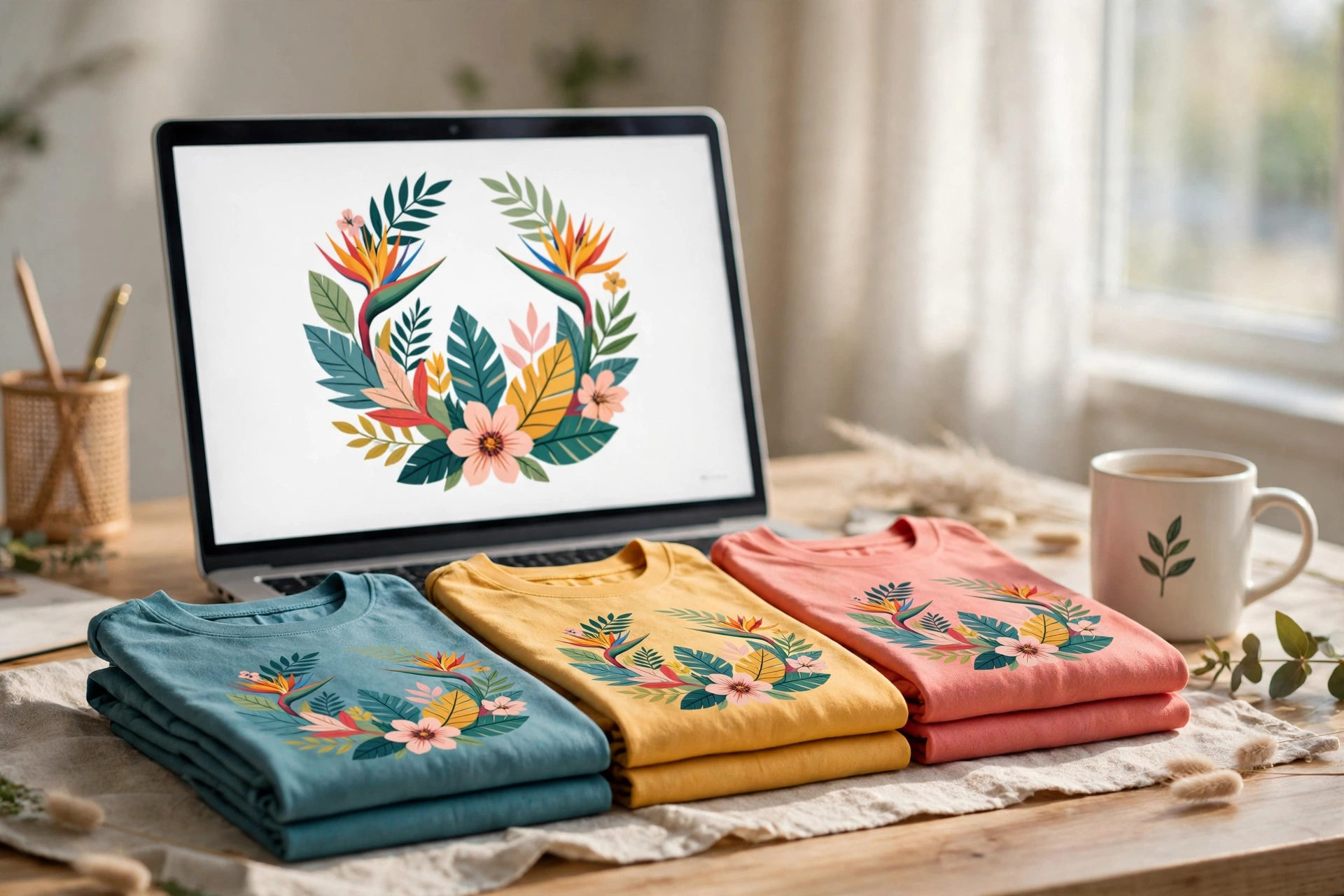
Imagine selling t-shirts, mugs, and posters online without ever buying stock, renting a warehouse, or packing a single box. That is the promise of print on demand for beginners, and it is the reason so many people pick it as their first online business. You create a design, upload it to a platform, and a print partner makes and ships the product only after a customer pays for it. You never touch the product. You only pay when you have already made a sale.
I like this model because it removes the scariest part of starting a business: spending money before you earn any. When I first looked into print on demand for beginners, the part that convinced me was the maths. A plain t-shirt costs you nothing until someone orders it. If a design never sells, you lose nothing but the hour you spent making it. That is a very forgiving way to learn how online selling works, and in this guide I will walk you through the whole thing — how it works, the exact steps to launch, the platforms worth your time, what you can realistically earn, and the mistakes that sink most new sellers.
Table of Contents
What Is Print on Demand for Beginners?
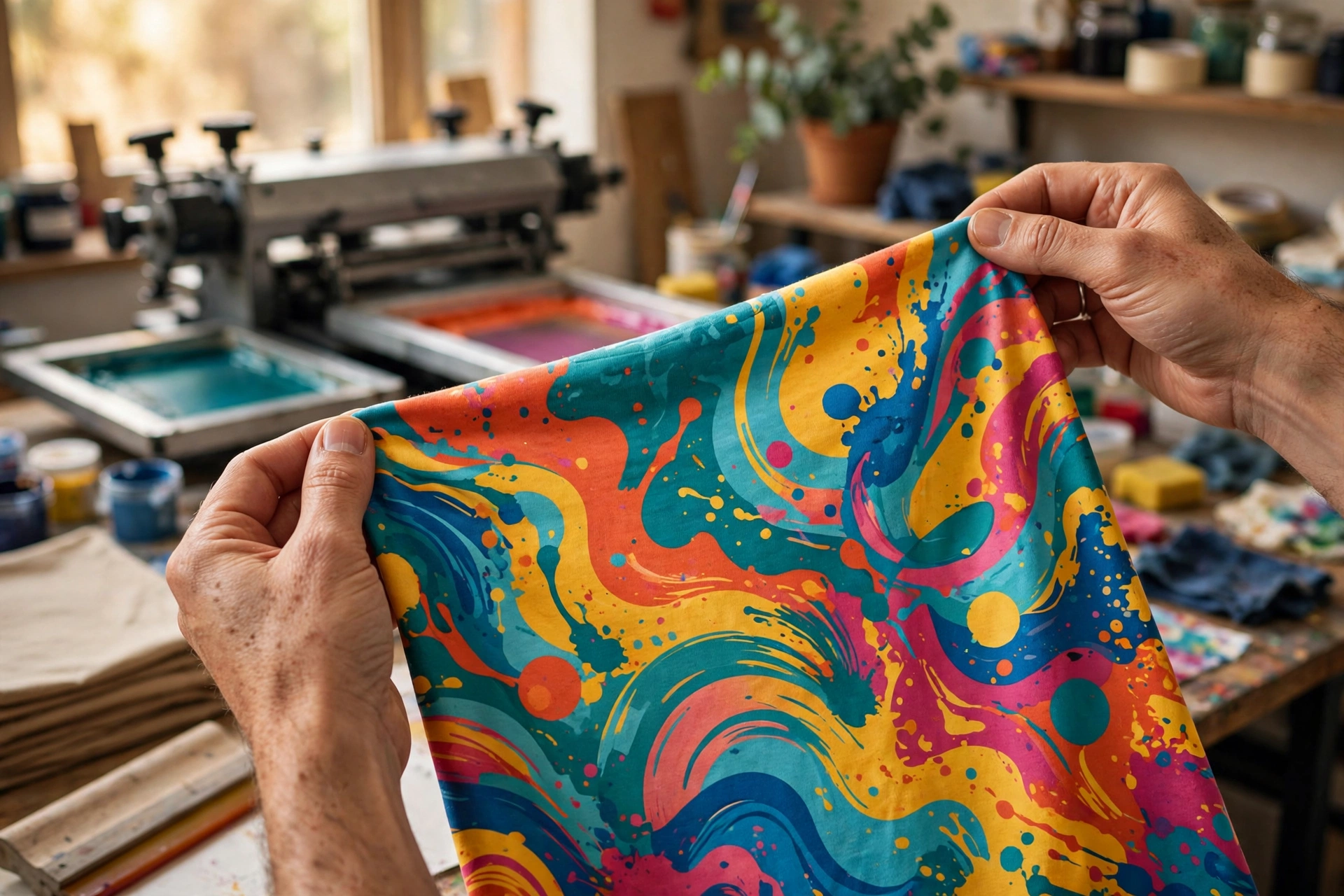
Print on demand for beginners means selling custom-designed products that are printed one at a time, only after a customer places an order. You supply the design. A print partner supplies the blank product — a t-shirt, a hoodie, a mug, a poster — prints your design on it, packs it, and ships it straight to your customer. You never hold inventory, and you never handle shipping.
The short name for it is POD, and you will see those three letters everywhere once you start reading about it. The idea sits between two models you may already know. In traditional e-commerce, you buy hundreds of shirts upfront and hope they sell. In dropshipping, you sell someone else’s ready-made products. Print on demand for beginners is different because the product is yours — your design, your brand — but the production and shipping are someone else’s job. That combination is what makes it so friendly for a first-timer.
Here is a simple example. Suppose you love funny cat quotes. You design a t-shirt that says “My Cat Runs This House” in bold letters. You upload that design to a platform and set the price at $24.99. A customer buys it. The platform takes its printing and shipping cost — say $13 — and you keep the rest, around $12, as profit. You did not print the shirt, pack it, or visit a post office. Your job was the idea, the design, and getting the listing in front of buyers. That is the whole business in one paragraph, and it is the reason print on demand for beginners keeps growing year after year.
How Print on Demand for Beginners Works
The process has five steps, and once you set it up, most of it runs on its own.
First, you create a design. It can be text, an illustration, a photo, or a mix of all three. Free tools like Canva are enough to start, and your files should be high resolution — at least 300 DPI — saved as a transparent PNG so the design prints cleanly on any product colour.
Second, you pick the products. T-shirts sell best for most new sellers, followed by hoodies, mugs, tote bags, and posters. Start with two or three products, not twenty. A small, focused shop is easier to manage and easier to make look professional.
Third, you upload your design to a print-on-demand platform and apply it to your chosen products. You write the product title and description, set your price, and publish the listing to your store or a marketplace like Etsy.
Fourth, a customer finds your listing and buys. Your store automatically forwards the order to the print partner. That is the moment print on demand for beginners really clicks for most people — the sale happens while you are asleep, and the work is already done.
Fifth, the print partner prints the product, packs it, and ships it to the customer under your brand name. You get paid through your store’s payment system — usually PayPal, Stripe, or Shopify Payments — minus the platform’s fees. Your part of the work is done. The only thing left is answering the occasional customer question.
Why Print on Demand for Beginners Is a Smart First Business
There are four honest reasons this model suits a first business better than most others.
The first is low risk. You can start with almost no money. There is no inventory to buy, no warehouse to rent, and no shipping boxes piled up in your living room. The only real cost is your time and, if you sell on Etsy, a small listing fee of about 20 cents per product. Compare that with opening a normal shop, where a single order of stock can cost hundreds of dollars before you sell anything.
The second is freedom. You can run the whole business from a laptop, from anywhere. There are no fixed hours, no boss, and no commute. Plenty of people run a print-on-demand shop as a side hustle next to a full-time job, spending an hour or two in the evening on new designs.
The third is that it teaches you real business skills. You learn how to spot a good niche, how to make designs people want, how to write product listings that sell, and how to bring in traffic. Those skills transfer to almost any online business you try later. That is why print on demand for beginners is such a good training ground, even if you later move on to something else.
The fourth is that it scales. One good design can sell hundreds of times without any extra work from you. You design it once, and it keeps earning. That is not a promise of overnight riches — most sellers earn a modest side income at first — but it is a real advantage over selling your time by the hour, where your income stops the moment you stop working. That is why so many people choose print on demand for beginners as their first online business.
7 Steps to Start Print on Demand for Beginners
Here is the exact path I recommend, in order. Do not skip step one — it is the step most beginners rush past, and it is the one that decides whether anything else works.
Step 1: Pick a Niche, Not a Product
A niche is a specific group of people with a shared interest. “Dog lovers” is a niche. “Funny shirts” is not. The narrower your audience, the easier it is to make designs they love. Good niches for print on demand for beginners include nurses, truck drivers, gym fans, cat owners, fishermen, new parents, and people who love a particular hobby like gardening or gaming. Pick something you understand or care about, because you will be making dozens of designs for these people.
Step 2: Research What Already Sells
Before you design anything, spend an hour looking at what is already selling in your niche. Search your niche on Etsy and look at the best sellers. Read the reviews — buyers tell you exactly what they liked and what they wished was different. Look at which products get the most reviews, which colours sell, and which slogans keep appearing. Your goal is not to copy anyone. It is to understand what buyers in your niche already pay for, so your first designs land in proven demand instead of guessing in the dark. This research step is what separates print on demand for beginners who succeed from those who guess.
Step 3: Create Simple, Bold Designs
Winning print-on-demand designs are usually simple. Bold text, a clean icon, a short phrase people feel strongly about. A design that tries to say everything says nothing. If you are not a designer, Canva is enough to start, and tools like Kittl make it easier to make professional-looking text designs. Keep your text big and readable, use no more than two or three colours, and always check how the design looks on a dark shirt as well as a light one. One honest tip: your first ten designs are research, not your retirement plan. Treat them as experiments, publish them, and let real sales tell you what to make more of.
Step 4: Choose Your Print Partner
Your print partner decides your product quality, your shipping speed, and your profit margin, so choose carefully. Printful is known for reliable quality and prints most products in-house. Printify offers more suppliers and often lower prices, but quality can vary between suppliers, so always order a sample first. Redbubble and TeePublic are marketplaces — you upload designs and they handle everything, including finding the customers, but you earn less per sale and have less control over your brand. For most people starting print on demand for beginners with their own store, Printful or Printify paired with Etsy or Shopify is the best combination.
Step 5: Set Up Your Store
You have two main choices. A marketplace like Etsy gives you built-in traffic — millions of shoppers are already there searching — but you pay listing and transaction fees and you follow Etsy’s rules. Your own store on Shopify gives you full control over your brand and your prices, but you have to bring your own traffic. Most beginners do better starting on Etsy, because traffic is the hardest part, and Etsy solves it for you. You can always open your own store later once you have winning designs. Either way, connect your print partner to your store so orders flow automatically.
Step 6: Price for Real Profit
Pricing is where many beginners lose money without realising it. Start with your total cost: the print partner’s base price plus shipping, plus the marketplace fee. Then add your profit. A good rule is to aim for at least $7 to $10 profit per t-shirt, which usually means a retail price of $24.99 to $29.99.
Do not race to the bottom on price — a $19.99 shirt with a $2 profit needs ten times as many sales as a $29.99 shirt with a $10 profit. Buyers pay for designs they love, not for the cheapest shirt on the page. And remember that pricing is part of what makes print on demand for beginners work as a business rather than a hobby.
Step 7: Market Your Products Every Day
A listing nobody sees earns nothing. Spend at least as much time on marketing as on designing. On Etsy, that means writing titles and tags with the exact words buyers search for. On social media, it means showing your products in real life — a short video of someone wearing your shirt beats ten static photos. Pinterest works well for print-on-demand products because people go there looking for gift ideas. And an email list, even a tiny one, is worth building from day one, because it is the only audience you truly own.
Best Print on Demand Platforms for Beginners
Here is a quick comparison of the platforms most beginners start with. The right choice depends on whether you want your own store or a ready-made marketplace.
| Platform | Best for | Starting cost | Profit per shirt |
|---|---|---|---|
| Printful | Own store, reliable quality | Free to join | Around $8–$12 |
| Printify | Lowest prices, many suppliers | Free plan available | Around $9–$14 |
| Redbubble | No store needed, built-in traffic | Free to join | Around $2–$5 |
| TeePublic | Artists, apparel focus | Free to join | Around $3–$6 |
| Gelato | International shipping | Free to join | Around $8–$12 |
Printful is the safest first choice if you want consistent quality and you plan to build your own brand. Printify wins on price if you are willing to test suppliers and order samples. Redbubble and TeePublic are the easiest way to start — upload a design and you are done — but the earnings per sale are much smaller, so they work best as a second income stream alongside your own store.
The table above shows the main options for print on demand for beginners at a glance. Whichever you pick, order a sample of your own product before you spend money on ads. If the print looks faded or the shirt feels cheap, your customers will notice, and a bad review costs far more than a sample ever will.
How Much Can Print on Demand for Beginners Really Earn?
Let us be honest, because the internet is full of wild claims. Most beginners earn very little in the first month — often nothing at all. That is normal. The business grows with the number of good listings you have, and it takes time to build that catalogue.
A realistic path looks like this: the first month you might make $0 to $50 while you learn. By month three, with 50 to 100 listings live, many sellers reach $100 to $300 a month. Sellers with a few hundred listings in a good niche, who keep publishing and marketing, can reach $500 to $2,000 a month within a year. A small number reach much more, but they are the exception, not the rule.
The maths behind it is simple. If you earn $10 profit per shirt and you sell 3 shirts a day, that is $30 a day, or about $900 a month. Selling 3 shirts a day sounds small, but it usually takes 100 or more live listings to get there, because most listings sell rarely and a few winners carry the shop.
That is why consistency matters more than talent here. The sellers who win are the ones who keep publishing new designs every week, month after month, while everyone else quits after twenty listings. For print on demand for beginners, patience is not a nice extra — it is the whole strategy. These numbers are realistic for print on demand for beginners who publish steadily.
How to Price Your Products for Real Profit
Good pricing has three parts: cost, value, and testing. First, work out your true cost per item, including the base price, shipping, and marketplace fees. On Etsy, for example, you pay a 20-cent listing fee, a 6.5% transaction fee, and a payment processing fee of about 3% plus 25 cents. On a $24.99 shirt, those fees add up to roughly $2.70. If your print partner charges $13, your real cost is about $15.70, leaving you around $9.30 profit. Know that number before you list anything.
Second, price for the value of the design, not the cost of the shirt. A clever design for a nurse’s birthday is worth more to the buyer than a blank shirt, and buyers know it. Shops that price at $24.99 to $29.99 for t-shirts and $39.99 to $49.99 for hoodies usually earn more overall than shops that undercut everyone at $19.99, because the extra profit per sale matters more than a few extra sales.
Third, test. Raise the price on your best sellers by $2 and watch what happens for two weeks. If sales hold steady, keep the higher price. If they drop, go back. Small tests like this, done one at a time, are how experienced sellers quietly increase their income without finding new customers. Testing prices is a habit that separates serious print on demand for beginners from hobby sellers. And remember that fees and costs change over time, so check your numbers every few months instead of setting a price once and forgetting it.
7 Mistakes Print on Demand for Beginners Should Avoid
Most new sellers make the same handful of mistakes. Here they are, so you can skip them. Every one of these mistakes is common in print on demand for beginners, and every one is avoidable.
First, copying other people’s designs. It is tempting, and it can get your shop shut down. Marketplaces remove copied work quickly, and a copyright strike can end your account. Make your own designs, even simple ones, and you will sleep better.
Second, picking a niche that is too broad. “Funny shirts for everyone” competes with millions of listings. “Funny shirts for left-handed guitar players” competes with almost nobody. Narrow wins.
Third, skipping the sample order. A design that looks great on screen can print badly on fabric. Order one of each product you plan to sell, check the print quality, wash it once, and only then spend money promoting it.
Fourth, ignoring your product mockups. Your mockup is your shop window. A flat, dull image of a shirt sells far less than a photo of a real person wearing it. Use lifestyle mockups — many platforms provide them free — and show the product from more than one angle.
Fifth, writing lazy titles and descriptions. “Cool shirt” tells a buyer nothing and tells the search engine nothing. Write titles with the words buyers actually type, like “funny nurse t-shirt gift for registered nurse birthday”, and describe the product honestly: the fabric, the fit, the print method, and the shipping time.
Sixth, giving up after two weeks. This is the most common mistake of all, and it is the one that kills the most shops. Print on demand for beginners rewards people who publish steadily for months, not people who list ten designs and wait for a miracle.
Seventh, forgetting about customer service. Your print partner handles production, but the customer is yours. Answer messages quickly, solve problems politely, and refund when something is genuinely wrong. One happy customer who leaves a five-star review is worth more than ten silent sales.
Getting Your First Sale
Your first sale is the hardest, and it teaches you more than any guide. Here is a practical plan for it. First, launch with at least 10 listings in one niche, all with good mockups and clear titles. A shop with one product looks empty, and buyers trust fuller shops. Second, share your products where your niche already hangs out — a Facebook group for nurses, a Reddit community for fishermen, a Pinterest board for cat lovers. Do not spam. Share something genuinely useful or funny, and let the product be part of it.
Third, ask friends and family to look at your shop and tell you honestly what they would buy and what confuses them. A fresh pair of eyes catches problems you cannot see. Your first sale proves that print on demand for beginners can work for you.
Fourth, consider a small, time-limited discount on your first listings to encourage those first few orders and reviews. Reviews are gold on marketplaces — a listing with five good reviews sells far better than the same listing with none. And fifth, keep publishing. Your tenth listing might be the one that sells, or your fiftieth. You cannot know in advance, which is why the sellers who keep going are the ones who get there. If you want a broader view of low-cost online businesses, our guide to dropshipping explains a related model where you also hold no inventory.

Frequently Asked Questions
Is print on demand for beginners profitable?
Yes, it can be, but not overnight. Most beginners earn little in the first month and grow slowly as they add listings. With 100 or more good listings in a proven niche, a realistic income is a few hundred dollars a month, and it can grow from there. The profit per sale is usually $7 to $14 on a t-shirt, so your income depends on how many listings you have and how well you market them.
Do I need design skills to start print on demand for beginners?
No. Simple text-based designs sell very well, and free tools like Canva are enough to make them. You do need an eye for what your niche likes — the right words, the right colours — but you do not need to be a trained designer. Many successful sellers outsource designs to freelancers for $3 to $10 each once they know which ideas sell.
How much money do I need to start print on demand for beginners?
Almost none. Joining platforms like Printful, Printify, and Redbubble is free. On Etsy you pay about 20 cents per listing. The only sensible early expense is ordering samples of your own products, which costs roughly $15 to $30 per item. Everything else — design tools, mockups, store setup — has a free option to start with.
Which is better for print on demand for beginners: Etsy or Shopify?
Etsy is better for most beginners because it brings you shoppers who are already searching. Shopify gives you more control and better long-term branding, but you must bring your own traffic, which is the hardest part of the business. Many sellers start on Etsy and open a Shopify store later, once they have winning designs and an audience.
Can I do print on demand for beginners without a store?
Yes. Marketplaces like Redbubble and TeePublic let you upload designs and sell without building a store at all. They handle the customers, the printing, and the shipping. You earn less per sale — usually $2 to $6 — but it is the simplest possible start, and it is a good way to test which designs people like before you invest in your own store.
Disclaimer
This article is general educational information only. It is not professional, financial, or legal advice. Earnings from print-on-demand vary widely and depend on your niche, designs, pricing, and effort — no income is guaranteed. Fees, platform rules, and shipping costs change over time, so please verify prices, terms, and policies on the official websites of the platforms you use before spending money or starting a business.
To learn more about the site behind this guide, visit the About Us page.