If you want to improve posture for beginners without buying a brace, a special chair, or a drawer full of gadgets, start smaller than you think. Most posture problems are not caused by one dramatic injury. They creep in during long phone scrolling, laptop work on a sofa, and hours spent leaning toward a screen.
I like the plain approach: loosen what feels tight, strengthen what feels sleepy, and change position more often. When you improve posture for beginners this way, standing tall feels less forced and more normal.
This guide gives you a 2-minute check, a better desk setup, and 7 easy home exercises. A wall, a chair, a doorway, and 10 minutes a day are enough.
Table of Contents
What Good Posture Really Means
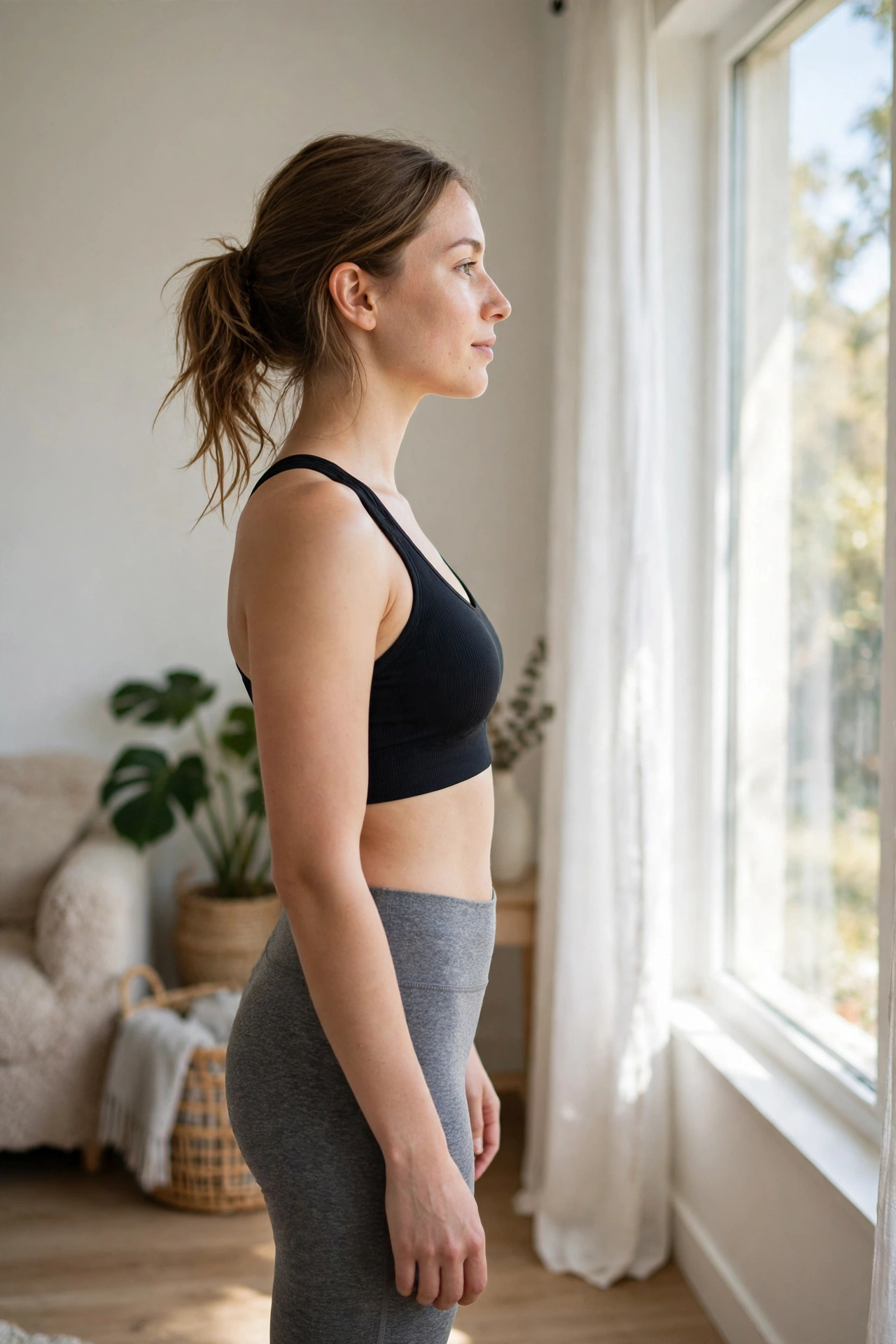
Good posture is not a stiff military pose. You should be able to breathe, turn your head, and relax your shoulders while your body stays stacked in a comfortable line. From the side, your ear sits roughly over your shoulder, and your shoulder sits roughly over your hip.
That simple stack matters because your head is heavy. When it drifts forward for hours, your neck and upper back work overtime. The goal to improve posture for beginners is not perfection every minute. It is spending more of the day near that easy, stacked position.
Try this quick test. Stand with your back near a wall, heels a few inches away from it. Let the back of your head, shoulder blades, and hips come close to the wall without forcing them flat. If that feels strange, do not panic. It just shows which areas need gentle work.
How to Improve Posture for Beginners: Start With a 2-Minute Check
Before you change anything, notice your current habits. Sit the way you normally sit, then look at three things: your head, your shoulders, and your feet. Are your feet flat? Are your shoulders rolled forward? Is your chin poking toward the screen?
Next, take a side photo with your phone. Prop it on a shelf, set a timer, and stand naturally. Do not pose. This photo is your starting point, and it helps you improve posture for beginners with proof instead of guesswork. Take another photo after 4 weeks in the same spot.
Write down two numbers as well: how long you can sit before your neck feels tired, and how many wall angels you can do slowly. Small numbers are fine. They give you something real to beat next week.
Fix Your Desk Before You Blame Your Back
Your chair and screen can undo good exercises in one afternoon. If your laptop sits low, your head follows it down. If your feet dangle, your lower back works harder. A few cheap fixes help you improve posture for beginners faster than willpower alone.
Raise your screen so the top third is near eye level. Books work fine. Keep elbows near 90 degrees, shoulders relaxed, and feet flat on the floor or a footrest.
| Desk item | Simple target | Quick fix |
|---|---|---|
| Screen height | Top of screen near eye level | Books, a box, or a laptop stand |
| Chair height | Feet flat, knees near hip level | Footrest or a firm cushion |
| Keyboard | Elbows relaxed near 90 degrees | Move it closer, not farther away |
| Phone | Held up, not down in your lap | Rest elbows on a table or pillow |
| Breaks | Stand every 30 to 45 minutes | Timer, water refill, short walk |
Protect the break habit first. Even 2 minutes of standing or walking can reset a slump. To improve posture for beginners, small resets beat one heroic Sunday stretch.
7 Simple Exercises to Improve Posture for Beginners
These moves are gentle, but gentle does not mean useless. Move slowly and stop if you feel sharp pain, numbness, tingling, or dizziness. Mild effort is fine. Travelling pain is not.
1. Chin Tucks
Sit or stand tall with your eyes looking straight ahead. Slide your chin straight back, as if you are making a double chin, without tilting your head down. Hold for 3 seconds, relax, and repeat 8 to 10 times. This small move helps improve posture for beginners by waking up the deep neck muscles that keep your head stacked.
2. Shoulder Blade Squeezes
Sit tall and gently squeeze your shoulder blades together and slightly down. Hold for 3 seconds, then release. Do 10 reps. Think of putting your shoulder blades into your back pockets. This is an easy way to improve posture for beginners during a work break.
3. Wall Angels
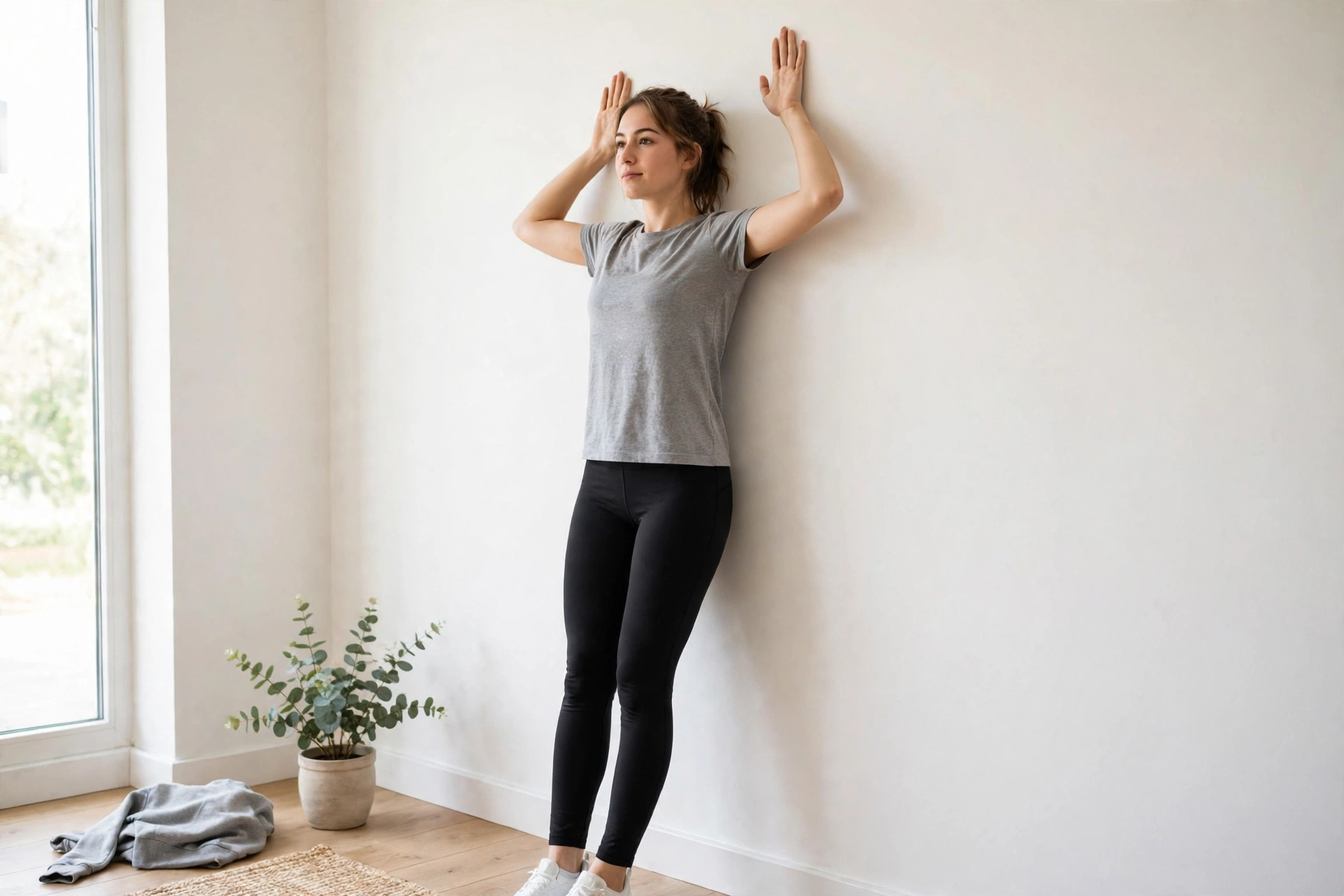
Stand with your back against a wall and your arms in a goalpost shape. Slowly slide your arms up and down while keeping contact with the wall as much as you can. Do 6 to 10 slow reps. Wall angels teach your upper back to work, and they help improve posture for beginners who sit at a desk all day.
4. Doorway Chest Stretch
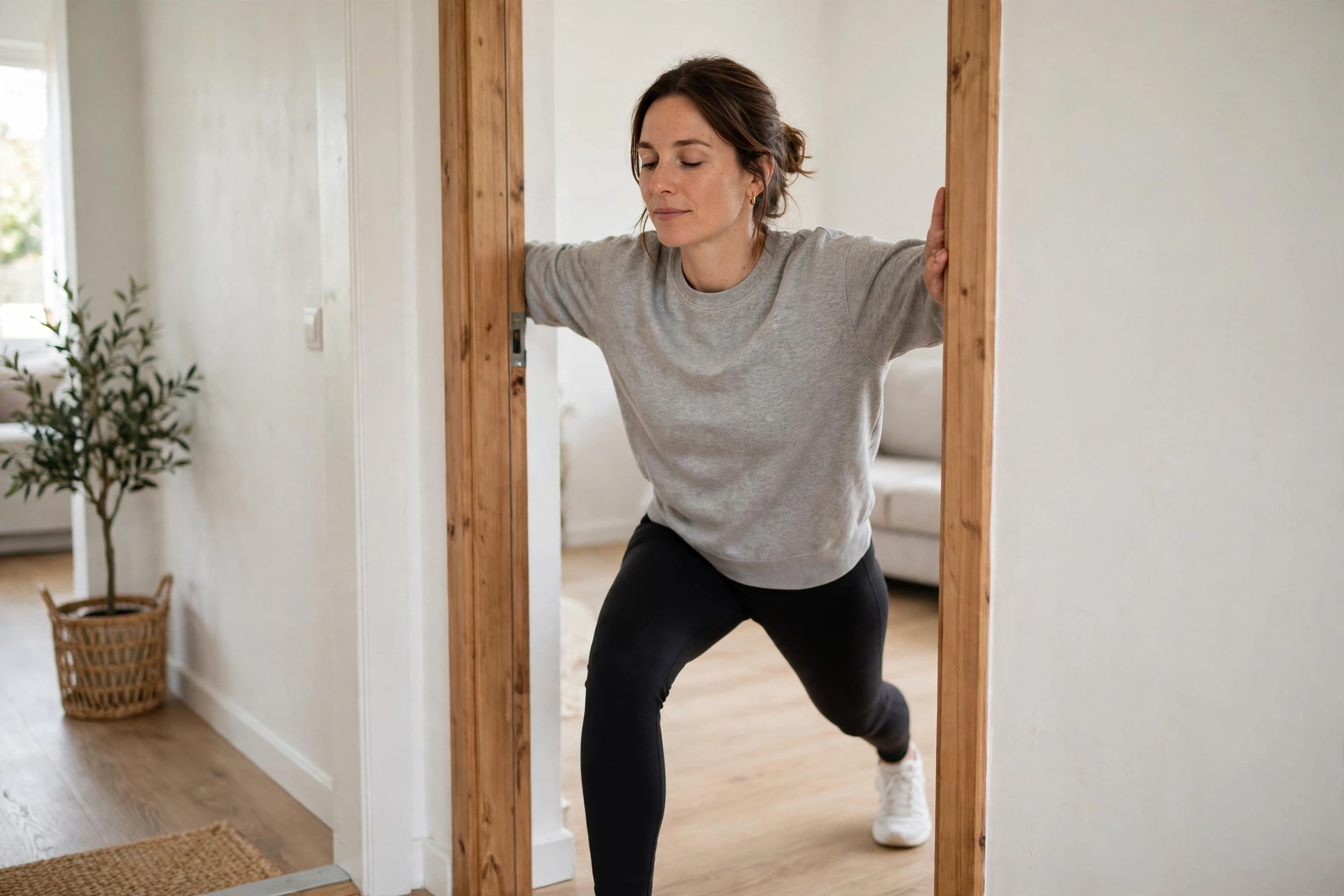
Place your forearms on a door frame with elbows near shoulder height. Step one foot forward and lean gently until you feel a stretch across your chest. Hold for 20 to 30 seconds, then switch sides if needed. Tight chest muscles pull shoulders forward, so this stretch helps improve posture for beginners from the front side too.
5. Cat-Cow
Start on hands and knees. Inhale as you lift your chest and tailbone slightly, then exhale as you round your back and tuck your chin. Move slowly for 6 to 8 reps. Cat-cow is a kind way to improve posture for beginners because it moves the whole spine without load.
6. Glute Bridges
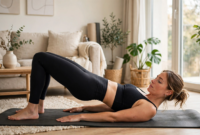
Lie on your back with knees bent and feet flat. Push through your heels, lift your hips until your knees, hips, and shoulders form a line, then lower slowly. Do 10 to 12 reps. Strong glutes support your pelvis, and that support helps improve posture for beginners when standing and walking.
7. Dead Bug
Lie on your back with arms pointing up and knees bent at 90 degrees. Slowly extend your right arm and left leg toward the floor while keeping your lower back steady. Return and switch sides. Do 6 reps per side. Dead bugs build core control, which helps improve posture for beginners without endless crunches.
If you want more gentle mobility ideas after this routine, our guide to stretching exercises for beginners is a good next step. For a clinical overview of similar moves, Cleveland Clinic also explains posture exercises in plain language.
A 10-Minute Daily Routine You Can Actually Keep
You do not need perfect form on day one. Pick a routine short enough to repeat on a busy Tuesday. Ten honest minutes daily beat 45 minutes once a week.
| Time | Move | Dose |
|---|---|---|
| Minute 1 | Chin tucks | 8 reps |
| Minute 2 | Shoulder blade squeezes | 10 reps |
| Minutes 3-4 | Wall angels | 8 slow reps |
| Minute 5 | Doorway chest stretch | 30 seconds |
| Minute 6 | Cat-cow | 8 reps |
| Minutes 7-8 | Glute bridges | 12 reps |
| Minutes 9-10 | Dead bug | 6 reps per side |
Do this once daily in week one. In week two, add a second short round on 3 days if your body feels fine. Take another side photo in week four. Many people feel looser in 1 to 2 weeks, while lasting change often takes 6 to 12 weeks. That is why improve posture for beginners works best as a habit, not a weekend project.
Common Mistakes That Keep Posture Stuck
The first mistake is forcing your shoulders back all day. That usually creates tension, not better posture. Aim for tall and relaxed. Your shoulders should sit down and slightly back, not pinned like a soldier.
The second mistake is stretching only. Stretching feels good, but weak upper-back and core muscles still need strength. To improve posture for beginners long term, pair stretches with chin tucks, wall angels, bridges, and core work.
The third mistake is ignoring the phone. Twenty minutes looking down can load your neck more than a short workout fixes. Raise the phone or rest your elbows.
The fourth mistake is expecting a brace to do the work. It may remind you to sit tall, but it cannot strengthen the muscles that hold you up. The real way to improve posture for beginners is repeatable movement plus an easier setup.
When Posture Pain Needs a Professional
Most everyday stiffness improves with movement, better setup, and time. Still, see a doctor or physiotherapist if pain is sharp, worsening, or comes with numbness, tingling, weakness, dizziness, vision changes, or headaches that worsen with neck movement.
Also get checked after a fall, car accident, or sports injury. This article can help improve posture for beginners in general, but it cannot diagnose your neck, back, or shoulder.
Frequently Asked Questions
How long does it take to improve posture for beginners?
Many beginners feel less stiff within 1 to 2 weeks of daily practice. Visible change often takes 6 to 8 weeks, and a new default posture may take 2 to 3 months. The timeline depends on how long the old habit has been in place.
Can 5 minutes a day improve posture for beginners?
Five minutes can help as a reset, especially if you repeat it during the day. For lasting change, pair those short resets with the 10-minute routine and regular movement breaks. Consistency matters more than intensity.
Do I need equipment to improve posture for beginners?
No. A wall, chair, doorway, and floor space are enough. A light resistance band can add variety later, but it is optional. Start with bodyweight moves and good form.
Is slouching always bad for my back?
Short periods of slouching are normal, and your spine is built to move. The problem is staying in one position for hours. Change position often, stand up regularly, and build strength so tall posture feels easier.
Should I wear a posture corrector?
A corrector may work as a reminder for short periods, but it should not replace exercise. If it makes you sore, numb, or dependent on it all day, stop and focus on movement, setup, and strength instead.
Final Thoughts
You do not need a perfect spine or desk to begin. You need a photo, a timer, a wall, and a repeatable routine. That is enough to improve posture for beginners without forcing it.
Start today with chin tucks, wall angels, and one desk fix. Tomorrow, repeat the same small plan. If you want to know more about the site behind these guides, visit our About Us page.
Disclaimer
This article is general educational information only and is not medical or professional advice. Posture needs, pain causes, exercises, and health guidance vary by person and provider, so readers should verify details from official sources and speak with a qualified professional for personal concerns.