
If you have ever watched floodwater creep toward a front door on the evening news and wondered whether your own home would survive the same, you are asking the right question. What is flood insurance for beginners, really — and do you actually need it, or is it one more policy an agent is trying to sell you? This guide answers what is flood insurance for beginners from scratch, so no prior knowledge is assumed.
The short answer is simple. What is flood insurance for beginners comes down to this: it is a separate insurance policy that pays to repair your home and replace your belongings when floodwater damages them. Your normal homeowners insurance does not do this job. In fact, most standard home insurance policies specifically exclude flood damage, which is why so many families discover the gap only after the water has already come in. This guide walks you through the whole subject in plain language — what it covers, what it costs, how the government program works, and how to buy a policy without overpaying.
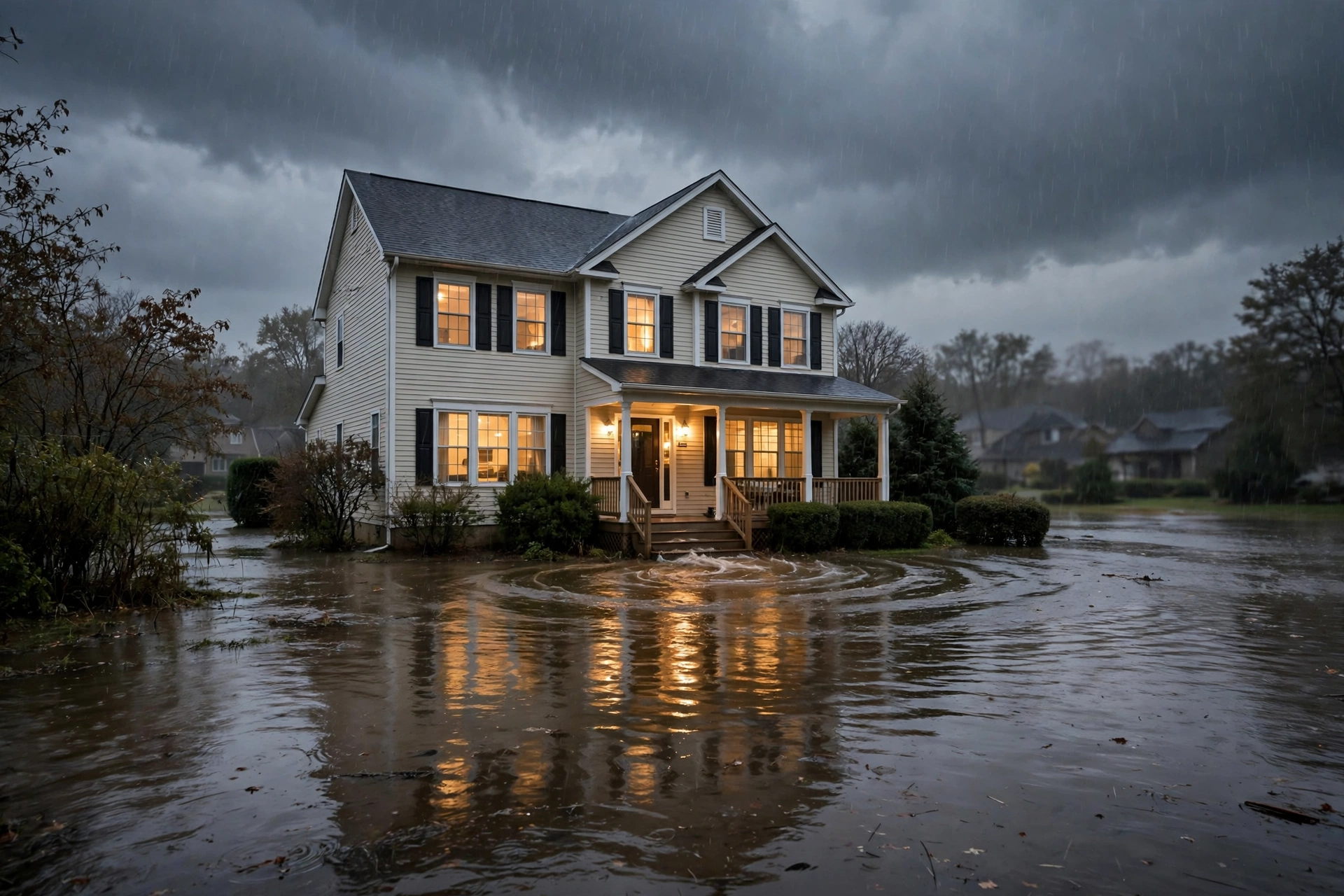
Table of Contents
What Is Flood Insurance for Beginners? The Basics
What is flood insurance for beginners, in the simplest possible terms? It is a policy that covers damage caused by flooding — water that rises from outside your home and spreads over normally dry land. The official definition used by the National Flood Insurance Program (NFIP) describes a flood as a general and temporary condition where two or more acres of normally dry land, or two or more properties, are partly or completely covered by water or mudflow.
That definition matters, because it draws a line between a flood and an everyday leak. A burst pipe inside your house is not a flood. Rainwater coming in through a broken window is not a flood. But a river overflowing its banks, a flash flood after heavy rain, or a storm surge pushing seawater into a neighbourhood — those are floods, and only flood insurance pays for them.
In the United States, most flood insurance is sold through the NFIP, a federal program run by the Federal Emergency Management Agency (FEMA). The NFIP does not sell policies directly. Instead, private insurance companies sell and service NFIP policies, and the federal government backs them. You can also buy a private flood insurance policy from an insurer that is not part of the NFIP. Both options are real, and later in this guide I compare them side by side so you can pick the one that fits your home. If you are new to this, what is flood insurance for beginners really asks is whether your home is protected against water that comes from outside.
One number explains why this subject deserves your attention. According to FEMA, just one inch of water inside a home can cause around $25,000 of damage. That is not a worst-case figure for a mansion. That is an ordinary house with an inch of dirty water across the ground floor — ruined flooring, soaked drywall, a dead furnace, and furniture that has to go. Without flood insurance, that bill lands entirely on you. That is why learning what is flood insurance for beginners is worth an hour of your time before the rainy season, not after it. In short, what is flood insurance for beginners is a policy against water from outside, not water from inside.
What Flood Insurance Covers
When people ask what is flood insurance for beginners supposed to cover, the answer splits into two parts: building coverage and contents coverage. An NFIP policy lets you buy one or both, and each has its own deductible. Before you buy, what is flood insurance for beginners should be clear on one point: building and contents are two separate kinds of cover.
Building coverage pays to repair or rebuild the structure of your home, up to $250,000 under an NFIP policy. It typically covers the foundation, the electrical and plumbing systems, the furnace and water heater, built-in appliances such as a central air conditioner, permanently installed carpeting and cabinets, and a detached garage. If floodwater wrecks the ground floor of your house, this is the part of the policy that pays for the repairs.
Contents coverage pays for your belongings, up to $100,000 under an NFIP policy. It typically covers furniture, electronics, clothing, curtains, portable appliances, the washer and dryer, and food in the freezer. Contents are always paid at actual cash value, which means the insurer pays what the item is worth today, not what it cost when it was new. That distinction matters when you set your coverage amount. Together, the two parts answer what is flood insurance for beginners protects: the structure and everything inside it.
It is worth checking the limits against the real value of your home. The NFIP caps are fixed by law, and a house worth $500,000 cannot be fully covered by a $250,000 NFIP building limit. If your home is worth more than the NFIP cap, a private policy with higher limits may be the better fit. If you are still wondering what is flood insurance for beginners meant to protect first, start with these two buckets and insure both.
What Flood Insurance Does Not Cover
A policy is only useful if you know its limits, and flood insurance has several. That is why a guide to what is flood insurance for beginners spends as much time on exclusions as on cover. This is the part of the guide where most beginners get their first surprise, so read it carefully before you buy.
First, flood insurance does not cover damage that could have been avoided, such as mould or mildew that grew because a previous flood was never cleaned up properly. Second, it does not pay for temporary housing while your home is being repaired — no hotel bills, no rent for a place to stay. Third, it does not cover outdoor property such as decks, patios, fences, swimming pools, and landscaping.
Fourth, it does not cover cars; a flooded car is a claim for your auto insurance, not your flood policy. Fifth, it does not cover sewer backup on its own, unless you buy a separate endorsement for it. And sixth, coverage below the lowest elevated floor of your home — for example, a finished basement — is very limited under NFIP rules.
A clear picture of what is flood insurance for beginners excludes is just as important as knowing what it covers. Flood insurance is not a replacement for home insurance. It is not a guarantee that every drop of water damage will be paid for. It is a focused policy that covers one specific risk, and it does that job well. For everything else, you still need your regular home insurance, which you can read about in our guide to what home insurance is.
NFIP vs Private Flood Insurance: Which One Fits You?
For most buyers, the choice in what is flood insurance for beginners comes down to NFIP or private, and the right one depends on your home and your budget. The table below lays out the differences at a glance.
| Feature | NFIP policy | Private policy |
|---|---|---|
| Who backs it | Federal government (FEMA) | A private insurance company |
| Building limit | Up to $250,000 | Often $500,000 or more |
| Contents limit | Up to $100,000 | Often $200,000 or more |
| Waiting period | 30 days | Often 10 to 14 days |
| Pricing | Standardised, same price from any seller | Varies by insurer and risk |
| Extra options | Limited | Replacement-cost contents, extra living costs, higher limits |
An NFIP policy is the safe default for most homeowners. The price is the same no matter which company sells it, the coverage is standardised, and the federal backing means the claim will be paid. It also has one big advantage for people in high-risk zones: insurers cannot refuse to sell you an NFIP policy because your home is risky.
A private policy suits a different kind of buyer. If your home is worth more than the NFIP limits, if you want your belongings covered at replacement cost instead of actual cash value, or if you need coverage to start faster than 30 days, a private policy may be worth the quote. The trade-off is that private pricing varies, and a private insurer can decline to cover a very high-risk property. My advice is simple: get an NFIP quote and at least one private quote, then compare them line by line before you decide.
How Much Does Flood Insurance Cost?
Price is the question everyone asks next, and the honest answer is that it depends on your home. The average NFIP premium is around $700 a year, according to FEMA, but that average hides a wide range. A low-risk home on high ground can cost a few hundred dollars a year, while a home in a high-risk flood zone can cost several thousand.
Several factors set your price. The biggest is your flood zone — the risk rating FEMA assigns to your address. Next comes the elevation of your home: a house raised above the expected flood level pays less than one sitting at ground level. The age and construction of the building matter too, along with the amount of coverage you choose and the deductible you accept. A higher deductible lowers the premium, but it also means you pay more out of pocket before the policy starts paying. Your insurer will also ask about the home’s age and construction, so what is flood insurance for beginners priced at for you depends on several small details at once.
When you ask what is flood insurance for beginners going to cost you personally, the only honest answer is to get a quote for your own address. FEMA’s newer pricing system, called Risk Rating 2.0, looks at your individual property — its distance from water, its elevation, its construction, even the cost to rebuild it — instead of relying only on the old flood-zone map. Two neighbours on the same street can now pay different prices for the same coverage. A quote for your neighbour’s house tells you nothing about yours. So when you budget for it, remember that what is flood insurance for beginners costs is set by your home, not by a national average.
The 30-Day Waiting Period Nobody Tells You About
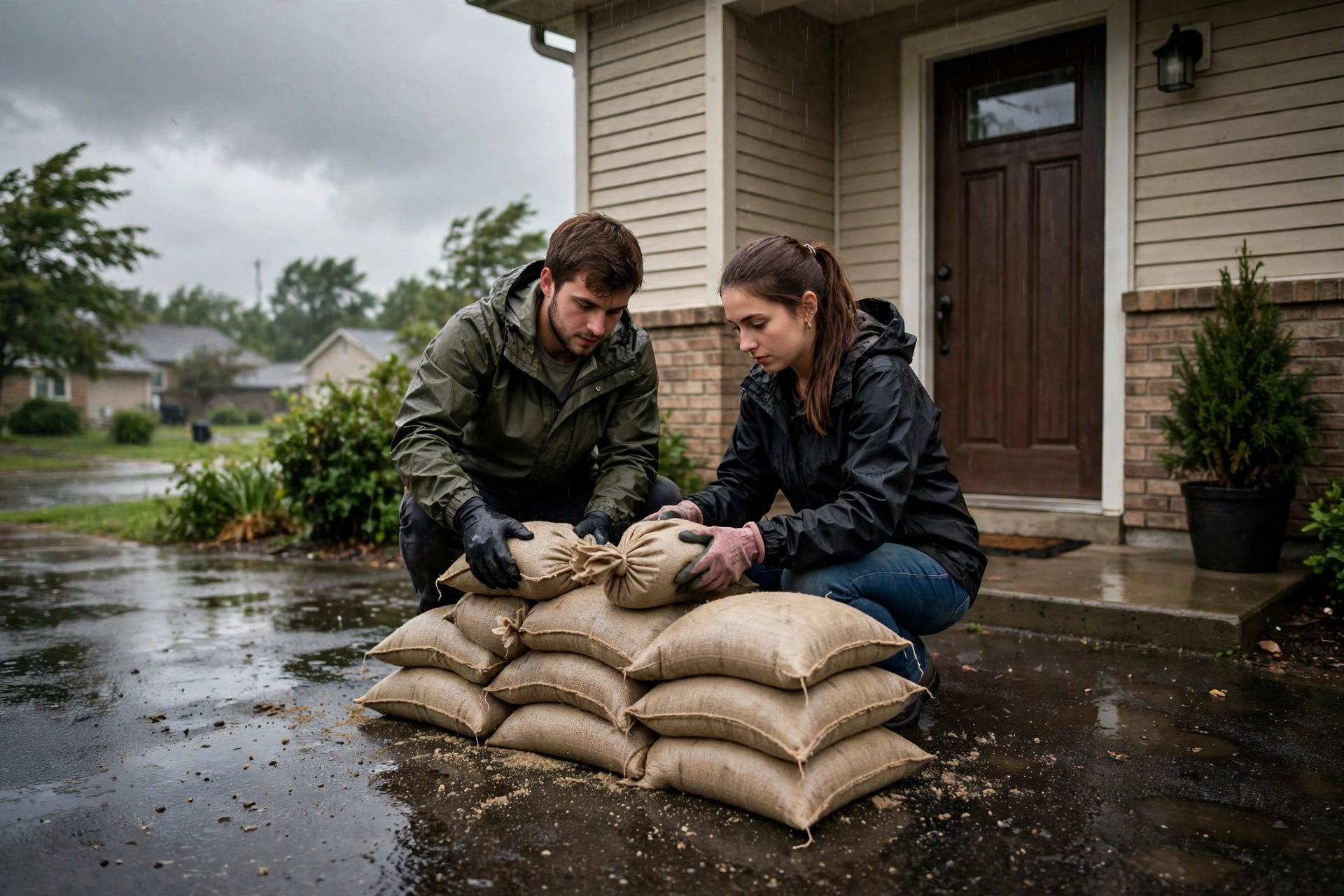
Here is the detail that hurts people the most, because it is the easiest to miss. An NFIP flood insurance policy does not start the day you buy it. It starts 30 days later. If you buy a policy on the 1st of the month, you are not covered until the 31st. If a storm floods your street in between, the policy pays nothing.
This is the part of what is flood insurance for beginners that agents sometimes forget to mention. There are only a few exceptions. The waiting period does not apply if your mortgage lender requires the policy as a condition of the loan, or if your home’s flood-zone map has just changed and you buy within a certain window. Otherwise, the 30 days apply to everyone.
Private flood insurance is usually faster — many private policies start after 10 to 14 days, and some start even sooner. But no policy, public or private, lets you buy coverage while the storm is already on the radar and expect it to pay. That is why the best time to think about what is flood insurance for beginners is on a dry, sunny day, not the week a hurricane is forecast. Most guides on what is flood insurance for beginners skip this detail, and it is the one that costs people the most.
Who Actually Needs Flood Insurance?
The short answer is: more people than think they do. If you live in a high-risk flood zone and you have a federally backed mortgage — an FHA loan, a VA loan, or a Fannie Mae or Freddie Mac mortgage — your lender will require you to carry flood insurance. That is not optional, and the lender will check every year that the policy is still in force.
But the bigger group is everyone else. The honest answer to what is flood insurance for beginners is that the risk is wider than the map suggests. FEMA reports that more than 40 percent of NFIP flood claims come from outside high-risk flood zones. Rain does not check a map before it falls, and a flash flood can hit a street that has never flooded in living memory. New housing developments, paved roads, and changing weather patterns all push water into places it never reached before.
Ask yourself three questions. Has your area ever had heavy rain that overwhelmed the drains? Is your home near a river, a stream, a lake, or the coast? Could you afford to pay for major repairs out of your own pocket if the ground floor flooded tomorrow? If you are working out what is flood insurance for beginners means for your street, start with those three questions. If the answer to the first two is yes and the answer to the third is no, flood insurance is worth a quote. A quote costs nothing, and the answer might be cheaper than you expect.
How to Buy Flood Insurance in 7 Simple Steps
Once you understand what is flood insurance for beginners covers, buying a policy is a short process — the paperwork takes an afternoon, though the coverage itself starts later. Here is the whole process, step by step.
Step 1: Check your flood zone
Visit FEMA’s Flood Map Service Center at FloodSmart.gov and enter your address. It takes two minutes and tells you your zone and your risk level. This is the same map insurers use, so it is the right starting point. You can find the official flood maps and guidance through FloodSmart, FEMA’s flood insurance site.
Step 2: Decide how much coverage you need
Add up what it would cost to repair your home and replace your belongings. The NFIP caps are $250,000 for the building and $100,000 for contents. If your numbers are higher, ask about a private policy with higher limits.
Step 3: Get an NFIP quote
Any licensed insurance agent can sell you an NFIP policy. Ask for a quote with the coverage amounts from step 2, and ask what deductible the quote assumes. A $1,000 deductible is a common starting point.
Step 4: Get a private quote too
Call at least one private flood insurer or ask your agent to check the private market. Compare the price, the limits, the waiting period, and whether contents are paid at replacement cost or actual cash value.
Step 5: Compare the two quotes line by line
Do not compare only the price. A cheaper policy with a 30-day wait and actual-cash-value contents is not the same product as a dearer one with a 10-day wait and replacement-cost contents. Read the exclusions on both.
Step 6: Buy the policy and note the start date
Pay the premium and write down the exact date your coverage starts. For an NFIP policy, that is 30 days after payment. Put a reminder in your phone so there are no surprises.
Step 7: Review the policy every year
Flood risk changes, your home changes, and prices change. Review the policy at renewal, update the coverage if you renovated, and check whether a private quote has become cheaper. A five-minute annual review is the cheapest habit in insurance. That is the full answer to what is flood insurance for beginners who want to buy a policy this week.
7 Mistakes Beginners Make With Flood Insurance
Most of these mistakes come from not knowing what is flood insurance for beginners really covers before buying. Even careful buyers trip over the same ones, so knowing them in advance is half the battle.
- Assuming home insurance covers floods. It does not. This is the single most expensive misunderstanding in property insurance, and it is the reason this guide exists.
- Waiting until a storm is forecast. The 30-day NFIP waiting period means a policy bought in a panic does not help with the storm that caused the panic.
- Buying only building coverage. Your furniture, electronics, and clothes are often worth tens of thousands of dollars. Contents coverage is usually cheap compared with what it protects.
- Choosing the cheapest deductible without thinking. A low deductible raises the premium every year. A higher deductible lowers it — as long as you can actually afford to pay it after a flood.
- Forgetting the basement. NFIP coverage below the lowest elevated floor is very limited. If your basement is finished, ask your agent exactly what is covered down there.
- Never updating the policy. A kitchen renovation, a new extension, or a rise in rebuilding costs can leave you underinsured. Review the numbers at every renewal.
- Skipping the quote because the zone looks safe. More than 40 percent of NFIP claims come from outside high-risk zones. A quote is free, and the result often surprises people in a good way.

Frequently Asked Questions
What is flood insurance for beginners in simple words?
What is flood insurance for beginners in the simplest terms? It is a separate policy that pays to repair your home and replace your belongings when floodwater damages them. Standard home insurance does not cover flooding, so this policy fills that gap.
Does homeowners insurance cover flooding?
No, not in most cases. A standard homeowners policy covers water damage from things like burst pipes or a leaking roof, but it specifically excludes flooding — water rising from outside and covering normally dry land. That is exactly what a flood insurance policy is for. In short, what is flood insurance for beginners exists precisely because homeowners insurance leaves this gap.
How much does flood insurance cost?
The average NFIP premium is around $700 a year, but the real price depends on your flood zone, your home’s elevation, its construction, and how much coverage you buy. A guide to what is flood insurance for beginners cannot give you an exact price, because low-risk homes can cost a few hundred dollars a year while high-risk homes can cost several thousand. The only way to know your price is to get a quote for your own address.
How long does it take for flood insurance to start?
An NFIP policy starts 30 days after you buy it, with a few exceptions such as when a mortgage lender requires it. Private flood insurance usually starts faster, often after 10 to 14 days. Either way, buy before storm season, not during it. That is why every honest guide to what is flood insurance for beginners says the same thing: buy early.
Can renters buy flood insurance?
Yes. For renters, what is flood insurance for beginners often means a contents-only policy, and it is usually affordable. Your landlord’s policy covers the building, not your belongings, so a contents policy is the renter’s version of flood protection. Renters can buy one through the NFIP or a private insurer.
Disclaimer
The information in this article is general educational information only. It is not professional or financial advice, and it is not a recommendation to buy or avoid any particular insurance policy. Prices, rules, coverage limits, and waiting periods change over time and vary by country, state, and provider, so please verify the current details from official sources such as FEMA and FloodSmart, or speak with a licensed insurance agent before making a decision.
To learn more about the site behind this guide, visit the About Us page.